You have not yet added any article to your bookmarks!
Join 10k+ people to get notified about new posts, news and tips.
Do not worry we don't spam!
Post by : Anis Farhan
When most people hear the phrase “space technology,” they imagine rockets, astronauts floating in orbit, or futuristic laboratories filled with scientists wearing white coats. What rarely comes to mind is the very phone you are holding, the map app guiding your route, or the rain alert that just saved you from carrying an umbrella unnecessarily.
Yet the truth is simple: modern life is deeply connected to space.
You may never set foot in a spacecraft, but space systems already operate behind the scenes of your daily routine. They guide you when you travel, warn you when storms approach, track delivery packages, enable banking transactions, schedule communication networks, and even help farmers decide when to sow crops.
Space is no longer separate from Earth. It is part of everyday life.
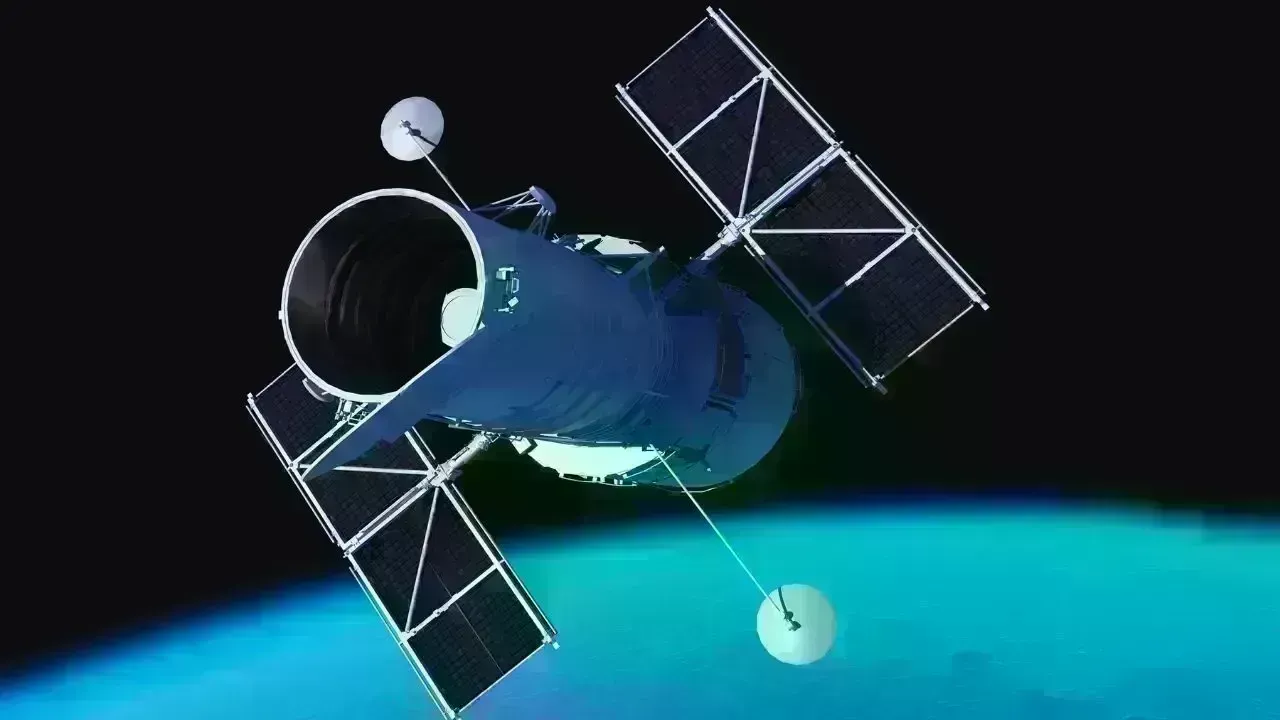
Most digital services you use depend on accurate location data, real-time connectivity, and constant monitoring of natural systems. Satellites provide all three.
Whenever you:
Use a navigation app
Check the weather
Watch live news
Make an online payment
Track a delivery
Stream content
Join a video meeting
you are indirectly using data transmitted from space.
Satellites are not just floating machines. They are invisible workers that never sleep.
Location services rely on a group of navigation satellites constantly orbiting the planet. These satellites transmit timing and positioning signals that your phone receives to calculate your position.
Your smartphone doesn’t guess where you are.
It calculates your exact location by communicating with satellites more than 20,000 kilometres above Earth.
This is what makes services like:
Ride-hailing apps
Food delivery platforms
Emergency response systems
Fitness trackers
Social media check-ins
possible with accuracy entering into metres.
Remove satellites from the equation and your phone becomes geographically blind.
Digital maps appear simple: a blue dot moving along streets as you travel.
Behind that simplicity is a massive system of:
Earth observation satellites
Real-time traffic data
Positioning networks
Imaging sensors
Surface modelling algorithms
Satellites continuously scan roads, bridges, highways and terrain from above. They collect information that helps map developers detect changes like:
New flyovers
Road diversions
Construction zones
Narrow lanes
Flood-prone areas
Traffic congestion patterns
Routes are recalculated instantly using this satellite data.
The reason your navigation app can recommend faster routes in response to a traffic jam is because satellites constantly update data from space.
Your phone uses signals from multiple satellites at once.
The more satellites your device connects with, the more accurate your location becomes.
Urban environments with skyscrapers may weaken signal strength slightly, while open highways provide stronger satellite visibility.
Despite this, location accuracy today can often narrow down your position to within a few meters—sometimes even less.
That is the strength of modern space technology operating quietly above your head.
Weather forecasts are not magic.
They are powered by a global network of satellites orbiting the Earth, continuously capturing:
Cloud movement
Ocean temperature
Wind patterns
Atmospheric pressure
Greenhouse gas levels
Ice coverage
Cyclone formation
Every national weather forecast starts in space.
Satellite data feeds massive computer models that predict temperature changes, rainfall patterns, temperature shifts and extreme events.
This allows meteorologists to:
Issue cyclone alerts
Warn about heatwaves
Predict floods
Track drought
Forecast snowfall
Monitor storms
When a weather app warns you of rain in two hours, it’s not guessing.
It’s following a cloud signature visible from space.
Early warnings save lives.
Without satellites, many disasters would hit without warning.
Satellites detect:
Cyclone formation over oceans
Earthquake fault movement
Forest fire spread
Glacier melting
Rising sea levels
River overflow risks
In many countries, disaster response teams rely on space systems to:
Estimate damage
Identify cut-off areas
Plan rescue routes
Monitor flood levels
Assess forest damage
Observe landslides
Satellites often become the first eyes on disaster aftermath—long before rescue teams reach the ground.
When you make a video call, stream a live match, or watch international news without cable interruption, satellites are often involved.
Remote areas without fiber networks depend almost entirely on satellite communication.
Satellites enable:
Live television broadcast
Emergency signals
Military communication
Maritime navigation
Aviation control
Rural internet connectivity
Subsea cables carry a large share of data, but satellite networks fill the gaps where infrastructure is limited.
For people living in difficult terrain, satellites are not a luxury.
They are a lifeline.
Bank transfers must be accurately time-stamped.
Digital payments depend on precise clocks.
ATM networks require location confirmation.
All these rely on satellite timing signals.
If satellites were disrupted for extended periods, systems affected would include:
Online banking
Stock markets
Smart grids
Power distribution
Mobile networks
Payment verification
Space is no longer separate from finance.
The financial system floats silently in orbit.
Satellites carry atomic clocks.
These clocks are more accurate than any clock on Earth.
Digital economy systems rely on this timing to:
Authenticate payments
Synchronise networks
Maintain stock exchange accuracy
Support secure encryption
Manage global transactions
Your phone’s internal clock quietly traces its accuracy to space.
Modern farming is no longer guesswork.
Satellite imagery tells farmers:
Soil health
Crop stress levels
Moisture availability
Pest outbreaks
Weather patterns
Irrigation needs
This allows for:
Targeted fertilizer use
Better yield planning
Reduced water wastage
Higher efficiency
Lower environmental damage
What once required generations of experience now includes satellite assistance.
Agriculture is becoming a science backed by space.
Every flight depends on satellite navigation.
Aircraft do not navigate by sight.
They rely on satellites for:
Positioning
Routing
Weather avoidance
Landing accuracy
Time synchronization
Without space technology, aviation would be slower, riskier, and more expensive.
Modern airports depend on satellite data for:
Runway safety
Air traffic coordination
Weather conditions
Passenger flow
Every safe flight proves the value of space systems.
Live matches, satellite TV, remote broadcasts from stadiums, disaster coverage, international interviews—all travel through orbit.
Streaming services rely on:
Satellite data routing
Weather-resistant transmission
Backup connectivity
Bandwidth mapping
When undersea cables fail, satellites take over.
Entertainment survives because space does.
Space technology does more than improve comfort.
It protects the planet.
Satellites measure:
Carbon emissions
Deforestation
Desert growth
Ice melt
Ocean acidification
Wildlife patterns
Governments use this data to:
Enforce environmental laws
Track illegal mining
Monitor forest use
Detect pollution
Assess climate change impact
Environmental reporting is now driven by orbital data rather than field reports alone.
Ambulance services, police coordination, disaster rescue teams—all use satellite-based systems to:
Locate victims
Track vehicles
Coordinate relief
Monitor weather
Avoid hazardous areas
The reason help often arrives faster today is because space systems are silently guiding the response.
Space technology is no longer niche.
Jobs in space support systems now include:
Software developers
Data analysts
Machine learning engineers
Environmental scientists
Material engineers
Policy planners
Satellite operators
Network technicians
Children learning coding today may one day work on satellite networks tomorrow.
Space is becoming a workplace, not just a destination.
It’s uncomfortable to imagine, but worth understanding.
If space systems were disrupted for long durations:
Navigation would fail
Communication slows
Stock markets freeze
Weather alerts disappear
Emergency response weakens
Modern civilisation runs on orbital infrastructure.
The reason this usually goes unnoticed is because space systems work too well.
As technology grows, reliance on space will increase, not decrease.
Future systems will include:
Autonomous vehicle navigation
Space-based internet services
AI-powered weather prediction
Earth observation for city planning
Satellite-based healthcare delivery
Space climate modelling
Smart cities will depend heavily on satellite data for:
Pollution control
Traffic optimisation
Water management
Disaster resistance
Energy efficiency
The sky will become the control centre for Earth.
Because it is invisible.
Wires are visible. Towers are visible.
Satellites float silently above, doing their job without demanding attention.
This invisibility makes their importance underestimated.
But your life would grind to a halt within days without them.
The ultimate sign of success is when a system becomes so reliable that nobody notices it anymore.
Space technology is not futuristic.
It is familiar.
It is embedded in your routine.
It wakes you with alarms.
It guides you to work.
It alerts you of storms.
It moves your money.
It entertains your evenings.
It warns you of danger.
It protects your crops.
It lights your streets.
It powers your world.
You may never look up at satellites.
But they are always watching over you.
Quietly. Constantly. Reliably.
This article is intended solely for educational and informational purposes. It does not provide technical, governmental, or policy guidance. For specialised advice related to satellite services or communication technology, readers should consult qualified professionals or official sources.







Nvidia Pledges $250 Million for UK AI Safety Research
Nvidia will provide $250 million in computing resources over five years to support AI safety researc

Jacob Bethell Returns as England Name Squads for Australia Tour
England name ODI and T20 squads for the Australia tour, with Jacob Bethell returning from injury and

Beauden Barrett Opens Up About Mental Struggles During All Blacks Exile
Beauden Barrett discusses his confidence struggles after missing six tests, his return against Austr

IMF Says AI Investment Supports Global Growth Despite Energy Shock
IMF says AI investment is supporting global growth near 3%, with Asian economies benefiting from ris

Will O'Rourke Ruled Out of New Zealand's India Series
New Zealand fast bowler Will O'Rourke will miss the India series with hamstring and calf injuries as

AI Companies Expected to Drive Most US Earnings Growth in Q3
AI companies are expected to drive US third-quarter earnings growth as investors assess tech profits