You have not yet added any article to your bookmarks!
Join 10k+ people to get notified about new posts, news and tips.
Do not worry we don't spam!
Post by : Rohit Dhiman
MANZANILLO, Mexico: Hurricane Simon weakened from Category 4 to Category 3 on Sunday, October 11, while moving parallel to Mexico's Pacific coastline. Despite the reduction in intensity, the storm continued to pose a serious threat to coastal communities, bringing powerful winds, intense rainfall and widespread flooding in affected areas. According to the US National Hurricane Center (NHC), the storm had maximum sustained winds of approximately 205 kilometres per hour at 6 pm local reporting time on Sunday. Its centre was located about 175 kilometres west-northwest of Manzanillo, an important port city on Mexico's western coast. Forecasters warned that further weakening was possible. However, they expected the storm to remain a powerful hurricane as it passed near the west-central Mexican coastline. The movement and intensity of Hurricane Simon remained important factors for emergency officials, who were monitoring the possibility of additional rainfall, dangerous coastal conditions and flooding in several states.
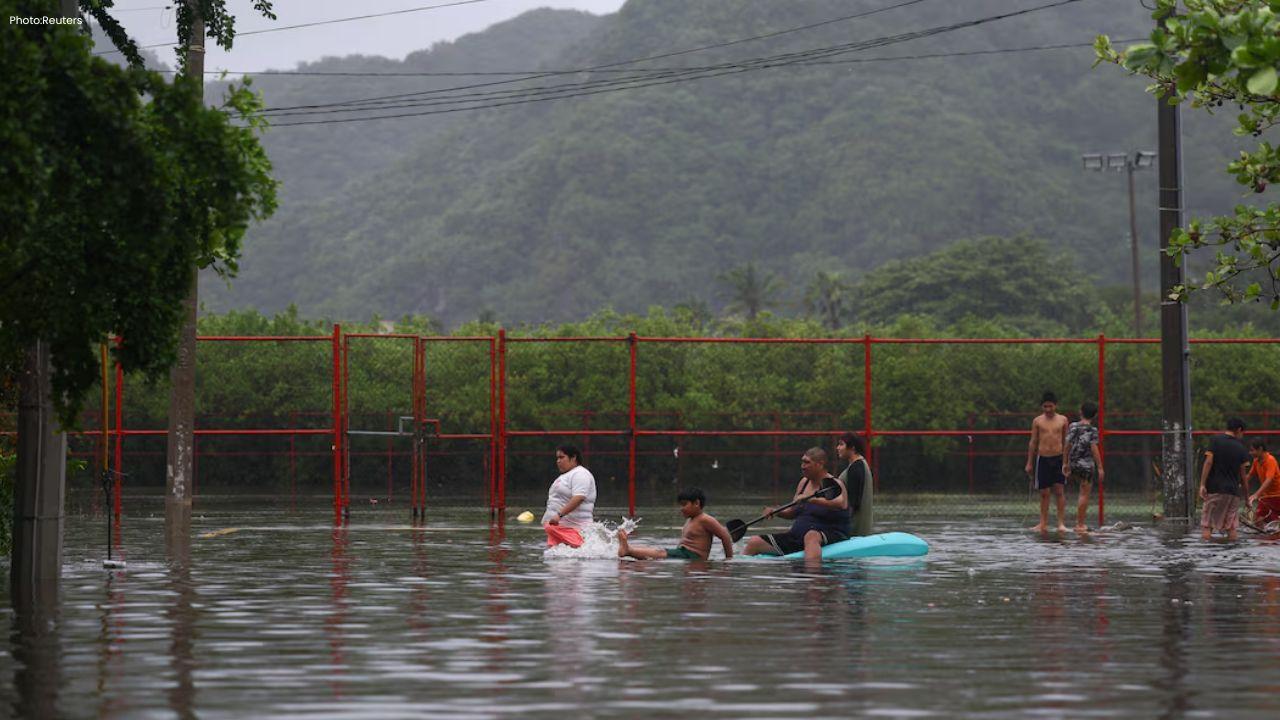
Residents in Manzanillo faced difficult conditions after heavy overnight rainfall flooded streets and residential properties. People were seen walking through waterlogged roads as families attempted to protect their belongings and remove water from their homes. Soldiers assisted residents with clearing floodwater and managing the immediate effects of the storm. Household furniture and essential appliances were among the items damaged by the flooding. One resident, Cecilia Palomar, described the damage to her home in comments reported by Reuters. She said that beds, refrigerators, cooking appliances and other furniture had become wet after water entered the property. The situation also highlighted the difficulties faced by elderly residents during evacuations and emergency relocations. Palomar explained that her elderly mother had been moved to her brother's home on higher ground, even though she was reluctant to leave her own house.
The National Hurricane Center warned that additional rainfall could affect parts of Colima, Jalisco, Nayarit and Sinaloa through early Thursday, October 15. Forecast rainfall totals ranged from approximately 50 to 100 millimetres in affected areas, with isolated locations potentially receiving as much as 200 millimetres more. The total rainfall associated with the storm could reach approximately 762 millimetres in parts of Michoacan, Colima and Jalisco, according to the NHC. Such accumulated rainfall can overwhelm drainage systems, increase river levels and raise the risk of dangerous flooding. The threat was especially concerning in mountainous areas, where saturated ground and steep terrain can contribute to landslides and destructive mudflows.
A Category 3 hurricane is classified as a major hurricane, with maximum sustained winds of at least 178 kilometres per hour. At the time described in the report, Simon's maximum sustained winds were around 205 kilometres per hour, keeping it within that category. A reduction from Category 4 to Category 3 does not mean that a storm has become harmless. Powerful winds can damage buildings, uproot trees, disrupt electricity supplies and create hazardous conditions for people travelling outdoors. Heavy rainfall can also cause severe damage independently of wind strength. Rivers may rise rapidly, streets can become impassable, and water may enter homes and commercial properties. The Category 3 hurricane also threatened coastal areas through dangerous waves and storm surge. Storm surge occurs when hurricane winds push seawater towards the shore, potentially causing coastal inundation and damage to low-lying communities.
Mexican authorities expanded emergency preparations as the hurricane approached vulnerable coastal regions. According to civil protection bulletins cited in the report, 28 municipalities across Jalisco and Colima were placed under the highest cyclone alert level. Another 93 municipalities were under a high alert. These warnings reflected concerns about strong winds, intense rainfall, flooding and dangerous coastal conditions. Local authorities were preparing communities for possible disruption while emergency personnel continued to monitor the developing situation. Officials also took steps to reduce public exposure to hazardous weather. Non-essential activities were suspended in affected areas, and emergency shelters were opened in coastal communities considered at risk. The authorities' response focused on encouraging residents to follow official instructions, avoid dangerous locations and seek safer accommodation when necessary.
Read Also: IMF Says AI Investment Supports Global Growth Despite Energy Shock
The hurricane also disrupted transport and tourism-related activities along Mexico's Pacific coast. Puerto Vallarta International Airport was temporarily closed as authorities responded to the storm threat. The interruption affected a key transport gateway serving a popular coastal destination. Airport closures during severe weather are intended to protect passengers and aviation personnel when operating conditions become unsafe. Travellers may face delays, cancellations or changes to their travel arrangements when airports suspend operations. Authorities also closed beaches and urged people to stay away from the shoreline as dangerous waves and storm-related coastal conditions developed.
Mexican President Claudia Sheinbaum urged residents in coastal communities across Jalisco, Colima, Nayarit and Michoacan to remain indoors as the storm approached. Her warning came earlier on Sunday, when Simon was still classified as a Category 4 hurricane. The appeal was part of broader efforts to limit the risks to people living in areas exposed to severe weather. Remaining indoors, following evacuation instructions and avoiding flooded roads can reduce exposure to dangerous conditions during a hurricane. Authorities were particularly concerned about the combination of strong winds, intense rainfall and potentially life-threatening flooding. Residents in low-lying areas and locations vulnerable to landslides faced additional risks if rainfall continued to accumulate. Emergency shelters offered an alternative for people whose homes were unsafe or who needed to move away from exposed coastal locations.
The storm's impact was expected to extend beyond the immediate area around Manzanillo. Heavy rainfall across several states could affect transport, residential areas, local businesses and essential services. Flooded streets can prevent vehicles from moving safely, while damaged roads and unstable slopes may complicate emergency access. Water entering houses can also damage electrical equipment, furniture and other household possessions. For coastal businesses, severe weather can interrupt normal operations, particularly when authorities suspend non-essential activities or restrict access to beaches. The potential for additional rainfall meant that communities already affected by flooding could face further difficulties. Even areas outside the hurricane's direct path may experience heavy rain and hazardous weather conditions. The NHC's warnings about heavy rainfall and flash flooding underscored the importance of monitoring changing conditions rather than relying only on the storm's category.
Simon arrived only days after Hurricane Polo affected Mexico's Baja California Peninsula as a Category 2 hurricane. Polo reportedly brought down trees and power poles and caused flooding in streets, adding to the weather-related disruption experienced in the country. The two storms affected different parts of Mexico, but their close timing highlighted the challenges that severe tropical weather can create for emergency services and local communities. Recovery from one storm can require time and resources, particularly when infrastructure, electricity supplies and transport routes have been damaged. The arrival of another hurricane can place additional pressure on emergency response operations. However, the effects of each storm depend on its track, intensity, rainfall distribution and the preparedness of the communities in its path.







IMF Says AI Investment Supports Global Growth Despite Energy Shock
IMF says AI investment is supporting global growth near 3%, with Asian economies benefiting from ris

Will O'Rourke Ruled Out of New Zealand's India Series
New Zealand fast bowler Will O'Rourke will miss the India series with hamstring and calf injuries as

AI Companies Expected to Drive Most US Earnings Growth in Q3
AI companies are expected to drive US third-quarter earnings growth as investors assess tech profits

Money Market Funds See Record Inflows as Global Bond Selloff Intensifies
Global money market funds attract $153.81 billion as bond yields rise, inflation fears persist and i

Meta Bans TikTok Ads on Facebook and Instagram in Seven Countries
Meta has banned TikTok ads in seven countries, escalating competition over social media users, adver
ASML and Zeiss Target Next-Generation Chip Technology in 10 Years
ASML and Carl Zeiss are developing Hyper NA technology to print smaller chip circuits, with the next