You have not yet added any article to your bookmarks!
Join 10k+ people to get notified about new posts, news and tips.
Do not worry we don't spam!

Post by : Badri Ariffin
India's ambition of achieving a $5 trillion economy has encountered a significant challenge. As highlighted in the latest IMF consultation report published on November 26, the timeline for reaching this goal is now pushed to FY29, a full year beyond previous estimates.
This adjustment stems from reduced nominal growth projections and a depreciating rupee. The IMF now anticipates India's GDP will stand at $4.96 trillion in FY28, a downward revision from the earlier prediction of $5.15 trillion. Notably, just two years ago in 2023, a grander forecast of $5.96 trillion was posited.
Impact of Currency Decline
The declining rupee is influencing the revised GDP forecast measured in dollars. Consequently, the IMF has altered its FY25 exchange rate expectation from Rs 82.5 to Rs 84.6 per dollar. Projections for FY26 and FY27 forecast further depreciation, estimating the rupee will reach Rs 87 and Rs 87.7, respectively. On November 21, the currency hit a record low of Rs 89.49 per dollar.
These developments have led the IMF to redefine India's exchange-rate framework from “stabilized” to “crawl-like,” indicating a higher allowance for gradual depreciation.
Declining Nominal Growth Rates
Nominal GDP growth predictions have also been adjusted. The IMF projects an 8.5% growth rate for FY26, down from the previously expected 11% in FY24. In dollar terms, this equates to expected growth rates of 5.5% for FY26 and 9.2% for FY27, influenced by both slower domestic development and fluctuations in exchange rates.
Nonetheless, India continues to be recognized as one of the fastest-growing major economies worldwide. Robust domestic demand, advancement in infrastructure, and ongoing reforms remain pivotal in contributing to its growth potential. The IMF emphasizes that finalized trade agreements and continuous reform efforts could enhance India’s economic trajectory further.
While India challenges certain assumptions—especially regarding the sustainability of U.S. tariffs on its exports—the overall outlook remains optimistic. Analysts assert that meticulous macroeconomic governance, currency stabilization, and sustained policy reforms are crucial for India to regain its swift progress toward achieving the $5 trillion goal.








Hyundai raises profit target, expands hybrid lineup in the US
Hyundai hybrid cars get a major boost as the automaker raises its profit margin target and plans new

Josh Kerr and Jakob Ingebrigtsen Set for 1,500m Rivalry Rematch
Josh Kerr and Jakob Ingebrigtsen will renew their 1,500m rivalry at the Ultimate Championship in Bud

PSG Coach Luis Enrique Urges Players to Step Outside Comfort Zone
PSG coach Luis Enrique says players must leave their comfort zone and keep improving as the club tar

China’s Tiangong Sets New 400m Record at Robot Olympics
China’s Tiangong robot sets a new 400m record at the Robot Olympics, beating a South African robot i

George Russell Wins Dutch GP Sprint, Boosts Mercedes Morale
George Russell wins the Dutch GP Sprint from pole as Mercedes teammate Kimi Antonelli extends his F1
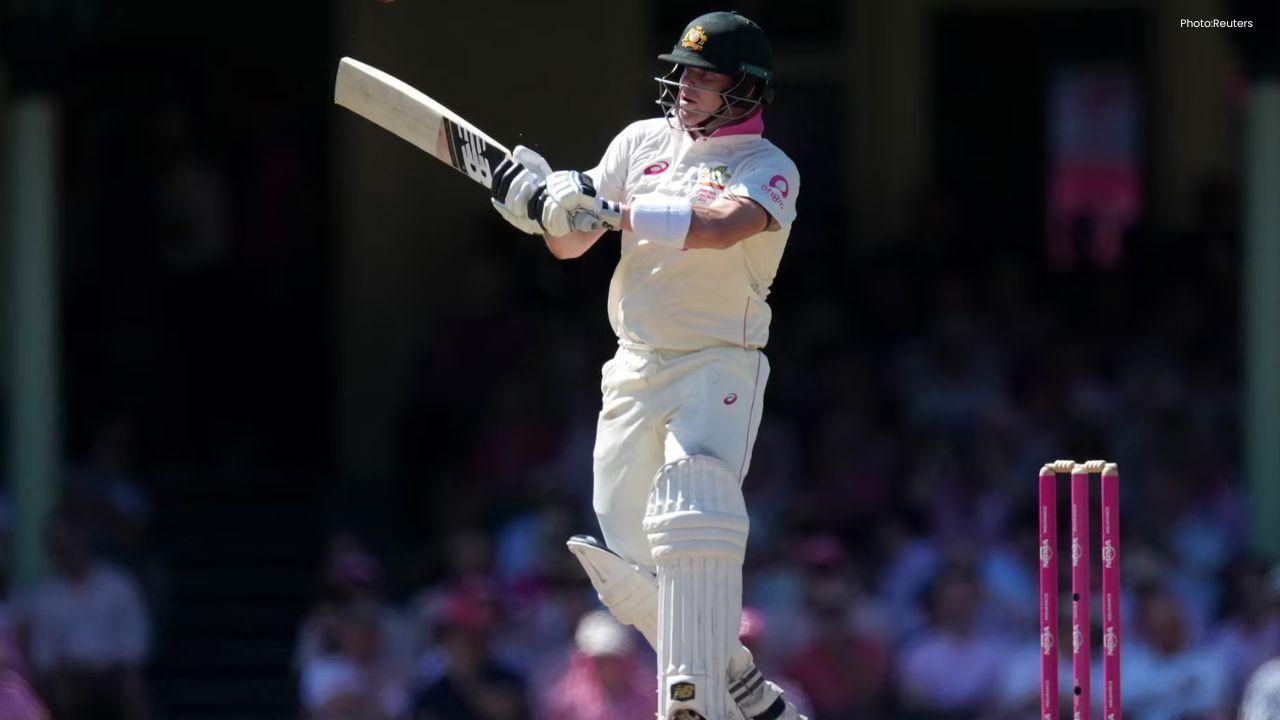
Australia 50/3 After Bangladesh Bowled Out for 64 in Second Test
Australia reached 50/3 after Bangladesh were bowled out for 64 in the second Test, with Mitchell Sta