
You have not yet added any article to your bookmarks!
Join 10k+ people to get notified about new posts, news and tips.
Do not worry we don't spam!
Post by : Anis Farhan
Photo: Reuters
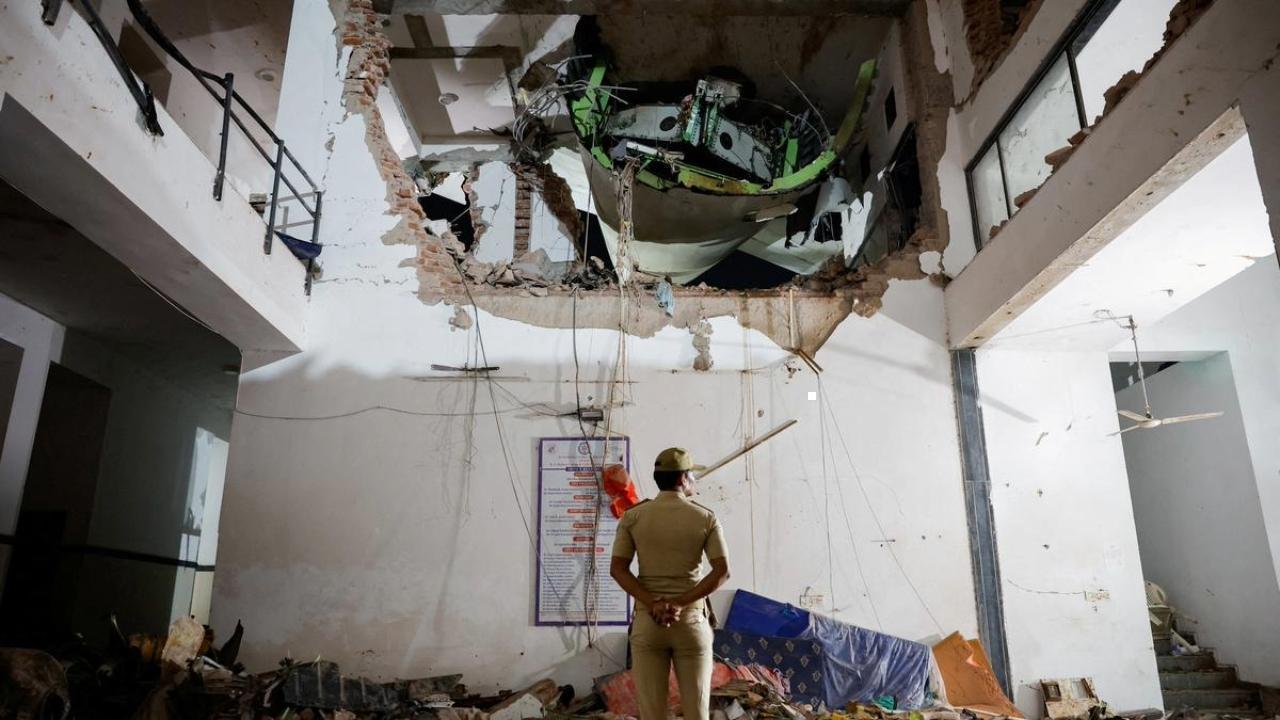
India’s Aircraft Accident Investigation Bureau (AAIB) has declined to allow a United Nations aviation expert from the International Civil Aviation Organization (ICAO) to take observer lead in the probe of the June 12 Air India Boeing 787 crash in Ahmedabad, according to sources at the civil aviation ministry . ICAO had extended the unusual offer in response to international concern over the world’s deadliest aviation disaster in a decade—which claimed around 260 lives—and the reported delays in analyzing the wreckage’s black box data.
Safety analysts have stressed that granting observer access to a neutral UN investigator is standard practice under ICAO’s Annex 13 protocols, particularly for complex or high-casualty accidents. They argue that international participation could lend credibility and oversight to the data-processing phase—which began about two weeks post-crash after the cockpit voice recorder (CVR) and flight data recorder (FDR) were transported to the AAIB lab in Delhi. Critics point out that while ICAO had formally requested observer status, India held firm to its refusal, citing adherence to domestic protocols.
The civil aviation ministry maintains that all ICAO procedures are being followed and notes that flight recorder data was downloaded from the wreckage at the AAIB’s newly inaugurated Udaan Bhawan facility. This facility, established with technical support from Hindustan Aeronautics Limited, is equipped for black box analysis without external assistance. However, there is still public uncertainty over whether final decoding and interpretation might require external labs—potentially in the U.S., with participation from the NTSB —a scenario India has not ruled out in official statements.
Adding to scrutiny, nearly two weeks after the crash, the AAIB has yet to appoint its formal lead investigator—a step analysts say is crucial under ICAO guidelines to ensure accountability and timely reporting. The appointment delays have fuelled further calls for transparency. Under Annex 13 protocols, a preliminary investigation report is expected within 30 days, making expeditious procedures more important now than ever.
India’s Ministry of Civil Aviation has defended its decision, stating that a robust domestic investigation can uphold international trust while operating independently. Still, aviation experts caution that sidelining international participation—even in observer roles—could erode accident probe credibility. They argue that this could reduce public confidence and hamper future safety collaborations.
Looking ahead, the preliminary crash report is due by mid-July. And though India remains adamant on terminating external involvement at this stage, setting the lead investigator and progressing with AAIB-led black box decoding are viewed as pivotal. How India balances national control with global oversight in this high-stakes probe could influence both aviation safety reforms and international trust going forward.










PM Modi Pays Tribute to Mahatma Gandhi, Urges People to Support Khadi
PM Modi pays tribute to Mahatma Gandhi on Gandhi Jayanti and urges citizens to support Khadi and the

Amazon Seeks to Offload $8 Billion in Nvidia Chips to Investors
Amazon plans to move $8 billion in Nvidia chips to investors, using a new financing model to strengt

Samsung Raises Galaxy S26 Prices as Memory Chip Costs Rise
Samsung raises Galaxy S26 prices in South Korea as rising memory chip costs put pressure on smartpho

Lewis Hamilton Calls Singapore Grand Prix One of F1's Toughest Races
Lewis Hamilton discusses the demanding Singapore Grand Prix and brings Plus44 and Almave to Singapor

Denmark's Pandora Opens World's Largest Jewellery Factory in Vietnam
Pandora opens its largest jewellery factory in Vietnam, expanding global production, strengthening s

Gautam Gambhir Questions Batting-Friendly Pitches After India's Record ODI Chase
Gautam Gambhir questions batting-friendly ODI pitches after India’s record chase, calling for a bett

