You have not yet added any article to your bookmarks!
Join 10k+ people to get notified about new posts, news and tips.
Do not worry we don't spam!
Post by : Saif Rahman
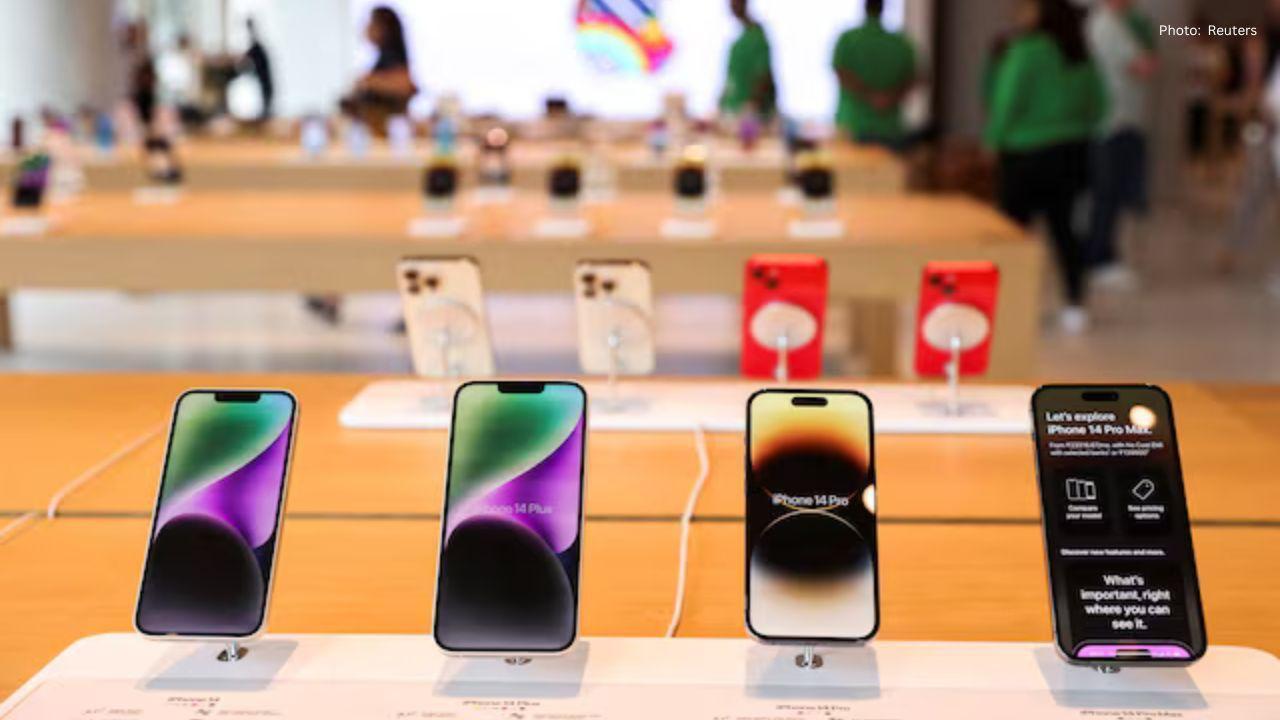
The Indian government has implemented a significant regulation for the smartphone sector, mandating that all manufacturers install a state-owned cyber safety application on every new device. This initiative aims to combat increasing occurrences of cybercrime, though it also raises important issues regarding privacy, consumer choice, and the lack of prior engagement with industry stakeholders.
This directive, issued on November 28 by the Ministry of Telecommunications, instructs companies such as Apple, Samsung, Vivo, Oppo, and Xiaomi to preload the Sanchar Saathi app on all new smartphones. A particularly contentious aspect is that users will be unable to delete or deactivate the application. Manufacturers are granted a 90-day window to comply. For devices already produced but unsold, the app must be integrated via a software update.
The change comes as India grapples with a surge in cyber fraud, mobile theft, and misuse of telecommunications through counterfeit or duplicated IMEI numbers. With over 1.2 billion telecom users, India stands as one of the largest mobile markets globally, necessitating robust security measures.
The government defends the necessity of the app to safeguard its citizens. Launched earlier this year, Sanchar Saathi assists users in locating stolen or lost phones, blocks compromised devices from telecom networks, and helps identify fraudulent mobile accounts. Official statistics indicate that the app has facilitated the recovery of over 700,000 stolen phones and has blocked millions of dubious connections.
Nevertheless, advocates for privacy and industry analysts express severe concerns regarding the new regulation. Technology lawyer Mishi Choudhary argues that the government has essentially eliminated meaningful user consent, suggesting that applications that cannot be deleted undermine user autonomy. Detractors also draw parallels to actions taken in Russia, where a similar mandate to preload a government messaging app sparked global pushback from privacy advocates.
Apple is anticipated to face significant hurdles as its policies typically prohibit the preinstallation of any government or third-party apps on devices prior to sale. The company has a storied history of resisting such demands globally, including from India. Experts speculate that Apple may seek to negotiate a middle ground, suggesting that users be encouraged rather than mandated to install the app.
According to Counterpoint, Apple holds merely about 4.5% of the Indian smartphone market, yet its policies are decidedly more stringent compared to many Android manufacturers. Samsung, Xiaomi, and other Android producers typically comply swiftly with governmental regulations, but they were nonetheless taken aback by the abrupt nature of this directive due to the absence of public discussion or industry consultation.
No responses were received from the telecom ministry, and major smartphone manufacturers have yet to provide comments. Presently, companies must discreetly navigate the 90-day enforcement period.
The government maintains that cyber threats pose a serious risk to national telecommunication security. Incidents involving counterfeit IMEI numbers, stolen devices, and fraudulent SIM cards have been exploited in scams, identity thefts, and financial crimes. Authorities assert that more potent measures are essential for public security, citing Sanchar Saathi's evident success with over 5 million downloads and millions of blocked fraudulent connections.
As discussions continue, experts argue that India needs to find a delicate balance between enhancing security and respecting personal freedoms. While tackling cybercrime is vital, they emphasize that any regulation impacting millions should be transparently discussed, safeguarding both security and digital rights.
The forthcoming weeks will reveal how companies, particularly Apple, choose to react. This decision may shape future technology policy in India and serve as a precedent for other nations observing closely.








Trump Plans First Meeting of New Peace Board in Washington This February
Former U.S. President Donald Trump is reportedly preparing to convene the inaugural session of a new

Apple’s iOS 26.3 Update Is Here — Why Millions of iPhone Users Should Install It Now
Apple has rolled out iOS 26.3 as a critical update for eligible iPhones, bringing important security

Pam Bondi’s Explosive Epstein Hearing: Four Moments That Defined the Testimony
US Attorney General Pam Bondi faced intense questioning in a House Judiciary Committee hearing that

Epic T20WC Thriller: South Africa Triumphs Over Afghanistan in Double Super Over Clash
An exhilarating account of one of the most dramatic matches in ICC Men’s T20 World Cup 2026 history,

Abhishek Sharma Hospitalised With Stomach Infection, Doubtful for India’s T20 World Cup Match Against Namibia
Indian opening batter Abhishek Sharma has been hospitalised with a stomach infection and is unlikely

Mass Shooting in British Columbia Leaves 10 Dead in One of Canada’s Deadliest Attacks
A tragic mass shooting at a high school and nearby residence in Tumbler Ridge, British Columbia, has