
You have not yet added any article to your bookmarks!
Join 10k+ people to get notified about new posts, news and tips.
Do not worry we don't spam!
Post by : Anis Farhan
In a rare and notable shift in investor behaviour in January 2026, gold and silver exchange-traded funds (ETFs) attracted higher net inflows than equity mutual funds — a development that has grabbed widespread attention in India’s personal finance and investment circles. Data from the Association of Mutual Funds in India (AMFI) showed that precious metal-linked ETFs drew significantly more capital than equity-oriented funds for the first time, signaling a recalibration of risk preferences among investors amid heightened volatility and macroeconomic uncertainties.
This record-setting trend reflects a pendulum swing away from traditional equity portfolios and towards assets perceived as safer havens. For investors, this raises a central question: what is the smartest way to allocate funds now — in gold ETFs, physical gold, other investment vehicles, or a balanced mix that includes equities? Understanding the factors driving this shift and the nuances of each investment option will help investors make more informed decisions.
In this detailed guide, we dive into how gold ETFs outperformed equity funds in January, why this matters for portfolio construction, and practical strategies investors might consider in light of evolving market dynamics.
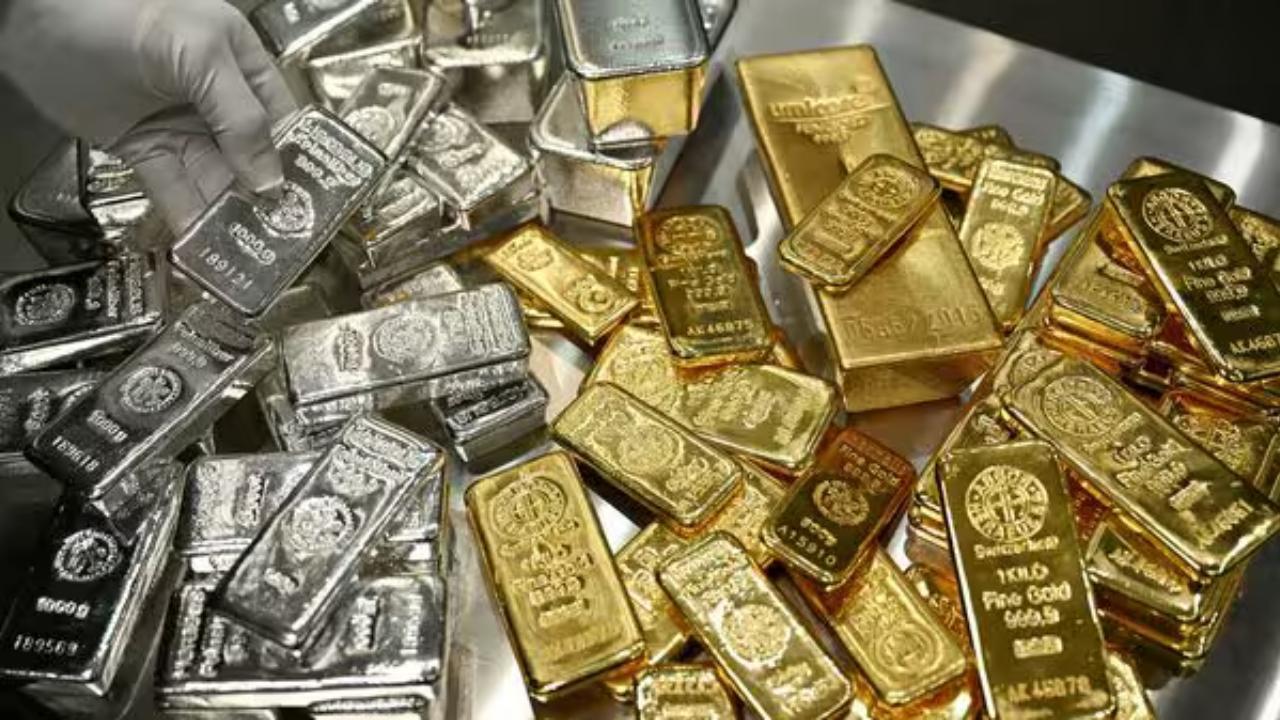
January’s data revealed that combined inflows into gold and silver ETFs crossed ₹33,500 crore, surpassing the ₹24,029 crore that flowed into equity mutual funds. Gold ETFs alone recorded net inflows of more than ₹24,039 crore, while silver ETFs attracted nearly ₹9,463 crore during the month — a sharp rise from prior months.
This marked a significant shift, especially considering that equity mutual funds historically attract the bulk of investor capital in India’s financial markets. The acceleration in metal-linked ETFs highlights a growing reconsideration of where investors want exposure amid periods of heightened uncertainty.
Several key themes help explain this rotation:
Equity markets saw increased volatility in recent months, and some benchmark indices registered declines. This context made many investors cautious, prompting them to seek assets that traditionally preserve capital in times of stress. Precious metals like gold and silver are often viewed as hedges against sharp market downturns.
Factors such as geopolitical tensions, currency fluctuations, and changing expectations around interest rates contributed to an environment where safe-haven assets like gold gained attractiveness. Reports from international markets suggest similar trends, with global ETFs seeing strong inflows as investors diversify away from riskier sectors.
As institutional and retail investors assessed their allocations after last year’s rallies in equities, many rebalanced portfolios towards more stable components. Gold ETFs — which offer regulated exposure to precious metals without the complications of physical storage — became a natural beneficiary of this reallocation.
Before exploring smart ways to invest, it’s essential to understand the different avenues through which investors can gain exposure to gold and related assets. Each has its own set of characteristics, risks and benefits.
Gold ETFs are passive funds that directly reflect the price movements of gold, offering a regulated, transparent way to invest in the metal without physically holding it. They are traded on stock exchanges and can be bought and sold like any equity security.
Key Features:
Liquidity: High — can be traded intraday.
Tracking: Typically mirrors domestic gold prices.
Costs: Low expense ratios compared to actively managed funds.
Safety: Backed by physical gold stored securely in vaults.
Gold ETFs also eliminate common drawbacks of physical gold ownership such as storage costs, security concerns, and resale hassles.
This includes jewellery, coins, and bars — the most traditional form of gold investment. Physical gold carries emotional and cultural significance in India, often woven into festivals, weddings and family wealth.
Pros:
Direct possession and cultural familiarity.
Tangible asset that you physically own.
Cons:
Lower investment efficiency due to making charges and GST on jewellery.
Storage and security costs, along with potential resale discount.
Liquidity constraints compared to ETFs.
Because of these factors, physical gold is generally better suited for personal use and sentimental investment rather than strictly financial portfolio growth.
This is a modern way to invest in precious metals through online platforms, where ownership is digitally recorded and the metals are stored in insured vaults.
Advantages:
Immediate liquidity: Buy or sell instantly on digital platforms.
Small entry amount: Ideal for phased or systematic investment.
No physical handling: Eliminates storage and security issues.
Risks:
Unregulated by authorities, leading to potential counterparty or platform risk.
Digital formats work well for investors seeking easy entry and exit but may not provide the same institutional safeguards as regulated ETFs.
Sovereign Gold Bonds are issued by the government and offer exposure to gold along with an annual interest component. In India, these bonds have historically provided tax benefits and yield potential, alongside price appreciation of gold itself.
Key Benefits:
Interest income in addition to price gains.
Tax advantages on long-term holdings.
No storage required.
SGBs are designed for long-term investors focused on both return and income, though they may be less liquid compared to ETFs.
Now that you understand the key options, how should investors think about allocating capital? The answer isn’t one-size-fits-all — it depends on individual goals, risk tolerance and time horizon. Here’s a framework to consider:
In light of the recent trend, investors should not view gold as a replacement for equities, but rather as an essential diversification tool. A balanced portfolio can combine equity exposure for growth with gold or precious metal ETFs for risk mitigation.
Example Allocation:
Equities: 60%
Gold/Precious Metals (ETFs or SGBs): 15–20%
Debt or Cash Equivalents: 20–25%
This mix enables growth potential while offering a buffer against volatility.
For short- to medium-term tactical moves — especially amid market uncertainty — gold ETFs provide the fastest way to reposition capital without liquidity constraints. Investors comfortable with market trading systems can quickly adjust positions based on evolving economic signals.
Investors with long-term horizons who seek stable returns alongside interest income should consider SGBs. These are particularly suitable for retirement planning or as part of a conservative portfolio bucket.
While January’s data suggests strong interest in gold, timing any single asset purely on recent performance can be risky. Instead, disciplined allocation — such as systematic investing across asset classes — can help smooth out volatility and improve long-term outcomes.
January 2026 marked a watershed moment in India’s investment landscape, with gold and silver ETFs outpacing traditional equity mutual funds in net inflows for the first time. This shift underscores a broader reassessment of risk amid market volatility and macro uncertainty.
Investors now face important decisions about how best to allocate capital across equities, gold-linked ETFs, digital metal platforms and sovereign gold bonds. The most prudent strategy involves diversification, disciplined allocation and alignment with personal financial goals. Gold — in its various investment forms — has reaffirmed its role as a portfolio stabiliser, but it should complement, not replace, growth-oriented assets like equities.
By understanding the nuances of each investment vehicle and adopting a holistic approach, investors can better navigate the complexities of today’s financial markets while positioning their portfolios for both stability and growth.
This article is intended for informational purposes only and does not constitute financial or investment advice. Readers should conduct their own research or consult with a qualified financial advisor before making investment decisions.










PM Modi Pays Tribute to Mahatma Gandhi, Urges People to Support Khadi
PM Modi pays tribute to Mahatma Gandhi on Gandhi Jayanti and urges citizens to support Khadi and the

Amazon Seeks to Offload $8 Billion in Nvidia Chips to Investors
Amazon plans to move $8 billion in Nvidia chips to investors, using a new financing model to strengt

Samsung Raises Galaxy S26 Prices as Memory Chip Costs Rise
Samsung raises Galaxy S26 prices in South Korea as rising memory chip costs put pressure on smartpho

Lewis Hamilton Calls Singapore Grand Prix One of F1's Toughest Races
Lewis Hamilton discusses the demanding Singapore Grand Prix and brings Plus44 and Almave to Singapor

Denmark's Pandora Opens World's Largest Jewellery Factory in Vietnam
Pandora opens its largest jewellery factory in Vietnam, expanding global production, strengthening s

Gautam Gambhir Questions Batting-Friendly Pitches After India's Record ODI Chase
Gautam Gambhir questions batting-friendly ODI pitches after India’s record chase, calling for a bett

