
You have not yet added any article to your bookmarks!
Join 10k+ people to get notified about new posts, news and tips.
Do not worry we don't spam!
Post by : Anis Farhan
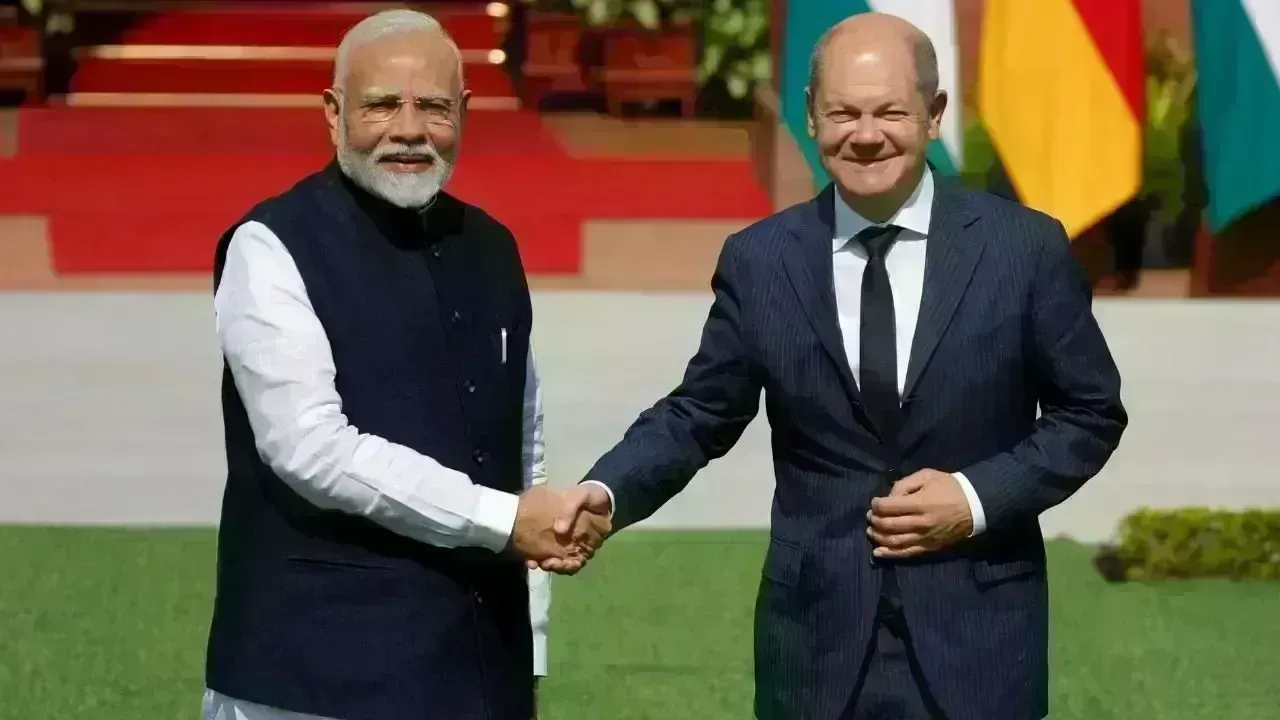
India and Germany are poised for a transformative chapter in their bilateral relationship as German Chancellor Friedrich Merz prepares for his official visit to New Delhi in 2026. The announcement has already generated global diplomatic interest, given the timing of shifting geopolitical alignments, evolving trade partnerships and the increasing strategic significance of both countries in shaping the future of global governance.
The 2026 visit is expected to be more than a ceremonial engagement. It reflects a maturing partnership based on shared values, economic collaboration, technological advancement, and mutual strategic interests. With India emerging as one of the fastest-growing major economies and Germany reaffirming its role as Europe’s economic engine, the upcoming diplomatic interaction is likely to influence key domains ranging from defence cooperation to clean energy transitions.
Below is a detailed analysis of what this visit means for both nations, how it aligns with current global developments, and why the India–Germany partnership is becoming increasingly essential for regional and international stability.
The world is undergoing dramatic geopolitical transitions, with Europe reassessing its security strategies, Asia emerging as the center of economic gravity, and global democracies strengthening cooperative frameworks. In this backdrop, Chancellor Merz’s 2026 visit holds symbolic and practical weight.
India and Germany have maintained strong bilateral ties for decades, yet current global developments have elevated the relationship to a new plane. As Germany diversifies its economic partnerships beyond Europe and China, India becomes a natural ally—demographically strong, politically stable, technologically ambitious and economically dynamic.
Both nations are expanding technological and industrial cooperation.
Global supply chain restructuring is accelerating cross-border partnerships.
Energy transition goals require joint R&D, innovation and investment.
Security dynamics in Europe and the Indo-Pacific demand deeper collaboration.
The upcoming visit is expected to cement long-term frameworks addressing all of these transformational areas.
Germany is already one of India’s largest trading partners in the European Union, with trade volumes increasing steadily in recent years. The upcoming visit aims to push this growth further by leveraging Germany’s industrial strength and India’s expanding consumer and manufacturing base.
Current economic engagements include sectors such as:
Automobiles and mobility solutions
Pharmaceuticals
Engineering and manufacturing
Information technology and software services
Renewable energy and green technologies
The potential for collaboration remains significant, especially as both countries pivot toward sustainable growth and digital innovation.
Chancellor Merz is expected to focus on strengthening bilateral investments. Germany’s advanced manufacturing expertise aligns smoothly with India’s focus on industrial modernization, making the partnership ideal for:
advanced machinery manufacturing
semiconductors and electronics
smart mobility
robotics and automation
green hydrogen production
German companies have shown commitment to expanding their footprint in India, attracted by its stable policy environment and skilled workforce.
Rising domestic demand
Manufacturing incentives and reforms
Infrastructure upgrades
Predictable taxation and policy stability
The Chancellor’s visit could also result in new joint-venture announcements across emerging industries.
India’s fast-growing digital economy and Germany’s engineering prowess create fertile ground for technological cooperation. Discussions during the 2026 visit are likely to revolve around:
AI-driven industrial automation
machine learning applications in health and logistics
cybersecurity frameworks
defence technologies
space cooperation
Both India and Germany have aggressive carbon-neutrality goals. As a result, the upcoming diplomatic engagement is poised to accelerate cooperation on clean technologies.
green hydrogen
climate-resilient infrastructure
electric mobility and charging ecosystems
renewable energy storage solutions
carbon capture and sustainable materials
Germany’s leadership in clean technology and India’s growing renewable infrastructure form a powerful synergy that the 2026 visit aims to institutionalize.
With security challenges intensifying across both Europe and Asia, defence collaboration has become a core pillar of India–Germany relations. Germany’s pursuit of enhanced strategic autonomy and India’s efforts to modernize its defence capabilities create opportunities for expanded defence engagements.
collaborative defence manufacturing
technology transfers
naval cooperation in the Indo-Pacific
expanding joint military training programs
intelligence-sharing mechanisms related to cyber and hybrid threats
India’s prominence in the Indo-Pacific region aligns with Germany’s commitment to maintaining a free, open and rules-based order in the maritime domain.
Indo-Pacific tensions impacting trade and security
NATO reforms influencing Germany’s defence posture
the need to protect global supply chains
rising cyber threats requiring coordinated response frameworks
The visit is expected to elevate strategic discussions to a more structured and long-term format.
Germany remains one of the most preferred destinations for Indian students pursuing higher education, particularly in engineering, science, medicine and business studies. The upcoming visit is likely to amplify existing academic relations.
joint research programs
student exchange schemes
scholarships for STEM fields
dual-degree and collaborative curriculum programs
AI and biotech innovation labs
Both countries benefit from intellectual exchange, with German institutions gaining from India’s vast talent pool and Indian scholars contributing to cutting-edge European research.
Beyond politics and economics, people-to-people ties are a cornerstone of long-lasting bilateral relationships. Cultural cooperation, tourism promotion, and cross-community engagements will also feature in the diplomatic discussions.
joint art and heritage exhibitions
Indo-German music and film festivals
youth exchange programs
tourism collaborations
language training partnerships
As both nations emphasize cultural diplomacy, these initiatives play a key role in building mutual understanding.
The world is witnessing a realignment of strategic partnerships. India’s rise as an economic and geopolitical power complements Germany’s role in Europe’s leadership structures. Together, the two nations can influence discussions on global governance, especially as multilateral institutions adapt to modern challenges.
climate change mitigation
fair-trade frameworks
sustainable development models
global peacekeeping
digital governance
Their collaboration is not merely bilateral—it contributes to shaping global norms and strengthening democratic partnerships across continents.
Germany has increasingly acknowledged the importance of the Indo-Pacific as a crucial region for trade and security. India’s geographical and strategic position makes it indispensable for any long-term European engagement in the Indo-Pacific.
maritime security
supply chain resilience
ensuring free trade routes
reducing dependence on unstable geopolitical regions
Chancellor Merz’s visit symbolizes Germany’s intention to deepen its Indo-Pacific footprint with India as a central partner.
The economic outlook for 2026 appears promising for both India and Germany. The upcoming visit will likely lead to new investments, agreements, and cross-sector collaborations that shape the next decade of relations.
rising consumption in India
industrial modernization in Germany
global shifts favoring trusted supply partners
rapid technological convergence
Both nations stand to gain from a collaborative growth strategy.
Chancellor Friedrich Merz’s 2026 visit to India is more than a diplomatic milestone—it is a strategic convergence of two influential democracies preparing to navigate an increasingly complex global future. From industrial partnerships and digital innovation to defence cooperation and cultural diplomacy, the visit promises a multi-dimensional strengthening of bilateral ties.
As India positions itself as a global growth engine and Germany recalibrates its global engagements, their relationship is entering a defining phase. The 2026 visit could pave the way for a deeper, more resilient partnership capable of addressing not only national priorities but also global challenges.










PM Modi Pays Tribute to Mahatma Gandhi, Urges People to Support Khadi
PM Modi pays tribute to Mahatma Gandhi on Gandhi Jayanti and urges citizens to support Khadi and the

Amazon Seeks to Offload $8 Billion in Nvidia Chips to Investors
Amazon plans to move $8 billion in Nvidia chips to investors, using a new financing model to strengt

Samsung Raises Galaxy S26 Prices as Memory Chip Costs Rise
Samsung raises Galaxy S26 prices in South Korea as rising memory chip costs put pressure on smartpho

Lewis Hamilton Calls Singapore Grand Prix One of F1's Toughest Races
Lewis Hamilton discusses the demanding Singapore Grand Prix and brings Plus44 and Almave to Singapor

Denmark's Pandora Opens World's Largest Jewellery Factory in Vietnam
Pandora opens its largest jewellery factory in Vietnam, expanding global production, strengthening s

Gautam Gambhir Questions Batting-Friendly Pitches After India's Record ODI Chase
Gautam Gambhir questions batting-friendly ODI pitches after India’s record chase, calling for a bett

