You have not yet added any article to your bookmarks!
Join 10k+ people to get notified about new posts, news and tips.
Do not worry we don't spam!
Post by : Meena Ariff
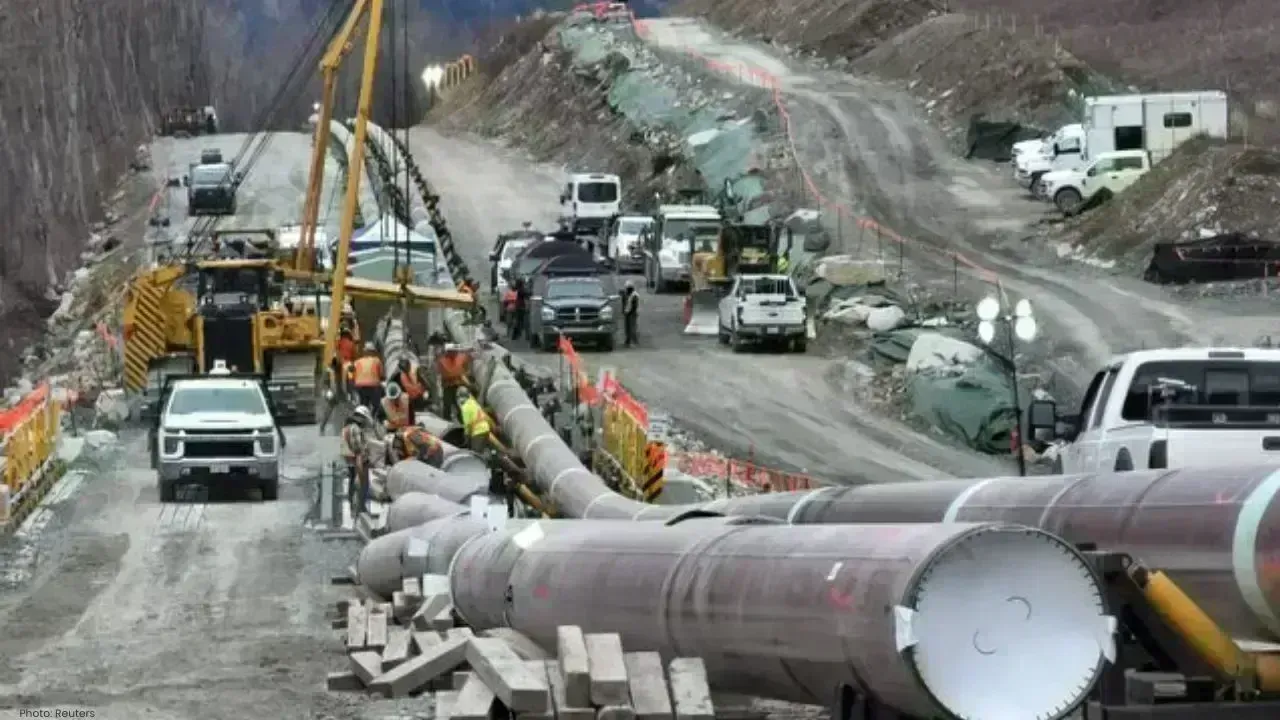
Alberta's provincial government and the federal authorities are laying the groundwork for a proposed pipeline that would transport oil from Alberta to the coast of British Columbia. However, Indigenous communities in Alberta express differing views on the plan, even though one group has been designated a significant partner.
The Alberta Indigenous Opportunities Corporation (AIOC) has been acknowledged as a key collaborator in this initiative. AIOC’s Channa Martineau stated that while this represents an important early step, genuine partnership requires involvement from Indigenous communities at the outset instead of after plans are largely decided upon.
“Initial discussions can be challenging,” she remarked, “but they are preferable to addressing problems later on.”
AIOC has already facilitated approximately $745 million in loan guarantees for projects involving 43 First Nations.
Nonetheless, the pipeline's advancement hinges on obtaining the consent of affected First Nations in both Alberta and British Columbia, with some leaders expressing frustration over not being included early in the discussions.
The Confederacy of Treaty 6 First Nations has expressed a desire to collaborate with both Ottawa and Alberta on economic opportunities but voiced disappointment in being excluded from the decision-making process. A significant portion of the proposed pipeline route intersects with Treaty 6 lands.
According to the plan, the pipeline is expected to transport around 300,000 to 400,000 barrels of bitumen daily to the West Coast for export to Asia.
The initiative might necessitate modifications to the Oil Tanker Moratorium Act, which currently prohibits large tanker traffic in a portion of B.C.’s northern coastline due to environmental concerns.
Environmental apprehensions remain prominent. Rick Steiner, who was involved in the 1989 Exxon Valdez oil spill response, cautioned that regardless of how stringent safety regulations are, the risk of significant spills persists with tanker traffic.
For tanker operations related to the new pipeline to commence, the federal government would need to either lift the tanker ban or modify its restrictions. However, B.C. Coastal First Nations have asserted that they will oppose any exceptions.
Alberta’s Minister of Indigenous Relations, Rajan Sawhney, emphasized her commitment to fostering transparent dialogues with all Indigenous communities. She recently reported a constructive meeting with Chief Kelsey Jacko of Cold Lake First Nation.
Martineau emphasized the necessity for both energy corporations and Indigenous groups to reevaluate their perceptions of each other, insisting that outdated stereotypes continue to complicate their interactions.





US Security Officials Drive S. Jaishankar 416 Miles During Shutdown
US security drove External Affairs Minister S. Jaishankar 416 miles during a government shutdown to

US Pledges $45M to Strengthen Fragile Thailand-Cambodia Truce
The US will provide $45 million in aid to help stabilize the fragile truce between Thailand and Camb

U.S.-India Trade Deal Falters as Modi Skips Trump Call Says Lutnick
U.S. Commerce Secretary Lutnick reveals India wasn’t ready for a trade deal after PM Modi avoided a

Boosting Northern Luzon Economy: Marcos Jr. Inaugurates Modern Camalaniugan Bridge
President Marcos Jr. opens the ₱2.3B Camalaniugan Bridge, enhancing connectivity, trade, and economi

Trump warns China on Taiwan, says any change would upset him
Donald Trump says Taiwan’s future depends on Xi Jinping but warns he would be unhappy if China tries

Gold Prices Slide as Strong Dollar and Futures Selling Weigh
Gold prices dipped as investors adjusted positions ahead of a commodity index reshuffle, while a str