
You have not yet added any article to your bookmarks!
Join 10k+ people to get notified about new posts, news and tips.
Do not worry we don't spam!
Post by : Saif Rahman
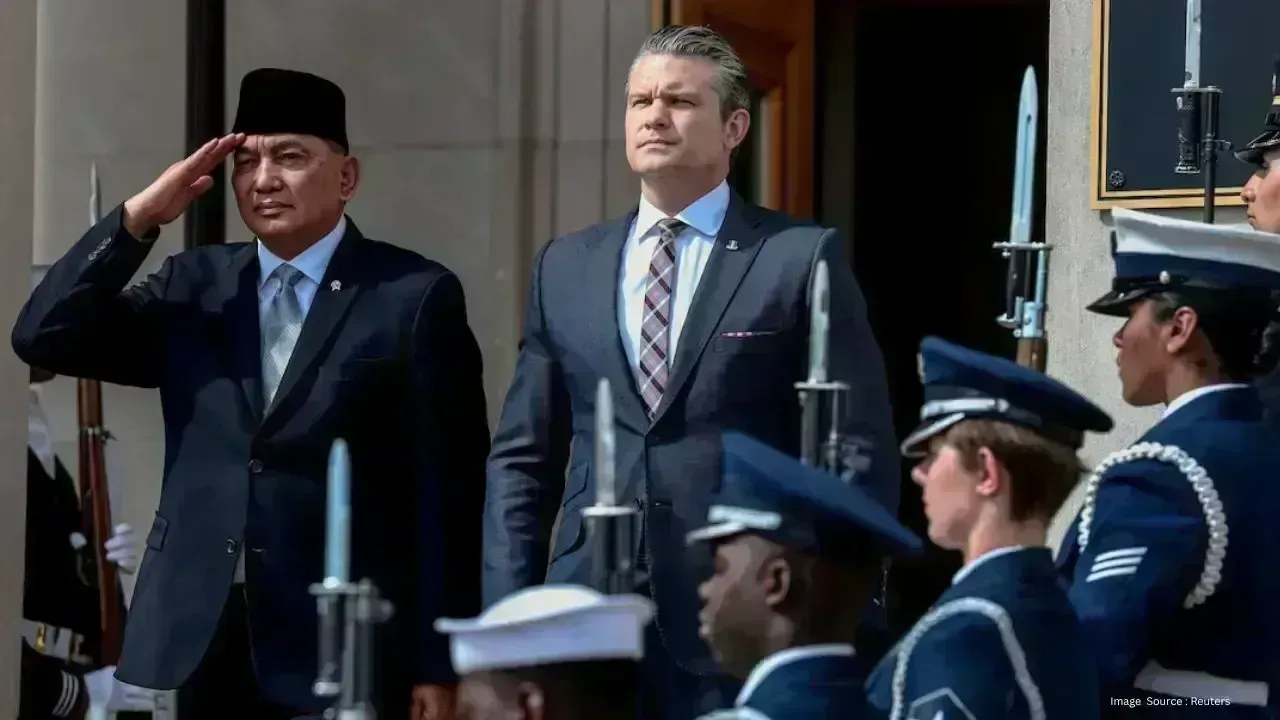
Indonesia is expressing significant apprehension regarding a proposal from the United States that would grant its military aircraft expanded access to Indonesian airspace. This matter has ignited a discussion about national sovereignty, regional stability, and the nation's enduring stance on balanced global relations.
Reports indicate that the Indonesian foreign ministry dispatched an urgent and confidential communication to its defense ministry, cautioning against any haste in considering the proposal. If endorsed, this plan would provide the United States with what is termed a "blanket" permission for overflight across Indonesian territory.
Officials articulated concerns that such an agreement could entangle Indonesia in ongoing regional disputes, particularly in the already tense South China Sea. This area is characterized by territorial disagreements involving multiple countries and increasing presence from major global powers.
Indonesia's warning symbolizes its cautious approach to foreign relations. Traditionally, the country has embraced a non-aligned strategy, striving to cultivate amicable relations with all significant powers without overt alignment. This approach, often described as "free and active," enables Indonesia to safeguard its national interests while maintaining independence.
The proposed arrangement emerges amid growing defense relations between Indonesia and the United States, with both nations enhancing collaboration through joint military exercises, training programs, and strategic dialogues. Nonetheless, this new proposal raises alarms regarding the potential compromise of Indonesia's neutrality.
A primary concern raised by the foreign ministry pertains to national sovereignty. Granting foreign military aircraft extensive access to its airspace could suggest a closer alignment with one geopolitical power. Officials have cautioned that this could jeopardize Indonesia's relationships with other crucial partners, including China.
Security risks are another major concern. The ministry highlighted that such an agreement may render Indonesia a target in times of regional conflict. In the event of heightened tensions in the South China Sea, countries embroiled in disputes might perceive Indonesia as part of the conflict, despite its intent to remain neutral.
The situation is complicated further by historical incidents. Reports indicate that US military aircraft have previously conducted surveillance operations interpreted as violations of Indonesian airspace, raising concerns regarding the intended use of any granted overflight permissions.
Despite these apprehensions, Indonesia's defense ministry has confirmed that the proposal is still under assessment. Officials stress that no definitive agreement has been finalized, and any subsequent decisions will uphold national laws and sovereignty.
This cautious stance underscores Indonesia's strategic positioning within the region. As an archipelago of over 17,000 islands, it occupies a pivotal location along major international shipping routes. The implications of such decisions are far-reaching, impacting both trade and military navigation.
Analysts suggest that Indonesia is attempting to balance its expanding partnership with the United States while simultaneously preserving stable relations with China and other regional stakeholders. This quest for equilibrium is challenging, particularly in the face of escalating global tensions.
The scenario also showcases a broader issue within international relations, where smaller and mid-sized nations are often caught in the crossfire as major powers vie for influence. In these situations, choices regarding defense collaborations could carry significant long-term repercussions for both security and diplomatic relations.
In summary, Indonesia's caution regarding the US military overflight proposal reflects its dedication to safeguarding sovereignty and maintaining a balanced foreign policy. While fostering cooperation with global forces is essential, Indonesia is judiciously focused on avoiding actions that may intensify regional tensions or compromise its independence. As deliberations progress, the developments surrounding this proposal will be scrutinized throughout the Indo-Pacific region.










PM Modi Pays Tribute to Mahatma Gandhi, Urges People to Support Khadi
PM Modi pays tribute to Mahatma Gandhi on Gandhi Jayanti and urges citizens to support Khadi and the

Amazon Seeks to Offload $8 Billion in Nvidia Chips to Investors
Amazon plans to move $8 billion in Nvidia chips to investors, using a new financing model to strengt

Samsung Raises Galaxy S26 Prices as Memory Chip Costs Rise
Samsung raises Galaxy S26 prices in South Korea as rising memory chip costs put pressure on smartpho

Lewis Hamilton Calls Singapore Grand Prix One of F1's Toughest Races
Lewis Hamilton discusses the demanding Singapore Grand Prix and brings Plus44 and Almave to Singapor

Denmark's Pandora Opens World's Largest Jewellery Factory in Vietnam
Pandora opens its largest jewellery factory in Vietnam, expanding global production, strengthening s

Gautam Gambhir Questions Batting-Friendly Pitches After India's Record ODI Chase
Gautam Gambhir questions batting-friendly ODI pitches after India’s record chase, calling for a bett

