
You have not yet added any article to your bookmarks!
Join 10k+ people to get notified about new posts, news and tips.
Do not worry we don't spam!
Post by : Anis Farhan
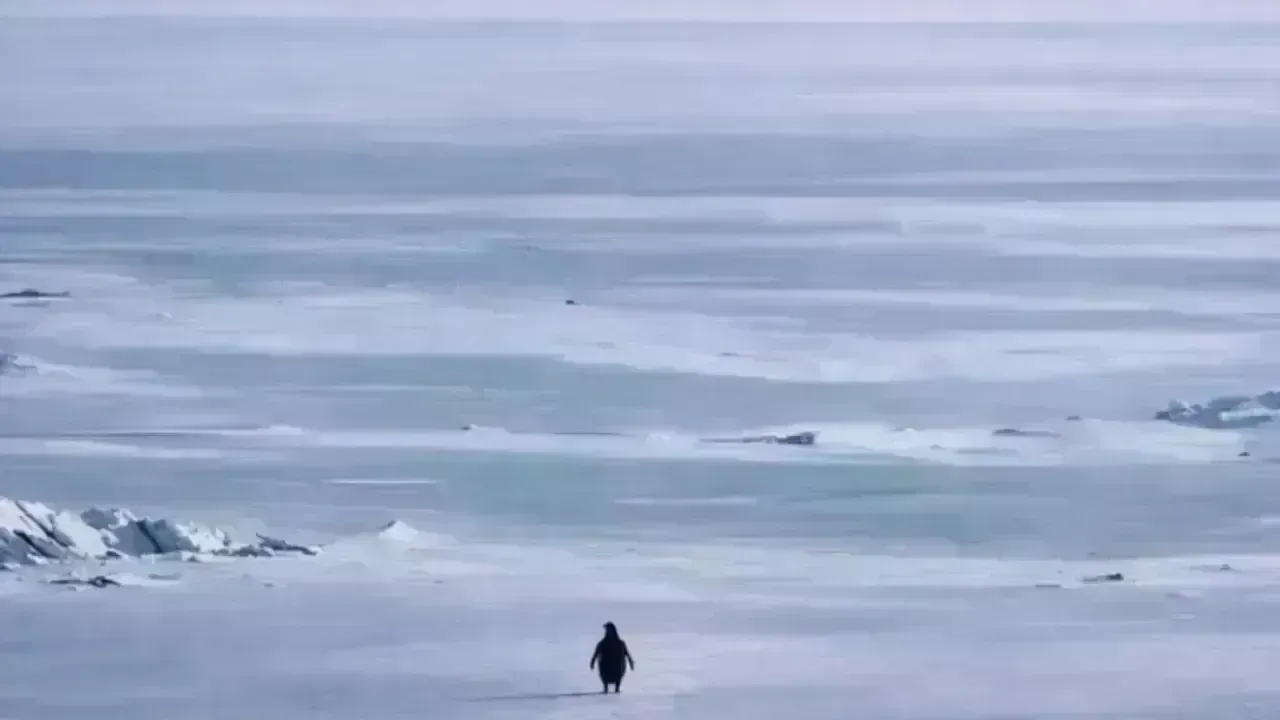
The internet has a long history of turning ordinary moments into extraordinary cultural symbols, but few viral trends have felt as strangely profound as the “Nihilist Penguin” phenomenon of 2026. A short video clip showing a lone penguin walking away from its colony and toward a distant, icy mountain range sparked an avalanche of reactions across social media platforms. What might have otherwise been dismissed as an obscure wildlife moment was instead elevated into a symbol of existential fatigue, quiet rebellion, and emotional detachment. In an online world constantly searching for meaning, this solitary march struck a nerve.
What made the video remarkable was not dramatic action or visual spectacle, but its simplicity. The penguin did not rush, panic, or hesitate. It simply walked forward, alone, indifferent to the expectations of its group. For millions of viewers, that image felt uncomfortably familiar. The meme quickly transcended humor, becoming a cultural shorthand for modern disillusionment and introspection. To understand why this happened, it is necessary to explore the origins of the clip, the psychology of internet virality, and the broader social context that allowed a penguin’s quiet walk to become a global conversation.
The footage that later became known as the “Nihilist Penguin” did not originate on social media. It came from a nature documentary filmed years earlier, capturing life in one of the harshest environments on Earth. Among scenes of collective survival and instinctive cooperation, the camera briefly focused on a single penguin that diverged from the group’s expected path. Instead of heading toward the ocean with the others, it turned inland and continued walking toward barren, frozen terrain.
At the time of filming, the moment carried no symbolic weight beyond scientific curiosity. Wildlife documentaries frequently capture unusual animal behavior, and this was one such instance. The scene lingered quietly, offering no narration that explained or dramatized the penguin’s choice. That lack of explanation would later become central to its viral appeal. When the clip resurfaced online years later, stripped of its original context, it invited interpretation rather than instruction.
The resurgence of the penguin video in 2026 was not accidental. Social media algorithms tend to amplify content that evokes strong emotional reactions, and this clip did exactly that. Initially shared as a curiosity, it was quickly reframed through captions and commentary that connected the penguin’s solitary walk to human experiences of burnout, alienation, and existential questioning.
The timing also mattered. The global digital audience in 2026 was navigating economic uncertainty, cultural polarization, and a pervasive sense of fatigue driven by constant connectivity. In that environment, the image of a penguin quietly abandoning the collective resonated deeply. It felt like a visual metaphor for stepping away from overwhelming expectations, even if the destination was unclear.
As the clip spread, internet users began attaching captions that transformed it into a meme. The penguin was no longer just an animal; it became a character. Phrases implying emotional detachment, rejection of meaning, or silent protest accompanied the video. The term “Nihilist Penguin” emerged organically, capturing the idea that the penguin represented a being that had simply opted out of purpose.
This transformation is a hallmark of meme culture. A single image or clip becomes a vessel for collective projection. Viewers imposed their own narratives onto the penguin’s actions, seeing in it a reflection of their own desire to disengage, to walk away, or to stop pretending that everything has a clear reason. Humor played a role, but so did sincerity. The meme oscillated between irony and genuine emotional expression.
Humans have always projected meaning onto animals, but social media accelerates and amplifies this tendency. The “Nihilist Penguin” arrived at a moment when many people felt emotionally drained and intellectually overstimulated. The penguin’s silent, steady movement felt like an antidote to noise. It did not explain itself. It did not justify its choice. It simply moved forward.
For some, the meme was funny because it exaggerated feelings of apathy. For others, it was comforting, offering validation for emotions they struggled to articulate. The penguin became a safe symbol through which people could express dissatisfaction without directly confronting it. In this way, the meme functioned as a collective emotional release valve.
Once the meme gained traction, remix culture took over. Users paired the clip with melancholic music, philosophical quotes, or stark minimalist captions. Others leaned into absurdity, using the penguin to mock overthinking itself. Each reinterpretation added a new layer of meaning, ensuring that the meme remained fresh even as it saturated feeds.
This adaptability is one reason the “Nihilist Penguin” endured longer than many viral trends. It could be sincere or sarcastic, dark or lighthearted. It spoke to different audiences in different ways, allowing people to see what they wanted to see. In doing so, it became less about the original footage and more about the shared act of interpretation.
While the internet embraced metaphor, scientists offered a more grounded explanation. Penguins, like all animals, can occasionally exhibit atypical behavior. Disorientation, illness, neurological issues, or environmental factors can cause an individual to stray from expected patterns. The penguin’s inland walk, while unusual, was not evidence of conscious rebellion or despair.
From a biological perspective, the penguin was not making a statement. It was responding to stimuli in a way that diverged from the norm. This scientific explanation, however, did little to dampen the meme’s popularity. In fact, the contrast between reality and interpretation highlighted a central truth about viral culture: accuracy is often secondary to resonance.
The persistence of the “Nihilist Penguin” meme despite scientific clarification reveals something important about how people engage with online content. The meme was never about factual accuracy. It was about emotional truth. Even after experts explained that the penguin’s behavior was not symbolic, users continued to share and reinterpret the clip.
This gap between meaning and reality is not unique to this trend. Memes often thrive precisely because they detach from their original context. The penguin’s walk became a story people needed, regardless of whether it was true in a literal sense. In that way, the meme functioned more like modern folklore than factual reporting.
At its core, the “Nihilist Penguin” phenomenon reflects a widespread sense of quiet exhaustion. Unlike louder forms of protest or expression, this meme was subdued. It did not shout or demand attention. It simply existed, moving forward without explanation. That subtlety resonated with people who felt overwhelmed by constant demands to perform, explain, and justify their choices.
The penguin’s walk suggested an alternative response to chaos: disengagement. Not dramatic escape, but calm withdrawal. In a culture that often glorifies hustle and constant productivity, this image felt radical in its simplicity.
Many viral trends burn brightly and fade quickly, but the “Nihilist Penguin” left a more lasting impression. Its endurance lies in its ambiguity. Because it does not dictate a single meaning, it remains relevant across different emotional contexts. People can return to it when they feel lost, amused, or reflective.
The meme also stands as an example of how digital culture increasingly blurs the line between humor and philosophy. A short clip of an animal became a shared language for discussing meaning, or the absence of it. That kind of cultural impact is rare, and it explains why the penguin’s walk continues to be referenced even after the initial viral surge.
The “Nihilist Penguin” did not intend to become a symbol, yet it did. Through the collective imagination of the internet, a simple moment of animal behavior was transformed into a powerful reflection of human emotion. The meme’s success lies not in what the penguin actually did, but in what people saw in it. It became a mirror, showing viewers their own thoughts, doubts, and quiet desires to step away from the noise.
In the end, the penguin’s march means everything and nothing at once. Scientifically, it was just a penguin walking. Culturally, it was a moment of shared recognition. That duality is what made the “Nihilist Penguin” one of the most memorable viral phenomena of 2026, reminding us that meaning is often something we create, not something we find.
Disclaimer: This article is intended for informational and cultural analysis purposes only. Interpretations of viral trends and animal behavior are based on publicly available information and expert commentary at the time of writing. Meanings attributed to internet memes are subjective and may evolve over time.








Google Signs 3.6-GW Power Deal With Constellation Energy in US
Google signs a 3.6-GW power deal with Constellation Energy, including nuclear power upgrades to supp

Harmanpreet Kaur Steps Down as India Captain Across All Formats
Harmanpreet Kaur steps down as India captain across all formats after a remarkable leadership journe

Michael Bracewell Chooses Casual Contract, Targets BBL Opportunity
Michael Bracewell moves to a casual contract as he eyes a BBL opportunity while remaining available

Tuchel Says Alex Scott Can Challenge Declan Rice for England Midfield Spot
Thomas Tuchel says Alex Scott can challenge Declan Rice for an England midfield place after his impr

Air Quality Turns Unhealthy in Central and Western Singapore Amid Haze
Singapore haze pushes PSI above 100 in central and western areas as smoke from regional hotspots rai

PM Modi Pays Tribute to Mahatma Gandhi, Urges People to Support Khadi
PM Modi pays tribute to Mahatma Gandhi on Gandhi Jayanti and urges citizens to support Khadi and the

