
You have not yet added any article to your bookmarks!
Join 10k+ people to get notified about new posts, news and tips.
Do not worry we don't spam!
Post by : Anis Farhan
Photo: Reuters
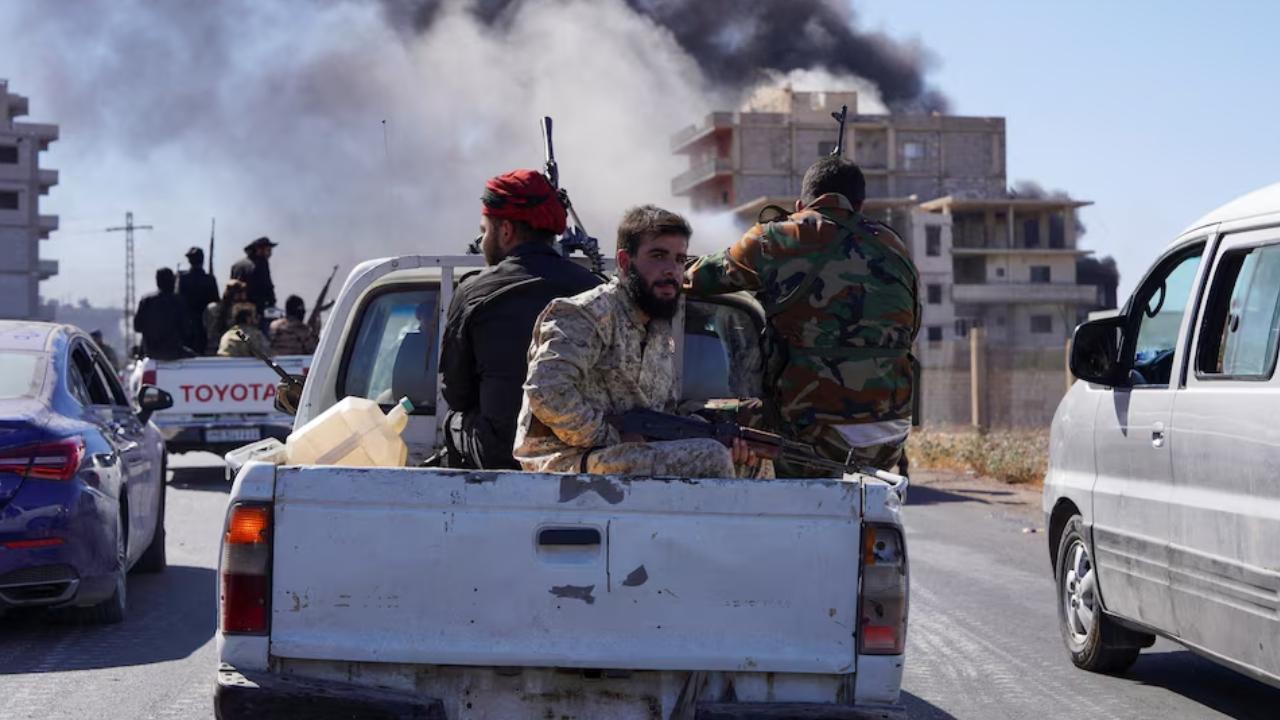
Israel conducted renewed airstrikes yesterday targeting Syrian government forces in southwestern Syria near the Druze-majority city of Suwayda. The Israeli military justified the operation by stating its intention was to safeguard Druze civilians and prevent Syrian military buildup in the area. Syrian state media confirmed retaliatory fire but reported no immediate civilian casualties.
The military struck multiple strategic positions, including artillery outposts and logistics hubs. Official statements from the Israeli Defense Forces indicate this operation is part of a broader campaign to curb Iranian influence and the presence of Hezbollah-linked units near Israel’s borders. The IDF emphasized this escalation reflects a shift in its approach to protecting allied minority groups, particularly the Druze community.
The Syrian Druze, an ethno-religious minority, inhabit a region historically marked by strained relations with Damascus. Israel's pledge to defend them symbolizes an increasingly sect-by-sect Israeli strategy in Syria—distinct from its broader anti-Hezbollah agenda.
Meanwhile, exchanges of airstrikes between Israel and Iran have intensified over the past month, following Iran’s direct missile and drone attacks on Israel. Iran reportedly launched over 300 drones and ballistic missiles using bases in Syria, Lebanon, and Yemen, with Israel intercepting the majority.
In mid-April, Iran’s assault struck an Israeli airbase in southern Israel, prompting retaliatory Israeli air strikes on Iranian infrastructure inside Syria. These bilateral tit-for-tats reflect a heightened threshold in their escalating conflict.
Houthi rebels based in Yemen have further complicated the security landscape by targeting commercial shipping in the Red Sea and Bab-el-Mandeb Strait, declaring their actions will continue until Israeli offensives in Gaza cease. These repeated strikes disrupted trade, pushing shipping firms to reroute vessels around Africa’s Cape of Good Hope—driving up freight costs.
In response, the U.S. Navy launched aerial and naval strikes against Houthi positions in Yemen in March, aiming to restore Red Sea shipping safety. Western-backed ceasefire negotiations mediated by Oman sought to reduce these maritime risks; however, Houthi groups clarified that the truce did not extend to operations against Israel.
These unfolding events are testing the resilience of regional supply chains, drawing global attention. India, which increasingly bypassed Suez via the India–Middle East–Europe Economic Corridor (IMEC), may still feel ripple effects. While IMEC offers some buffer against Red Sea disruptions, political volatility—from Iran–Israel escalation to Houthi maritime threats—could still impact transit frequencies and costs.
Domestically, India’s Ministry of External Affairs flagged the need to reassess energy and trade risk frameworks in light of mounting Middle East instability. Despite limited immediate impact, analysts warned that any escalation could disrupt trade routes, drive up oil prices, and threaten energy supply security. The Global Trade Research Initiative recommended India develop contingency plans and diversify energy partnerships beyond the Gulf.
Reports from CRISIL reveal that while Indian businesses have so far managed to continue MENA-bound shipments with minimal disruption, prolonged conflict could strain logistics and raise insurance premiums. They urged vigilance and the readiness to shift trade routes if required.
Looking ahead, the international community is watching whether Israel’s strikes in Druze-majority Suwayda mark a new strategic pattern—targeting sectarian enclaves—or signal deeper alignment with regional minority groups. Iran's sustained cross-border aerial assaults suggest its escalation calculus has entered a new phase, beyond proxy conflicts. Meanwhile, Houthi actions in the Red Sea continue to threaten vital maritime lanes, tying economic and humanitarian stakes together.
The evolving Middle East tensions demand swift response from global trade partners—especially Asia—where energy reliance and trade route stability are central to economic resilience. India’s parallel push through IMEC may provide one safeguard, but broader risk diversification and diplomatic coordination remain crucial.










PM Modi Pays Tribute to Mahatma Gandhi, Urges People to Support Khadi
PM Modi pays tribute to Mahatma Gandhi on Gandhi Jayanti and urges citizens to support Khadi and the

Amazon Seeks to Offload $8 Billion in Nvidia Chips to Investors
Amazon plans to move $8 billion in Nvidia chips to investors, using a new financing model to strengt

Samsung Raises Galaxy S26 Prices as Memory Chip Costs Rise
Samsung raises Galaxy S26 prices in South Korea as rising memory chip costs put pressure on smartpho

Lewis Hamilton Calls Singapore Grand Prix One of F1's Toughest Races
Lewis Hamilton discusses the demanding Singapore Grand Prix and brings Plus44 and Almave to Singapor

Denmark's Pandora Opens World's Largest Jewellery Factory in Vietnam
Pandora opens its largest jewellery factory in Vietnam, expanding global production, strengthening s

Gautam Gambhir Questions Batting-Friendly Pitches After India's Record ODI Chase
Gautam Gambhir questions batting-friendly ODI pitches after India’s record chase, calling for a bett

