You have not yet added any article to your bookmarks!
Join 10k+ people to get notified about new posts, news and tips.
Do not worry we don't spam!
Post by : Saif Rahman
Japan faces a tough decision in the East China Sea as its tensions with China escalate. In a discreet yet important action, officials have started advising fishermen to refrain from entering the waters surrounding the contentious Senkaku islands, fearing that even minor incidents could escalate into serious conflicts with Beijing.
The Senkaku islands, which are referred to as the Diaoyu islands in China, comprise a series of uninhabited rocks administered by Japan, but also claimed by China. These islands have long been a significant source of discord between the two Asian nations. Japanese fishermen have historically navigated these waters, not only to exploit its abundant fishing grounds but also to assert Japan's control over the region. Nationalist factions in Japan view these fishing excursions as a demonstration of sovereignty.
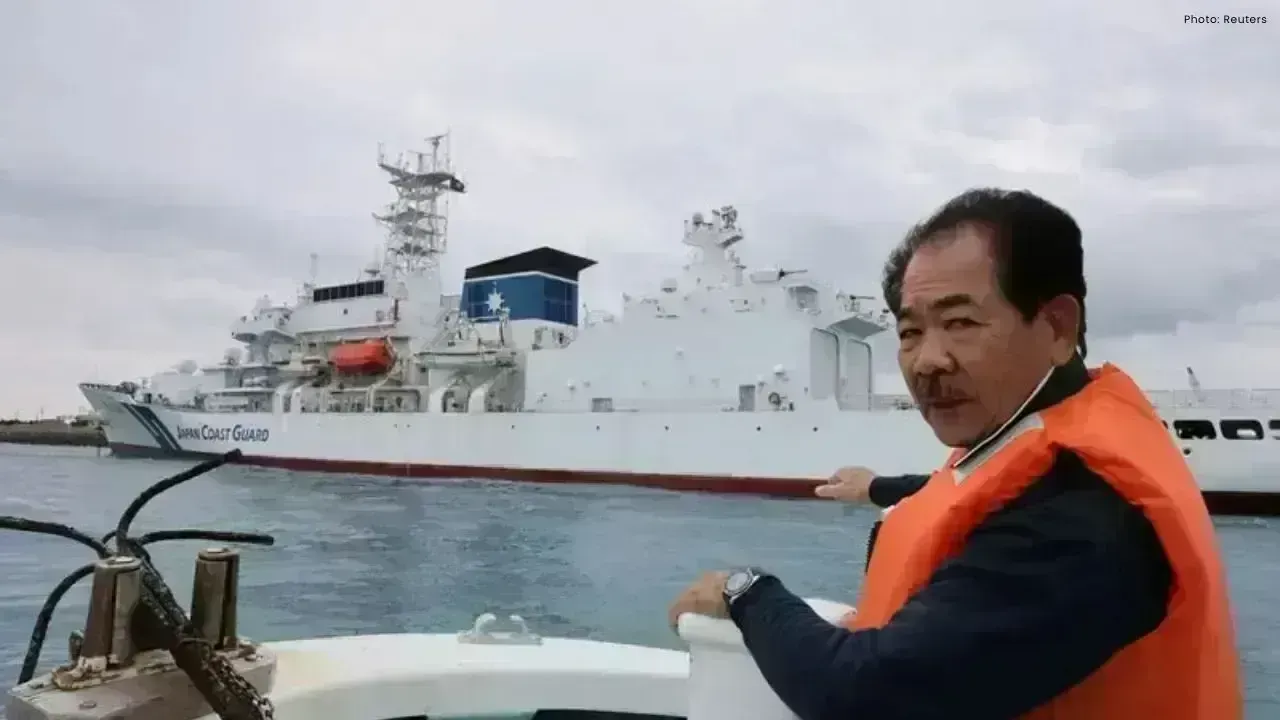
One such fisherman, Hitoshi Nakama, 76, hails from Ishigaki, an island close to the disputed territories. Having spent years fishing near the Senkaku islands, Nakama perceives himself as a guardian of Japan’s territorial rights. Previously, he and his peers often encountered Chinese coast guard ships while fishing, at times engaging in a precarious game of avoidance to continue their activities.
However, the dynamics have shifted since late last year. According to Nakama and others in the know, Japanese officials have discreetly encouraged fishermen to avoid the islands. This represents a clear departure from prior years when such trips were tacitly accepted by the authorities.
This shift in approach coincides with a deterioration in Tokyo-Beijing relations. In November, Prime Minister Sanae Takaichi sparked irritation in China by publicly discussing Japan’s potential response if China were to invade Taiwan. The remarks elicited strong reactions from Beijing and heightened diplomatic strains. Simultaneously, U.S. President Donald Trump reportedly advised Takaichi against further escalating tensions, although it remains uncertain if this influenced Japan’s advisory to fishermen.
Japanese officials have not overtly acknowledged these warnings. The foreign ministry reiterates that the isles are an integral part of Japan’s territory and continues to protest Chinese incursions through diplomatic means. Nevertheless, the discreet nature of these requests indicates apprehension within the government.
Japan finds itself in a challenging predicament. Permitting fishermen to operate near the islands bolsters Japan's claim and visibility. However, such activities also heighten the risk of encounters with assertive Chinese coast guard vessels. Any incident involving detention or inspection by Chinese authorities could rapidly escalate into a significant international crisis.
Some fishermen have altered their plans in response. Kazushi Kinjo, another Ishigaki fisherman, mentioned receiving numerous calls from officials advising him to avoid the islands just before a scheduled trip in late November. Although he briefly traversed the waters afterward, he opted not to fish there.
The directive from Tokyo became increasingly evident in December when Finance Minister Satsuki Katayama personally met with Nakama. While she didn't explicitly instruct him to cease fishing in the area, her caution that “minor incidents can escalate and lead to war” made a lasting impact. Nakama acknowledged that the government wished for him to keep his distance.
Local leadership echoes these concerns. Ishigaki's mayor has articulated that Japan aims to circumvent a scenario where a fisherman might be detained by China, as this would significantly escalate tensions and demand diplomatic and security responses.
China accuses right-wing Japanese factions of using fishing as a means to instigate trouble. Beijing asserts that maritime disputes should be resolved through dialogue. Concurrently, China has expanded its coast guard operations throughout the region, leading to confrontations with other neighbors like the Philippines.
Historically, such a volatile situation has proven precarious. In 2010, a collision between Chinese and Japanese vessels near the islands resulted in a significant diplomatic crisis, followed by further deterioration of relations in 2012 when Japan nationalized several isles.
Currently, Japan seeks to avoid repeating past mistakes. Advising fishermen to steer clear of the area may mitigate immediate risks, yet it also raises concerns that taking a step back could embolden China to pursue its claims with greater vigor. The Senkaku dispute persists as a perilous flashpoint, where even minor maritime actions could yield consequences far beyond the ocean's surface.






George Russell Wins Dutch GP Sprint, Boosts Mercedes Morale
George Russell wins the Dutch GP Sprint from pole as Mercedes teammate Kimi Antonelli extends his F1

Australia 50/3 After Bangladesh Bowled Out for 64 in Second Test
Australia reached 50/3 after Bangladesh were bowled out for 64 in the second Test, with Mitchell Sta

Jordan Burroughs Returns to Wrestling with 2028 Olympic Dream
Jordan Burroughs returns to wrestling with Real American Freestyle as the Olympic champion eyes a po

Lamborghini Catches Fire on Singapore's ECP, Causing Heavy Traffic
A Lamborghini caught fire on Singapore's ECP, causing heavy traffic and bus delays. No injuries were

Bangkok Airport Duty-Free Area Flooded by Pipe Burst
A burst water pipe flooded the duty-free shopping area at Bangkok's Suvarnabhumi Airport on July 16,
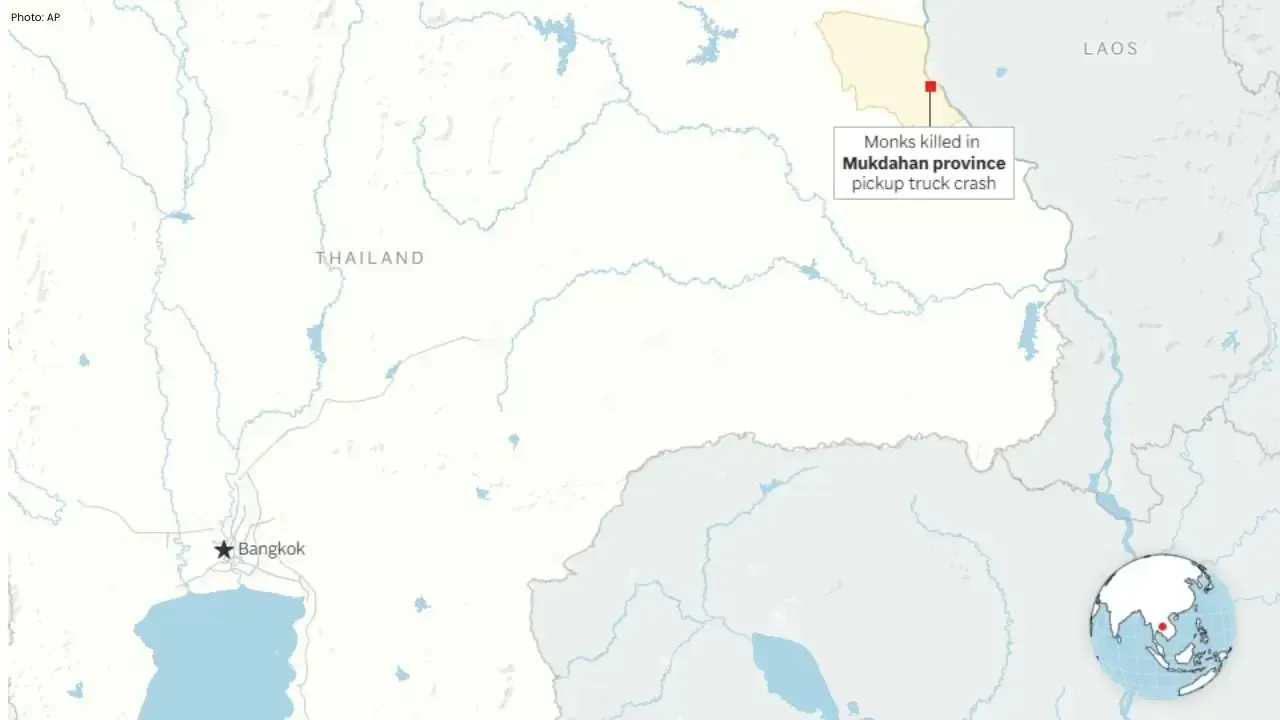
Nine Monks Killed in Thailand Pickup Truck Tragedy
An 11-year-old boy driving a pickup truck crashed into monks during a pilgrimage in northeastern Tha