You have not yet added any article to your bookmarks!
Join 10k+ people to get notified about new posts, news and tips.
Do not worry we don't spam!
Post by : Anis Farhan
Photo: Instagram
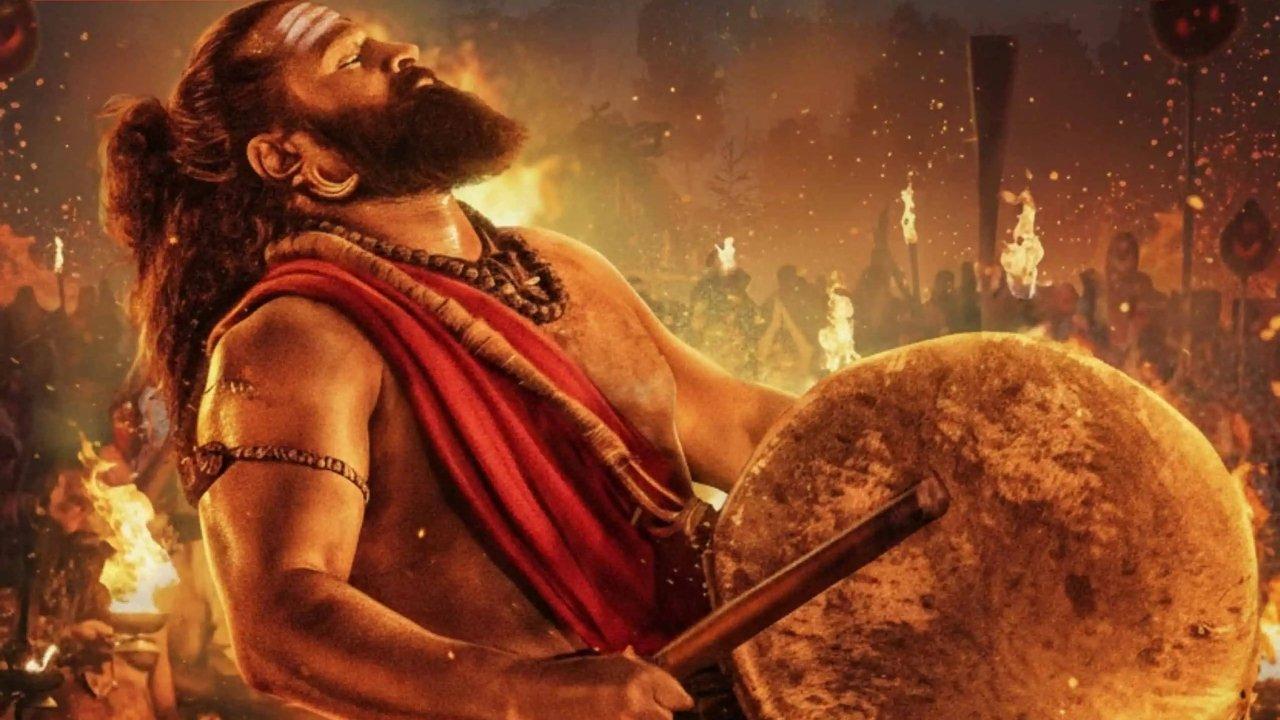
When Kantara released in 2022, it stunned Indian cinema with its raw energy, cultural depth, and unique storytelling. It wasn’t just a film—it was a cultural phenomenon. Audiences across India connected with its portrayal of traditional rituals, spiritual beliefs, and the tension between modernity and heritage. Now, Kantara Chapter 1 promises to expand on this universe, delving deeper into the origins of the myths and legends that shaped the story’s foundation.
Unlike most prequels that serve as mere backstories, this film appears designed to weave a grand narrative that unravels the very soul of folklore. Rishab Shetty, both as actor and director, has envisioned a film that traces history, spirituality, and power struggles in a way that feels timeless and universal.
One of the most intriguing aspects of Kantara Chapter 1 is its timeline. Reports and teasers suggest that the story takes us back to around the 4th century CE, a period when tribal communities lived in close communion with nature and worshipped their deities with unshakeable devotion.
This time leap offers fertile ground for cinematic exploration. The landscapes, costumes, weapons, and cultural practices of that era provide an authentic backdrop. Viewers can expect grand visuals of dense forests, temple rituals, and the primal struggles between faith, kingship, and survival. More importantly, this period marks a turning point in how myths and beliefs became intertwined with politics and human ambition.
Rishab Shetty has earned a reputation for pushing boundaries. His approach to Kantara Chapter 1 reflects not just cinematic ambition but also a commitment to preserving cultural authenticity. He has reportedly immersed himself in extensive research about tribal customs, folklore, and oral histories to ensure the film resonates truthfully.
Unlike generic commercial cinema, Shetty’s craft lies in creating a bridge between local traditions and global appeal. His ability to capture raw emotions and cultural specificity without diluting them for mass entertainment makes Kantara Chapter 1 highly anticipated.
While the official cast lineup remains under wraps, what excites audiences is how the characters will embody archetypal themes of good versus evil, faith versus skepticism, and human greed versus divine justice.
In Kantara, the hero represented the spiritual protector of the land. In Chapter 1, we may see earlier incarnations or ancestors of such figures—characters who laid the foundation for rituals and legends. These characters are likely to straddle the line between mortals and mythic beings, blurring the boundaries of what is real and what is divine.
What makes Kantara Chapter 1 stand out is not just its cinematic ambition but its cultural significance. In a world dominated by global franchises, Indian cinema has often struggled to highlight local traditions in a way that feels both authentic and globally engaging. Kantara did exactly that by making audiences feel the power of native folklore.
The prequel now carries the responsibility of expanding on that achievement. By exploring the roots of the culture, rituals like Bhoota Kola, and the role of deities in human affairs, the film can solidify its place as not just entertainment but cultural preservation. It reflects how deeply spirituality is woven into the everyday life of communities and how these traditions continue to thrive even today.
Another highlight expected in Kantara Chapter 1 is its visual richness. Cinematography in the first film was widely praised for capturing the mystic aura of forests, rituals, and action sequences. The prequel is likely to push these boundaries further, with grander set designs and more immersive visuals.
The music too is expected to play a vital role. Traditional instruments, tribal chants, and earthy sounds gave the first film its haunting atmosphere. For the prequel, the score will likely blend historical depth with emotional resonance, making the audience feel transported into another world.
Few films generate the kind of buzz that Kantara Chapter 1 has already created, even before release. The anticipation isn’t just about action or spectacle—it’s about witnessing a continuation of a story that touched audiences on a spiritual and emotional level.
For fans, the biggest expectation is authenticity. They want the film to remain true to its roots while exploring new narrative arcs. There is also curiosity about how much history and mythology will be interwoven and whether the story will align with real traditions or lean more into fantasy.
While the excitement is undeniable, creating a prequel also brings challenges. How does one make a story engaging when the audience already knows the eventual outcome? Rishab Shetty faces the task of crafting suspense and drama that feel fresh while still respecting the established lore.
Additionally, balancing historical accuracy with cinematic imagination is never easy. Too much adherence to history can make the story feel rigid, while excessive fantasy risks undermining cultural authenticity. Striking the right balance is key.
Spirituality lies at the heart of the Kantara universe. In the prequel, this element is expected to be even more prominent. Rituals, deities, and the human search for divine connection are likely to drive the story.
By showing how communities of the past lived in harmony with faith, Kantara Chapter 1 can offer audiences not only entertainment but also reflection. It reminds us of a time when spirituality was not separate from daily life but an inseparable part of it.
What makes Kantara fascinating is how a very local story captured global attention. Audiences across countries, who had no prior knowledge of Indian folklore, connected with its universal themes of struggle, belief, and redemption.
The prequel has the potential to further this reach. By focusing on the origins of these traditions, the film could become a cultural ambassador, introducing global audiences to the depth and diversity of Indian heritage. It shows how stories deeply rooted in one culture can still resonate universally.
In an age where cinema often focuses on futuristic tech, dystopian worlds, or glossy urban tales, Kantara Chapter 1 stands apart. It takes us back to origins, reminding us of the value of culture, nature, and belief.
The film’s significance lies not just in storytelling but in identity. It reinforces the idea that stories from the soil matter, that myths are not outdated tales but living traditions that continue to shape communities. By reviving this narrative, Kantara Chapter 1 offers relevance in today’s rapidly changing world.
With Kantara Chapter 1, the stage is set for a potential cinematic universe rooted entirely in folklore. If successful, it could pave the way for sequels, spin-offs, and more stories from different timelines and perspectives.
This could be India’s answer to global franchises—one that doesn’t rely on superheroes or sci-fi but instead celebrates cultural depth and spiritual heritage. Audiences can look forward to a world where folklore itself becomes the hero.
Kantara Chapter 1 isn’t just a film; it’s a journey into history, spirituality, and identity. It promises to transport audiences into an era where gods walked with men, where rituals defined life, and where myths shaped destiny.
With Rishab Shetty at the helm, the prequel could be one of the most defining cinematic events in recent years. Whether it lives up to the enormous expectations remains to be seen, but one thing is certain—Kantara Chapter 1 is not just awaited, it is already celebrated as a milestone in Indian storytelling.
This article is based on publicly available information, speculations, and cultural context. Final details about Kantara Chapter 1 may differ once the film is officially released.








Rabada Misses First Australia Test as South Africa Pick Two Spinners
Kagiso Rabada misses the opener as South Africa vs Australia begins, with Anrich Nortje returning an

Starc Compares Australia's Tough Year to McIlroy's Major Sweep
Mitchell Starc says Australia winning three away Test series and the World Cup would match Rory McIl

France’s Sesterce Plans $11 Billion AI Data Centre in Finland
Sesterce plans a $11 billion AI data centre in Finland, with major expansion, green energy plans and

Danaher to Launch AI-Powered Autonomous Research Lab in 2027
Danaher plans an AI research lab for 2027, combining robotics and automation to speed up drug discov

Musk Welcomes German Support for Tesla Driver Assistance Tech as EU Approval Push Continues
Elon Musk welcomes Germany's backing for Tesla FSD as the company seeks EU approval amid speed, safe

Microsoft and Nvidia CEOs to Unveil AI Laptop at San Francisco Event
Microsoft and Nvidia showcase a new AI laptop with RTX Spark chips as they push powerful local AI co