You have not yet added any article to your bookmarks!
Join 10k+ people to get notified about new posts, news and tips.
Do not worry we don't spam!
Post by : Rohit Dhiman
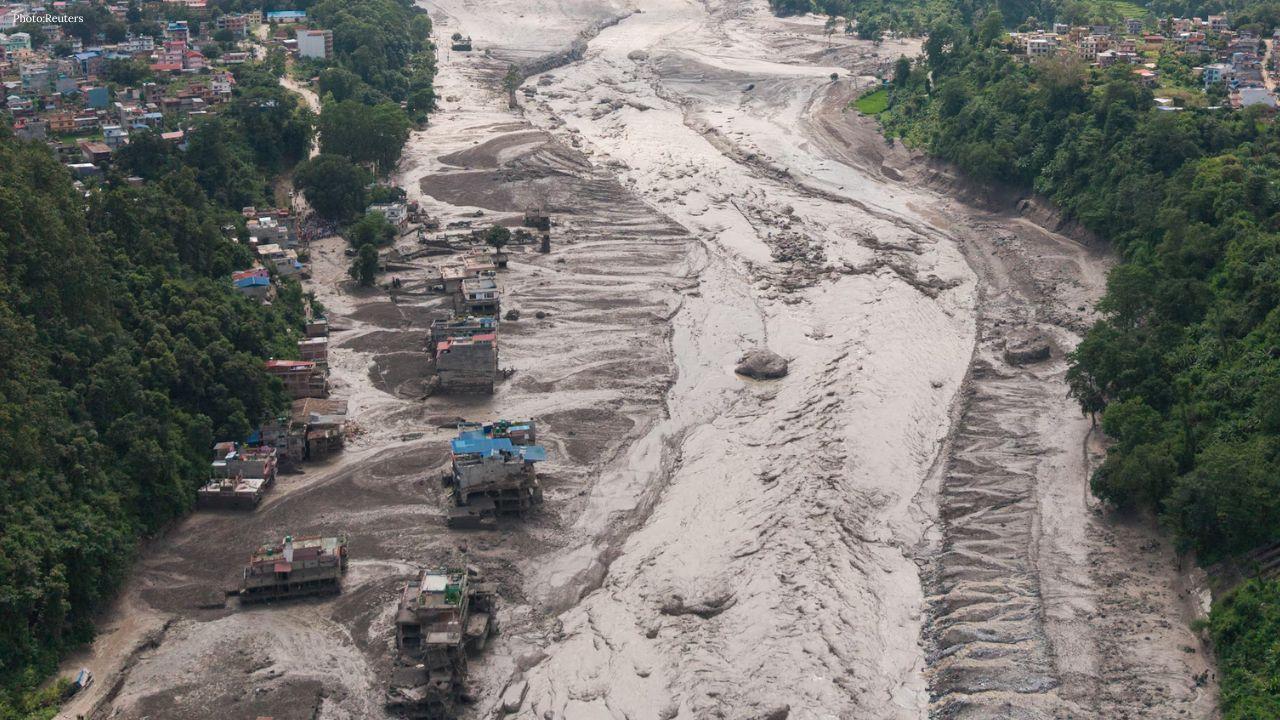
A sudden Nepal flash flood along the Budhi Gandaki River has caused widespread destruction in the mountainous Gorkha district, damaging homes, washing away bridges and affecting infrastructure connected to hydropower development. Five people have been reported missing, while rescue teams continue efforts to evacuate residents and tourists from areas exposed to the disaster. The flooding occurred on October 11, 2026, after a landslide reportedly blocked the river. Water accumulated behind the obstruction before the barrier gave way, releasing a powerful surge downstream. The fast-moving water carried debris through vulnerable areas, threatening settlements and infrastructure located near the river. According to the Associated Press, 95 people, including nine foreign nationals, had been evacuated by October 12. The evacuations were part of the emergency response to the rapidly developing situation in the affected region.
The Budhi Gandaki River runs through Nepal's mountainous terrain, where steep slopes and narrow valleys can make communities vulnerable to sudden changes in river conditions. Initial reports indicate that the flood followed a landslide that obstructed the river's flow. Such blockages can create temporary reservoirs as water collects behind accumulated earth, rocks and other debris. If the obstruction becomes unstable and breaks, the trapped water can rush downstream in a sudden and destructive surge. This type of event is commonly known as a flash flood. Unlike slower-rising floods, flash floods can develop rapidly and leave people with limited time to respond, particularly in steep valleys where water can travel quickly. In the Gorkha incident, the reported failure of the barrier released water into downstream areas. The resulting surge damaged structures and infrastructure along the river corridor.
The search for five missing people remains a major concern following the flooding. Emergency personnel are working to establish their whereabouts while assisting people who may still be in areas affected by the sudden rise in water. Rescue operations in mountainous regions can be complicated by damaged roads, unstable slopes, debris and limited access to isolated settlements. Teams must identify safe routes to reach affected locations while avoiding areas where river conditions or the surrounding terrain could pose additional risks. The reported evacuation of 95 people by October 12 included nine foreign nationals, according to the Associated Press. The operation involved moving residents and tourists away from danger as authorities responded to the emergency. Tourists travelling through remote mountain regions can face additional challenges during natural disasters because they may be unfamiliar with local terrain, evacuation routes and emergency procedures. Authorities and local responders therefore need to communicate warnings clearly and help visitors reach safer locations.
The flood has affected homes and transport infrastructure, with reports describing damage to houses and bridges along the river. The force of fast-moving water, particularly when combined with rocks, mud and other debris, can undermine foundations, damage buildings and sweep away structures close to riverbanks. For people living in affected settlements, damage to homes can create immediate concerns about shelter, food, drinking water and access to medical care. Families may also need help recovering essential belongings and finding temporary accommodation until damaged buildings can be inspected. Bridge damage can create a separate challenge for emergency services. In mountainous parts of Nepal, bridges often connect villages with markets, hospitals, schools and administrative centres. When a crossing is destroyed or becomes unsafe, communities may face longer journeys or lose direct access to essential services. Damaged roads and bridges can also slow the movement of rescue personnel and relief supplies. Authorities must determine which routes remain usable and whether temporary crossings or alternative access arrangements are needed.
The flooding has also damaged hydropower infrastructure in the affected region. Nepal relies heavily on hydropower as a source of electricity, and projects located near mountain rivers can be exposed to sudden flooding, landslides and the movement of debris. A flood can affect more than a project's main generating facilities. Construction equipment, temporary buildings, access roads, storage areas and other supporting structures may also be vulnerable when water levels rise suddenly. Damage to these facilities can interrupt construction work and create additional repair requirements. Even when a project's main equipment is not directly hit, blocked access routes or damage to supporting infrastructure may prevent normal work from continuing. Technical inspections are needed to determine the extent of the damage and whether electricity generation, construction schedules or other operations have been affected. No conclusions about the long-term impact should be drawn until the relevant assessments are completed.
A landslide-triggered flash flood rescue operation can become especially challenging because the danger may extend well beyond the original landslide site. When earth and rocks block a river, water can accumulate behind the obstruction. If the blockage breaks suddenly, the released water may travel downstream at high speed. The surge can carry debris, damage bridges and affect settlements that are not located directly beside the original landslide. Mountain rivers can be particularly unpredictable during such events because steep gradients allow water to move rapidly through narrow channels. The shape of the valley can concentrate the flow and increase its impact on structures in its path. People living near rivers may not always have enough time to gather belongings or move to safer locations once a sudden surge begins. Early warnings, clear evacuation instructions and reliable communication systems can therefore make a significant difference.
Emergency response teams are continuing to assist people affected by the flooding while authorities assess damage to homes, bridges and other infrastructure. The next stages of the response are expected to focus on locating the missing people, ensuring that evacuated residents have access to essential supplies and identifying communities that may require additional assistance. Authorities will also need to inspect damaged buildings and transport links before residents can safely return or normal movement can resume. Where bridges and roads have been damaged, restoring access will be important for delivering relief materials and reconnecting isolated settlements. Infrastructure inspections will help determine whether repairs can be carried out quickly or whether temporary arrangements are necessary. The condition of the affected hydropower facilities will also need to be evaluated. Any decision about repairs or the resumption of work will depend on the extent of the damage and the safety of the surrounding area.
Read Also: Hurricane Simon Weakens to Category 3, Floods Hit Mexico's Pacific Coast
People living near the Budhi Gandaki River and other vulnerable waterways should pay close attention to official warnings during periods of heightened flood risk. Residents should move away from riverbanks when authorities issue evacuation instructions and seek higher ground. They should avoid attempting to cross flooded roads or damaged bridges, even if the water appears to be slowing down. Floodwater can conceal debris, undermine surfaces and change direction unexpectedly. Travellers in mountainous areas should follow instructions from local authorities and avoid entering restricted or damaged areas. Tourists who are unable to continue their journeys should contact local officials, accommodation providers or emergency services for information about safe routes and available assistance. Returning to a damaged home or crossing a river should only be considered after the area has been assessed and declared safe by the relevant authorities.






Beauden Barrett Opens Up About Mental Struggles During All Blacks Exile
Beauden Barrett discusses his confidence struggles after missing six tests, his return against Austr

IMF Says AI Investment Supports Global Growth Despite Energy Shock
IMF says AI investment is supporting global growth near 3%, with Asian economies benefiting from ris

Will O'Rourke Ruled Out of New Zealand's India Series
New Zealand fast bowler Will O'Rourke will miss the India series with hamstring and calf injuries as

AI Companies Expected to Drive Most US Earnings Growth in Q3
AI companies are expected to drive US third-quarter earnings growth as investors assess tech profits

Money Market Funds See Record Inflows as Global Bond Selloff Intensifies
Global money market funds attract $153.81 billion as bond yields rise, inflation fears persist and i

Meta Bans TikTok Ads on Facebook and Instagram in Seven Countries
Meta has banned TikTok ads in seven countries, escalating competition over social media users, adver