
You have not yet added any article to your bookmarks!
Join 10k+ people to get notified about new posts, news and tips.
Do not worry we don't spam!
Post by : Anis Farhan
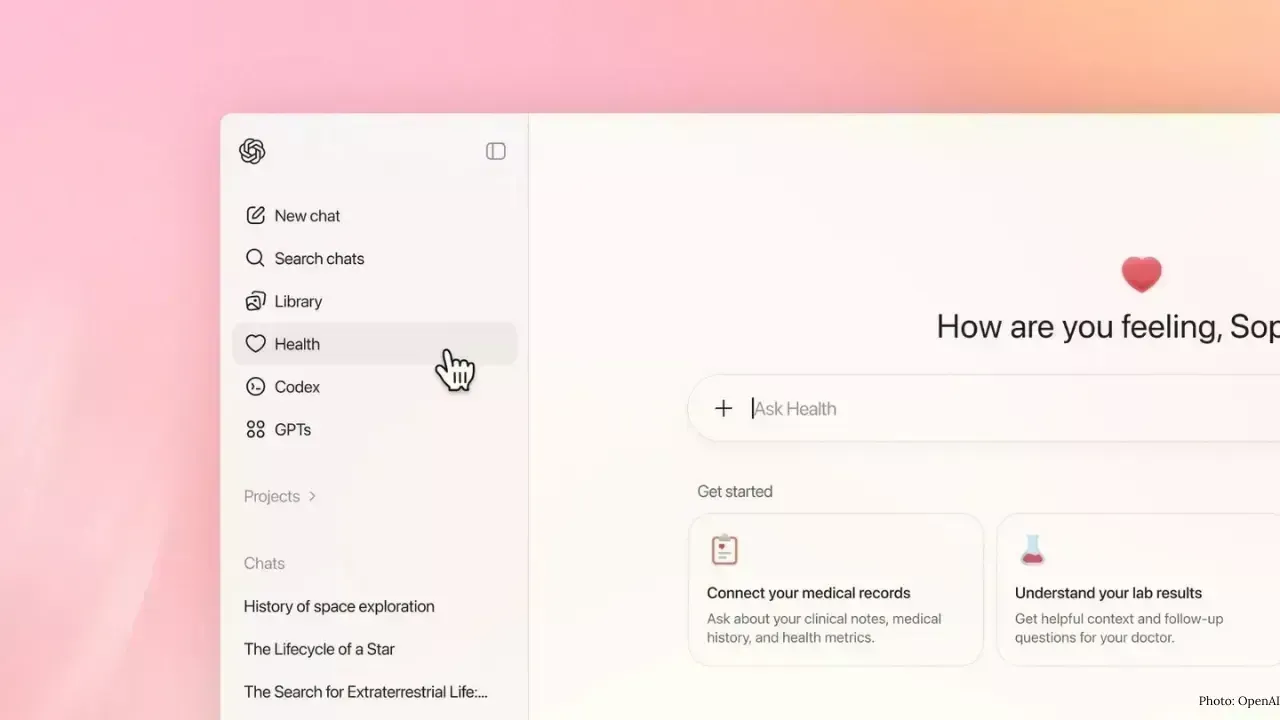
Artificial intelligence has steadily transformed how people work, learn, and communicate. Now, it is beginning to reshape how individuals think about their own health and well-being. With the launch of ChatGPT Health, OpenAI has taken a decisive step into the personal wellness space, offering a tool that aims to support users with tailored health-related information through natural conversation.
Unlike traditional health apps that rely heavily on static questionnaires or generic recommendations, ChatGPT Health is designed to interact dynamically with users. It listens, adapts, and responds in a way that feels more like a dialogue than a form-filling exercise. The goal is not to replace doctors or clinical care, but to help individuals make sense of everyday health concerns, routines, and wellness goals in a more informed and confident manner.
This launch comes at a time when people are increasingly seeking accessible, personalised, and trustworthy digital support for managing stress, fitness, nutrition, sleep, and general well-being. ChatGPT Health positions itself at the intersection of technology and daily life, where small, consistent insights can make a meaningful difference over time.
ChatGPT Health is built as a conversational wellness assistant that provides guidance based on user inputs, preferences, and stated goals. Rather than offering one-size-fits-all advice, it aims to contextualise responses, taking into account factors such as lifestyle habits, daily routines, and general wellness challenges.
Users can ask questions related to fitness routines, nutrition choices, sleep hygiene, stress management, and healthy habits. The system responds with clear, easy-to-understand explanations, suggestions, and practical tips designed to support healthier decision-making.
Importantly, ChatGPT Health avoids positioning itself as a diagnostic or treatment tool. Its focus remains firmly on wellness support, education, and habit-building, reinforcing the idea that informed daily choices play a crucial role in long-term health.
One of the defining features of ChatGPT Health is its conversational interface. Many people feel overwhelmed by medical jargon or rigid health apps that demand precise inputs. By contrast, this AI-driven system allows users to express concerns in their own words.
This conversational approach lowers barriers to entry, especially for individuals who may feel hesitant to explore wellness topics through traditional platforms. By meeting users where they are linguistically and emotionally, the system encourages ongoing engagement rather than sporadic use.
Over the past decade, there has been a noticeable shift in how people approach health. Rather than focusing solely on treatment after illness occurs, many individuals now prioritise preventive care and everyday wellness. This includes managing stress, maintaining physical activity, improving diet, and cultivating better sleep habits.
ChatGPT Health aligns with this shift by emphasising daily wellness decisions rather than acute medical interventions. It supports the idea that health is shaped by small, consistent actions rather than occasional dramatic changes.
Despite the abundance of fitness trackers, diet apps, and wellness platforms, many users experience digital health fatigue. Complex interfaces, constant notifications, and rigid goal structures can feel burdensome rather than supportive.
ChatGPT Health addresses this challenge by simplifying the experience. Instead of tracking every metric, it focuses on meaningful conversations that help users reflect on their habits and make gradual improvements. This human-like interaction may help sustain long-term engagement.
Personalisation is a powerful feature, but it comes with risks if handled irresponsibly. OpenAI has emphasised that ChatGPT Health is designed with clear boundaries. It does not provide medical diagnoses, prescribe medication, or replace professional healthcare advice.
Instead, it offers general wellness guidance, educational context, and suggestions that encourage users to seek qualified medical professionals when appropriate. This balance aims to empower users without creating false confidence or unsafe reliance on AI.
The system adapts its tone and depth based on how users frame their questions. Someone seeking general fitness motivation may receive encouraging, high-level advice, while another user asking about stress management techniques may receive more detailed coping strategies.
This adaptability helps ensure that responses feel relevant and respectful of individual circumstances, without crossing into areas that require clinical expertise.
Health-related information is deeply personal, and trust is essential for any digital wellness platform. OpenAI has highlighted privacy safeguards as a core component of ChatGPT Health, recognising that users need confidence that their data will be handled responsibly.
The system is designed to minimise unnecessary data retention and to prioritise user control over interactions. By focusing on general wellness rather than medical records, it reduces the sensitivity of stored information while still delivering value.
Transparency plays a critical role in building trust. Users are informed about what ChatGPT Health can and cannot do, helping set realistic expectations. This clarity reduces the risk of misuse and fosters a healthier relationship between users and AI-driven tools.
Artificial intelligence tools initially gained popularity through productivity and automation features. Writing assistance, coding support, and data analysis were early use cases. The move into wellness represents a natural expansion, as AI becomes more integrated into daily life.
ChatGPT Health demonstrates how conversational AI can move beyond tasks and into supportive roles that address human needs more holistically. This evolution reflects broader trends in technology, where user experience and emotional intelligence are increasingly valued.
Rather than competing with doctors, therapists, or healthcare providers, ChatGPT Health is positioned as a complementary tool. It can help users prepare better questions for appointments, understand general health concepts, and stay mindful of wellness goals between professional visits.
This complementary role could reduce unnecessary anxiety, encourage preventive care, and help individuals feel more engaged in their own health journeys.
Many users struggle with consistency when it comes to exercise, nutrition, or sleep. ChatGPT Health can offer reminders, motivational insights, and practical tips that adapt to changing routines.
For example, someone balancing a busy work schedule may receive suggestions for short, effective workouts or simple meal planning strategies. This flexibility makes wellness feel achievable rather than overwhelming.
Modern lifestyles often involve high levels of stress and mental fatigue. While ChatGPT Health does not replace mental health professionals, it can provide general stress management techniques such as breathing exercises, time management tips, and mindfulness practices.
These small interventions can help users recognise stress patterns early and take proactive steps to manage them.
One of the ethical challenges in AI-driven wellness tools is the risk of overdependence. OpenAI has addressed this by designing ChatGPT Health to encourage autonomy rather than reliance.
Responses often emphasise personal agency, reminding users that AI guidance is a supplement, not a substitute, for professional advice or personal judgment.
The system is trained to communicate carefully, avoiding alarmist language or definitive claims. This responsible communication style helps prevent unnecessary anxiety and reinforces the educational nature of the tool.
ChatGPT Health may influence how people expect wellness tools to behave. Static dashboards and rigid plans may give way to conversational systems that adapt in real time, respond empathetically, and evolve with user needs.
This shift could drive innovation across the digital health sector, encouraging developers to prioritise user experience and trust.
By using natural language and accessible explanations, ChatGPT Health can make wellness information more inclusive. Individuals who may feel intimidated by medical content can engage comfortably, asking questions without fear of judgment.
This inclusivity has the potential to reduce information gaps and empower a broader range of users to take charge of their well-being.
As AI becomes more capable, managing user expectations remains critical. Clear communication about limitations will be essential to prevent misunderstandings or misuse.
ChatGPT Health’s emphasis on wellness rather than diagnosis helps address this challenge, but ongoing education will remain important as the tool evolves.
Wellness is influenced by cultural, social, and personal factors. Ensuring that AI-driven guidance remains culturally sensitive and adaptable will be a key challenge as adoption grows across regions.
One of the most compelling aspects of ChatGPT Health is its emphasis on listening. By allowing users to articulate concerns in their own words, it respects individual experiences and perspectives.
This listening-first approach reflects a broader shift toward human-centric technology, where tools are designed to support rather than dictate.
Ultimately, the value of ChatGPT Health lies in its ability to help users understand their own habits and choices more clearly. By translating complex wellness concepts into practical insights, it empowers individuals to make informed decisions.
The launch of ChatGPT Health marks a significant milestone in the integration of artificial intelligence into everyday well-being. By focusing on personalised, conversational, and responsible wellness support, OpenAI has introduced a tool that reflects both technological advancement and ethical consideration.
ChatGPT Health does not promise instant transformation or medical solutions. Instead, it offers something arguably more valuable: consistent, accessible support that helps people navigate the complexities of daily health choices. As AI continues to evolve, this approach may set the standard for how technology can enhance human well-being without overshadowing professional care.
This article is intended for informational purposes only. ChatGPT Health is designed to provide general wellness support and should not be considered a substitute for professional medical advice, diagnosis, or treatment.









PM Modi Pays Tribute to Mahatma Gandhi, Urges People to Support Khadi
PM Modi pays tribute to Mahatma Gandhi on Gandhi Jayanti and urges citizens to support Khadi and the

Amazon Seeks to Offload $8 Billion in Nvidia Chips to Investors
Amazon plans to move $8 billion in Nvidia chips to investors, using a new financing model to strengt

Samsung Raises Galaxy S26 Prices as Memory Chip Costs Rise
Samsung raises Galaxy S26 prices in South Korea as rising memory chip costs put pressure on smartpho

Lewis Hamilton Calls Singapore Grand Prix One of F1's Toughest Races
Lewis Hamilton discusses the demanding Singapore Grand Prix and brings Plus44 and Almave to Singapor

Denmark's Pandora Opens World's Largest Jewellery Factory in Vietnam
Pandora opens its largest jewellery factory in Vietnam, expanding global production, strengthening s

Gautam Gambhir Questions Batting-Friendly Pitches After India's Record ODI Chase
Gautam Gambhir questions batting-friendly ODI pitches after India’s record chase, calling for a bett

