You have not yet added any article to your bookmarks!
Join 10k+ people to get notified about new posts, news and tips.
Do not worry we don't spam!
Post by : Saif Rahman
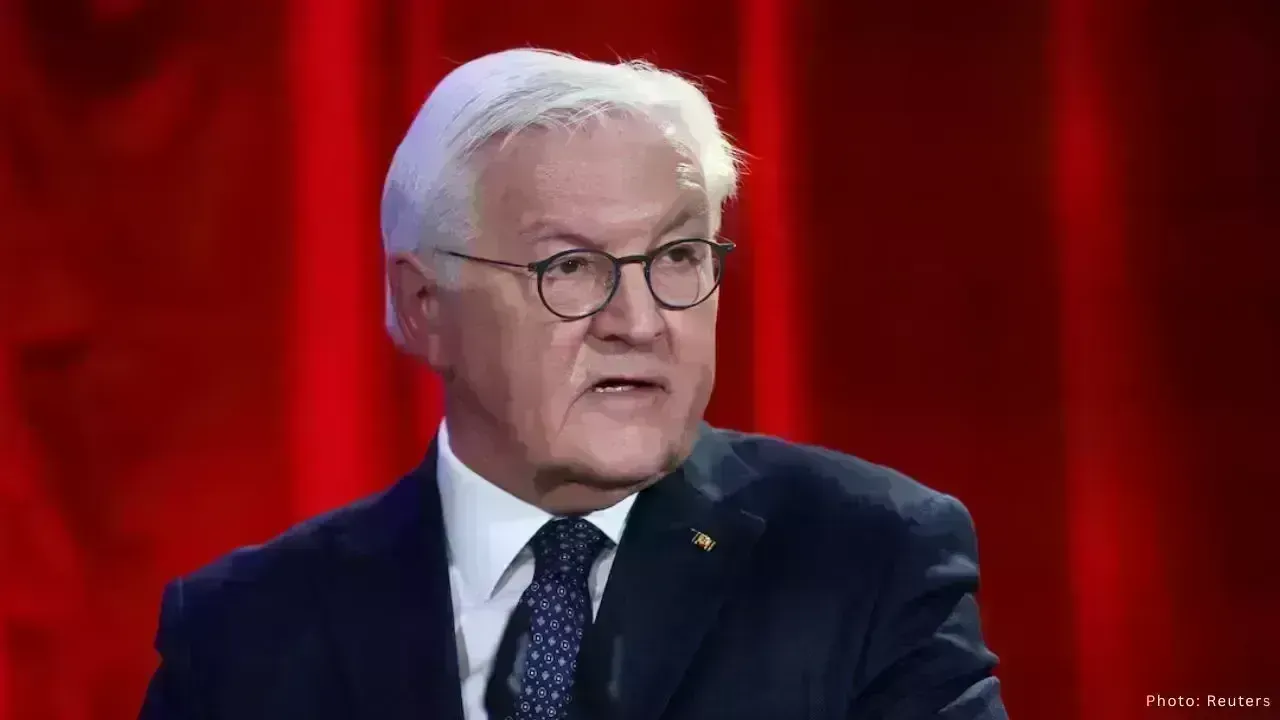
In a significant address, German President Frank-Walter Steinmeier has raised alarms about the future of the global order, criticizing the U.S. approach to foreign policy. His comments reflect escalating unease among European leaders regarding mounting instability and the erosion of international regulations.
At a recent public gathering in Berlin, Steinmeier expressed concerns that the global landscape may devolve into a scenario where dominant nations act unilaterally, disregarding laws and moral principles. He characterized this potential reality as a “den of robbers,” where collaboration and ethics are abandoned.
The German leader noted that the threat to global democracy has never been greater. He referred to various international developments which he believes illustrate a disintegration of trust and shared accountability among leading nations. While he did not enumerate specific instances, his remarks hinted at worries surrounding aggressive political maneuvers and neglect of established international norms.
Steinmeier also drew attention to previous global upheavals, notably Russia's annexation of Crimea and the subsequent invasion of Ukraine, which he sees as pivotal events that weakened the rules-based world system. He indicated that the present actions of the U.S. signify another dangerous shift, especially considering its historical role in shaping the post-World War II global framework.
While he does not dictate governmental policies, Steinmeier holds a position that allows him to voice concerns on ethical and political matters, giving his statements significant influence and resonating with broader anxieties felt across Europe regarding the state of global leadership.
He asserted that to safeguard the world order, proactive measures are indispensable. Steinmeier urged nations outside Europe and North America, like India and Brazil, to actively support international norms and democratic values. He stressed that maintaining global stability hinges on cooperation rather than power struggles.
His address underscores a rising trepidation that the framework established to avert turmoil after World War II is gradually deteriorating. A failure to uphold shared norms may lead to increased conflicts, with the most vulnerable nations suffering the most.
In conclusion, Steinmeier's message was resolute: the world cannot accept a future dictated by coercion and self-interest. A reinvigorated commitment to collaboration and shared principles is essential to prevent further decline in global order and ensure lasting peace.




China’s Tiangong Sets New 400m Record at Robot Olympics
China’s Tiangong robot sets a new 400m record at the Robot Olympics, beating a South African robot i

George Russell Wins Dutch GP Sprint, Boosts Mercedes Morale
George Russell wins the Dutch GP Sprint from pole as Mercedes teammate Kimi Antonelli extends his F1

Australia 50/3 After Bangladesh Bowled Out for 64 in Second Test
Australia reached 50/3 after Bangladesh were bowled out for 64 in the second Test, with Mitchell Sta

Jordan Burroughs Returns to Wrestling with 2028 Olympic Dream
Jordan Burroughs returns to wrestling with Real American Freestyle as the Olympic champion eyes a po

Lamborghini Catches Fire on Singapore's ECP, Causing Heavy Traffic
A Lamborghini caught fire on Singapore's ECP, causing heavy traffic and bus delays. No injuries were

Bangkok Airport Duty-Free Area Flooded by Pipe Burst
A burst water pipe flooded the duty-free shopping area at Bangkok's Suvarnabhumi Airport on July 16,