
You have not yet added any article to your bookmarks!
Join 10k+ people to get notified about new posts, news and tips.
Do not worry we don't spam!
Post by : Anis Farhan
Global trade has always followed power, geography, and economics. However, recent years of disruptions—from pandemics and wars to sanctions and climate shocks—have exposed the fragility of traditional trade routes. Against this backdrop, the latest international agreement aimed at reshaping cross-border connectivity is being viewed as more than a commercial pact; it is a strategic reset.
Unlike conventional free trade agreements focused primarily on tariffs and market access, this deal centres on logistics integration, alternative transit corridors, digital trade facilitation, and long-term infrastructure alignment. Its scope stretches across regions that collectively handle a significant share of global manufacturing, energy flows, and consumer markets.
Over the past few years, global supply chains have faced repeated shocks. Factory shutdowns, port congestion, container shortages, and geopolitical tensions have made reliability more valuable than cost efficiency.
Conflicts and sanctions have forced companies and governments to rethink routes that were once considered stable. Certain chokepoints have become politically sensitive, increasing risk premiums for traders.
Extreme weather events and climate regulations are influencing shipping patterns. Routes vulnerable to climate disruptions are being reassessed, while greener logistics corridors are gaining attention.
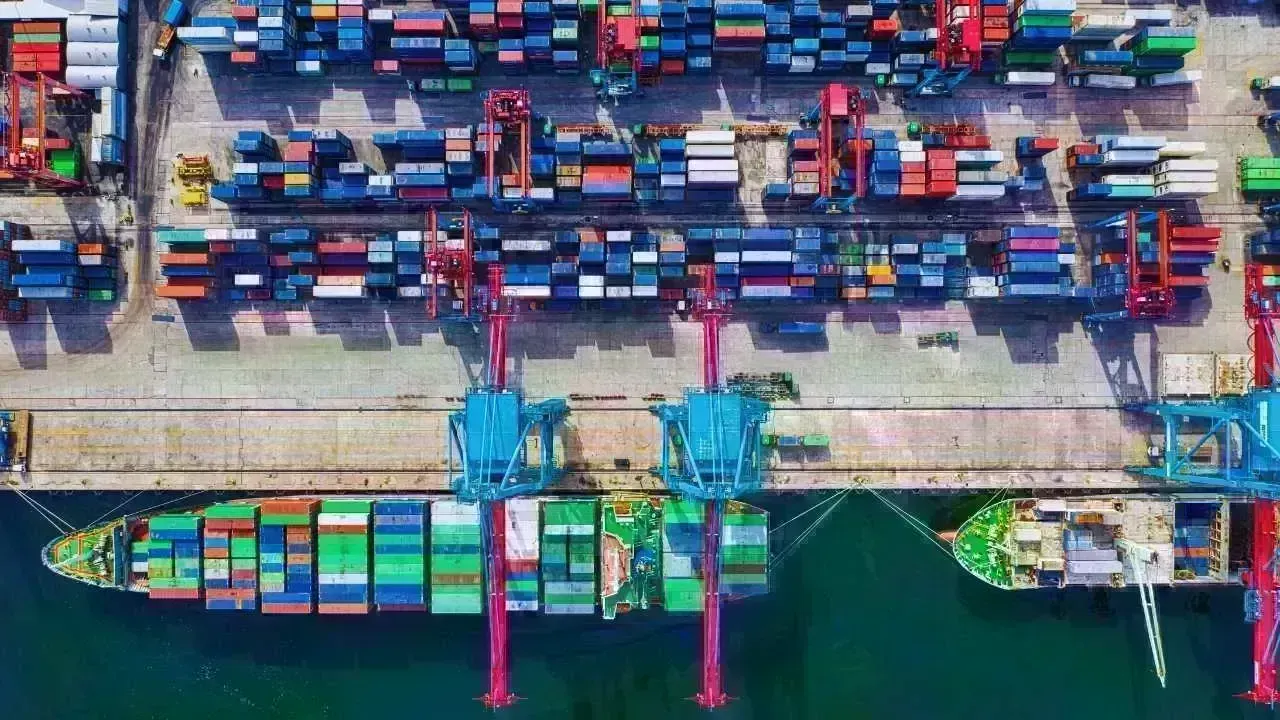
Rather than relying solely on maritime shipping, the agreement promotes an integrated network of sea, rail, road, and digital corridors. This diversification reduces dependence on a single route or region.
One of the most impactful aspects of the agreement is the harmonisation of customs documentation, digital clearance systems, and logistics standards. This could significantly reduce transit time and costs.
Signatory nations have committed to coordinated investments in ports, rail links, logistics parks, and energy corridors, ensuring continuity across borders.
For decades, global trade has depended heavily on a handful of sea routes. The agreement introduces viable alternatives that reduce congestion and geopolitical vulnerability.
Countries previously sidelined due to geography could emerge as critical transit hubs, benefiting from logistics, warehousing, and industrial development.
The agreement effectively redraws economic maps by creating new axes of trade that link production centres directly with consumption markets.
Beyond economics, the agreement carries geopolitical weight. It offers participating countries an alternative framework for trade cooperation without overreliance on any single global power.
By anchoring economic interests across borders, the pact strengthens diplomatic ties and reduces the likelihood of unilateral trade disruptions.
Major global powers are closely watching the agreement, aware that control over trade routes often translates into long-term political leverage.
The agreement prioritises resilience, allowing companies to reroute shipments quickly during crises. This marks a shift away from just-in-time models.
By streamlining customs and reducing bottlenecks, the pact could shorten delivery timelines for critical goods, including energy, food, and electronics.
Easier cross-border movement encourages companies to set up regional manufacturing hubs rather than concentrating production in one country.
Nations located along the new corridors are expected to attract investment, generate employment, and expand export capacity.
Ports and routes that once dominated global trade may see reduced traffic unless they adapt quickly.
Participation in a large, rules-based framework enhances bargaining power for smaller economies in global trade negotiations.
Although initial investments are high, integrated corridors are expected to reduce transportation costs in the long run.
Simplified procedures and faster movement of goods could significantly boost trade volumes among member countries.
Infrastructure certainty encourages institutional investors to fund logistics, energy, and industrial projects.
Large-scale agreements often face delays due to political changes, funding constraints, or bureaucratic resistance.
Not all participating countries may benefit equally, potentially creating internal tensions within the bloc.
Integrated digital trade systems raise questions about data sovereignty, cybersecurity, and infrastructure protection.
The agreement includes commitments to reduce emissions through efficient logistics and cleaner energy integration.
Infrastructure expansion must navigate environmental concerns, especially in ecologically sensitive regions.
New corridors are being designed to withstand climate-related disruptions, ensuring long-term viability.
Reduced disruptions could help stabilise prices of imported goods, benefiting consumers globally.
Small and medium enterprises gain easier access to international markets through simplified trade processes.
Digitisation improves traceability, accountability, and compliance across borders.
The agreement represents a shift from fragmented trade deals to comprehensive connectivity frameworks.
By diversifying routes and partners, nations reduce vulnerability to external shocks.
Trade routes often mirror power structures. Redefining them signals broader changes in global influence.
The true impact depends on how effectively countries translate commitments into action.
Businesses must align investment and logistics strategies with the new framework.
The agreement’s relevance will hinge on its ability to evolve with technology, climate realities, and geopolitics.
The international agreement poised to redefine global trade routes is not just about moving goods faster or cheaper. It reflects a deeper shift in how nations view economic security, cooperation, and resilience in an increasingly uncertain world. By reshaping connectivity, the pact has the potential to influence global commerce for decades, redefining winners, alliances, and the very map of international trade.
Whether it becomes a historic success or a missed opportunity will depend on political will, execution, and the ability of nations to see trade not as a zero-sum game, but as shared infrastructure for global stability.
Disclaimer:
This article is intended for informational and analytical purposes only. It does not constitute trade, investment, or policy advice. Readers are encouraged to consult official sources and experts for decision-making.








IMF Says AI Investment Supports Global Growth Despite Energy Shock
IMF says AI investment is supporting global growth near 3%, with Asian economies benefiting from ris

Will O'Rourke Ruled Out of New Zealand's India Series
New Zealand fast bowler Will O'Rourke will miss the India series with hamstring and calf injuries as

AI Companies Expected to Drive Most US Earnings Growth in Q3
AI companies are expected to drive US third-quarter earnings growth as investors assess tech profits

Money Market Funds See Record Inflows as Global Bond Selloff Intensifies
Global money market funds attract $153.81 billion as bond yields rise, inflation fears persist and i

Meta Bans TikTok Ads on Facebook and Instagram in Seven Countries
Meta has banned TikTok ads in seven countries, escalating competition over social media users, adver
ASML and Zeiss Target Next-Generation Chip Technology in 10 Years
ASML and Carl Zeiss are developing Hyper NA technology to print smaller chip circuits, with the next

