You have not yet added any article to your bookmarks!
Join 10k+ people to get notified about new posts, news and tips.
Do not worry we don't spam!
Post by : Anis Farhan
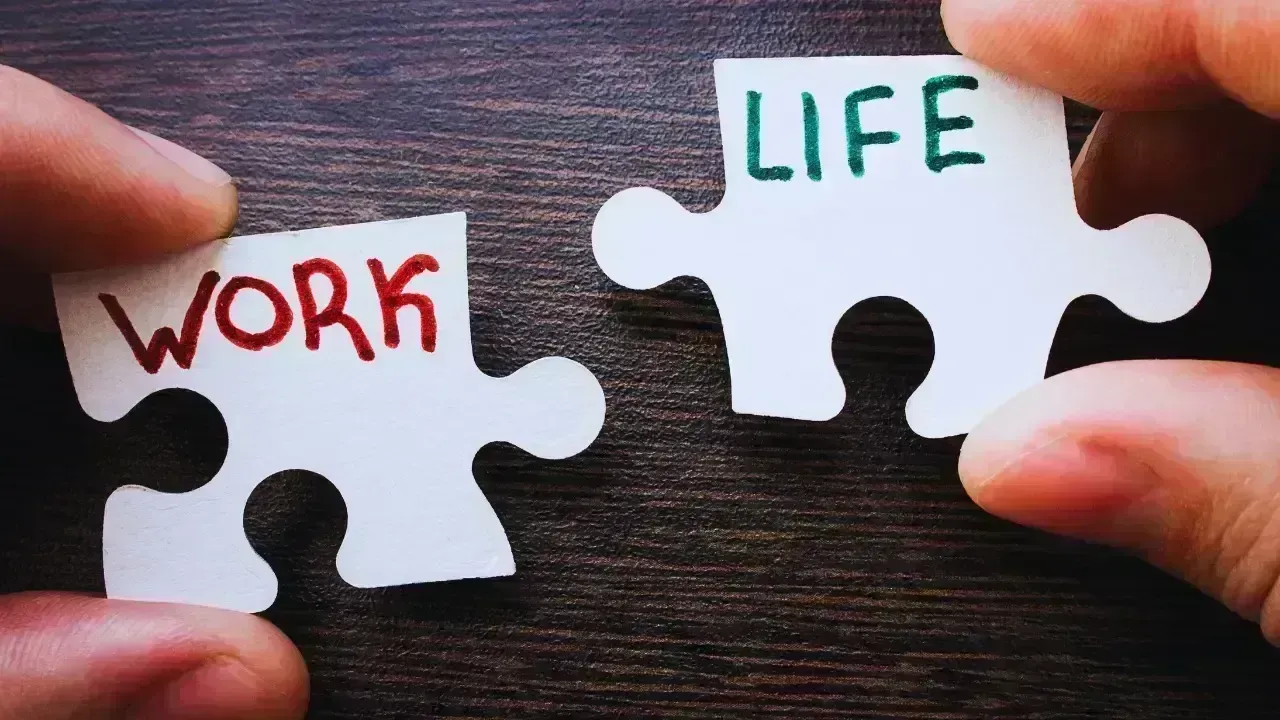
For years, work-life balance was understood as a clean separation between office time and personal life. The goal was simple: finish work, go home, and disconnect. In 2026, that definition feels outdated.
Technology has blurred boundaries. Work can happen anywhere, anytime. At the same time, people are questioning long-held assumptions about productivity, success, and personal fulfilment. The result is a redefinition of balance — not as separation, but as control.
Work-life balance today is less about hours worked and more about how work fits into life.
In traditional workplaces, productivity was measured by time spent at a desk. In 2026, output, impact, and efficiency matter far more than clocked hours.
Employees increasingly structure their workdays around personal energy levels rather than rigid schedules. Early mornings, split shifts, or shorter intense work blocks are replacing the standard nine-to-five routine.
This flexibility allows individuals to balance professional responsibilities with personal priorities more realistically.
With teams spread across locations and time zones, real-time availability is no longer always expected. Asynchronous communication has reduced the pressure to be constantly online.
This shift empowers workers to manage personal commitments without feeling guilty or disconnected, redefining balance as autonomy over time.
By 2026, hybrid work models are firmly embedded across industries. Offices are used for collaboration, not daily attendance. Homes, co-working spaces, and even temporary travel locations have become legitimate workplaces.
This change has allowed people to reclaim time previously lost to commuting and rigid routines, contributing to a more personalised work-life equation.
While remote work offers freedom, it also requires discipline. The new balance depends on individuals setting boundaries, managing workloads, and avoiding burnout without the physical separation of an office.
Balance is no longer enforced externally; it is self-managed.
In 2026, work-life balance is closely tied to mental well-being. Chronic stress, burnout, and digital fatigue have pushed organisations and individuals to reassess priorities.
Time off is no longer viewed as a reward but as a necessity. Emotional recovery, focus, and psychological safety are now considered essential for sustained performance.
Rest is being reframed as productive. Breaks, mental health days, and flexible leave policies are becoming part of mainstream work culture.
This shift reflects a growing understanding that creativity, decision-making, and resilience depend on rest, not constant activity.
With work always accessible through devices, the ability to disconnect has become a critical life skill. Balance in 2026 means knowing when to log off without fear of missing out or appearing uncommitted.
People are increasingly setting clear communication expectations, such as response windows and offline hours, to protect personal time.
Long hours are no longer a badge of honour. Efficiency, focus, and clarity are valued more than constant availability.
This cultural shift is gradually reducing the stigma around saying no, prioritising tasks, and protecting personal boundaries.
Professionals are increasingly choosing roles based on alignment with lifestyle and values rather than just pay or prestige.
Work-life balance now includes:
Control over schedules
Meaningful work
Space for personal growth
Time for family and health
This evolution has changed how people define career success.
In 2026, many professionals balance multiple roles, freelance projects, or creative pursuits alongside primary employment. Balance is no longer about a single job dominating identity, but about diversified engagement.
This approach offers both financial resilience and personal fulfilment.
Employers are shifting from monitoring activity to measuring outcomes. Trust-based systems reward results rather than visibility.
This approach supports healthier balance by reducing micromanagement and encouraging self-directed work.
In competitive talent markets, work-life balance has become a key differentiator. Organisations that respect personal time, mental health, and flexibility are better positioned to retain skilled professionals.
Balance is no longer a perk; it is an expectation.
Automation, collaboration platforms, and AI-powered workflows have reduced manual tasks, freeing up time for higher-value work.
When used wisely, technology supports balance by improving efficiency and reducing unnecessary effort.
At the same time, technology can blur boundaries if not managed carefully. Notifications, messages, and virtual meetings can extend work into personal time.
In 2026, balance depends on intentional technology use rather than unrestricted access.
There is no single model of balance anymore. For some, it means flexible hours. For others, it means stable routines. Parents, caregivers, and individuals at different life stages define balance differently.
The new understanding recognises diversity rather than enforcing uniform solutions.
Not all professions can offer remote or flexible work. Frontline and service-sector roles still face structural constraints.
Bridging this gap remains a challenge in making work-life balance truly inclusive.
When boundaries are self-managed, some individuals struggle to switch off. The pressure to perform can lead to overwork disguised as flexibility.
Balance requires awareness, not just opportunity.
Work-life balance is evolving into work-life integration — a dynamic arrangement where work adapts to life rather than competing with it.
Success lies in designing careers that support long-term well-being rather than short-term output.
In 2026, work-life balance is no longer about dividing time evenly between work and life. It is about control, choice, and sustainability. The ability to decide when, where, and how work happens has become the new measure of balance.
As expectations continue to shift, those who prioritise boundaries, mental well-being, and purposeful work will define the future of careers. Balance is no longer a compromise between ambition and personal life — it is the foundation that makes both possible.
Disclaimer:
This article is for informational purposes only and reflects evolving workplace trends and societal observations.



Starc Compares Australia's Tough Year to McIlroy's Major Sweep
Mitchell Starc says Australia winning three away Test series and the World Cup would match Rory McIl

France’s Sesterce Plans $11 Billion AI Data Centre in Finland
Sesterce plans a $11 billion AI data centre in Finland, with major expansion, green energy plans and

Danaher to Launch AI-Powered Autonomous Research Lab in 2027
Danaher plans an AI research lab for 2027, combining robotics and automation to speed up drug discov

Musk Welcomes German Support for Tesla Driver Assistance Tech as EU Approval Push Continues
Elon Musk welcomes Germany's backing for Tesla FSD as the company seeks EU approval amid speed, safe

Microsoft and Nvidia CEOs to Unveil AI Laptop at San Francisco Event
Microsoft and Nvidia showcase a new AI laptop with RTX Spark chips as they push powerful local AI co
Man to face charges over perfume thefts at Changi Airport
A 47-year-old man faces charges over perfume theft at Changi Airport after six items worth nearly S$