
You have not yet added any article to your bookmarks!
Join 10k+ people to get notified about new posts, news and tips.
Do not worry we don't spam!
Post by : Rameen Ariff
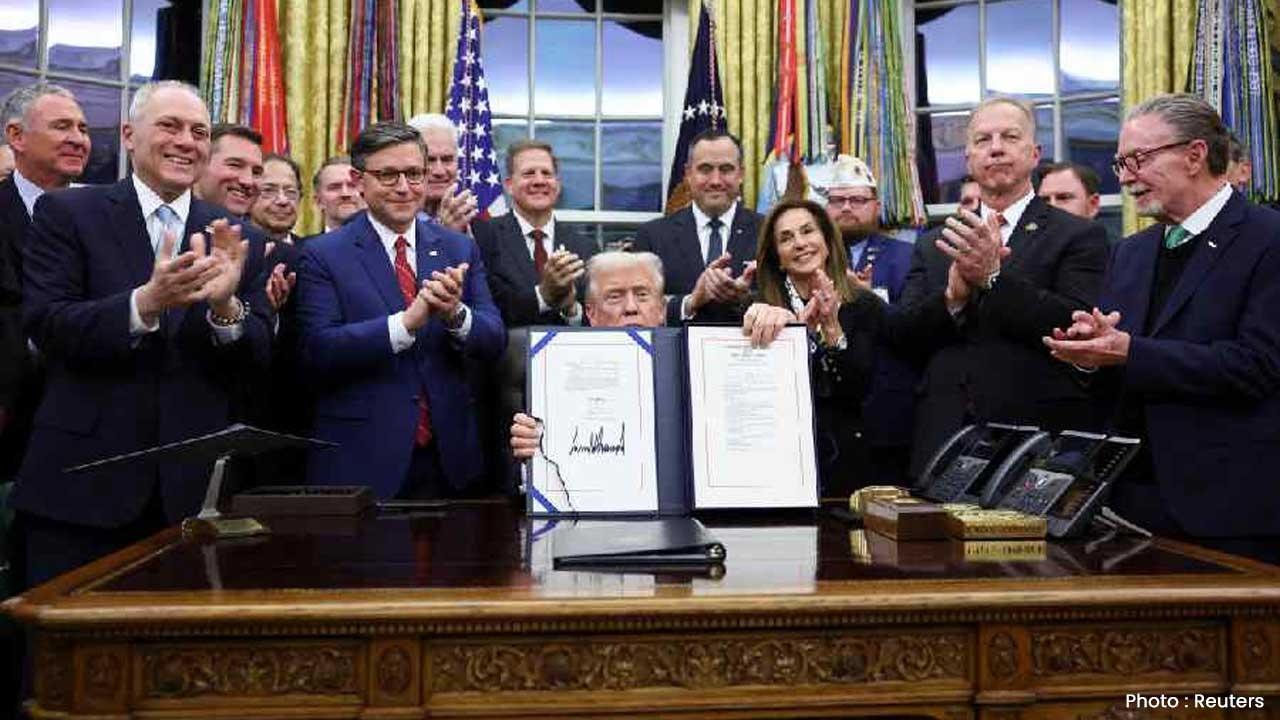
Washington, D.C. — President Donald Trump has signed a new funding bill, officially ending the unprecedented 43-day government shutdown, which stands as the longest in U.S. history. With this move, government functions will resume after weeks of disruption, impacting countless Americans and essential services.
Just hours prior, the House of Representatives, controlled by the GOP, passed the bill with a 222-209 vote, following intense negotiations. The legislation faced significant pushback from House Democrats, who expressed discontent with the Senate for failing to extend federal health insurance subsidies.
President Trump allocated responsibility for the shutdown's consequences to the Democrats, urging voters to hold them accountable in the upcoming 2026 midterms.
“Remember this when the midterms come around and consider what they did to our country,” he remarked after the bill's signing.
Earlier, the Senate advanced the bill with a 60-40 vote, thanks to a coalition of moderate Democrats and Republican leaders reaching a deal with the White House.
The newly enacted legislation will fund federal agencies until January 30, 2026, averting further job cuts and reversing Trump's previous plans for workforce reductions. Moreover, it ensures back pay for federal employees, including military staff, air traffic personnel, and Border Patrol agents, who went without pay during the shutdown.
Those federal employees impacted are expected to return to work Thursday, bringing an end to a period of uncertainty and financial hardship.
However, this bill also continues to add around $1.8 trillion each year to the existing national debt of $38 trillion, a growing concern among fiscal conservatives.
The shutdown arose from disputes surrounding healthcare subsidies and budget priorities, leading to significant nationwide disruptions, including delays in air travel and food assistance programs.
Despite the conclusion of the shutdown, Democrats aim to keep pursuing the extension of Affordable Care Act (ACA) subsidies, a crucial point of contention in the discussions.
House Democratic leader Hakeem Jeffries stated that the struggle continues, emphasizing, “This is just the beginning, not the end.”
Senate Minority Leader Chuck Schumer reiterated this sentiment earlier in the week, asserting, “We are dedicated to the fight for affordable healthcare for every American.”
This 43-day shutdown began after budget discussions fell apart, impacting hundreds of thousands of federal workers who were either furloughed or compelled to work without pay. Economists project that the shutdown has cost the U.S. economy billions in lost productivity and consumer spending.
Trump has openly criticized healthcare subsidies under the ACA, branding them as “a disaster for the American public” and advocating for direct compensation to individuals.
As the shutdown draws to a close, attention will shift back to long-term fiscal strategies and the ongoing conflict over healthcare funding, both anticipated to shape U.S. politics in the near future.










PM Modi Pays Tribute to Mahatma Gandhi, Urges People to Support Khadi
PM Modi pays tribute to Mahatma Gandhi on Gandhi Jayanti and urges citizens to support Khadi and the

Amazon Seeks to Offload $8 Billion in Nvidia Chips to Investors
Amazon plans to move $8 billion in Nvidia chips to investors, using a new financing model to strengt

Samsung Raises Galaxy S26 Prices as Memory Chip Costs Rise
Samsung raises Galaxy S26 prices in South Korea as rising memory chip costs put pressure on smartpho

Lewis Hamilton Calls Singapore Grand Prix One of F1's Toughest Races
Lewis Hamilton discusses the demanding Singapore Grand Prix and brings Plus44 and Almave to Singapor

Denmark's Pandora Opens World's Largest Jewellery Factory in Vietnam
Pandora opens its largest jewellery factory in Vietnam, expanding global production, strengthening s

Gautam Gambhir Questions Batting-Friendly Pitches After India's Record ODI Chase
Gautam Gambhir questions batting-friendly ODI pitches after India’s record chase, calling for a bett

