
You have not yet added any article to your bookmarks!
Join 10k+ people to get notified about new posts, news and tips.
Do not worry we don't spam!
Post by : Rohit Dhiman
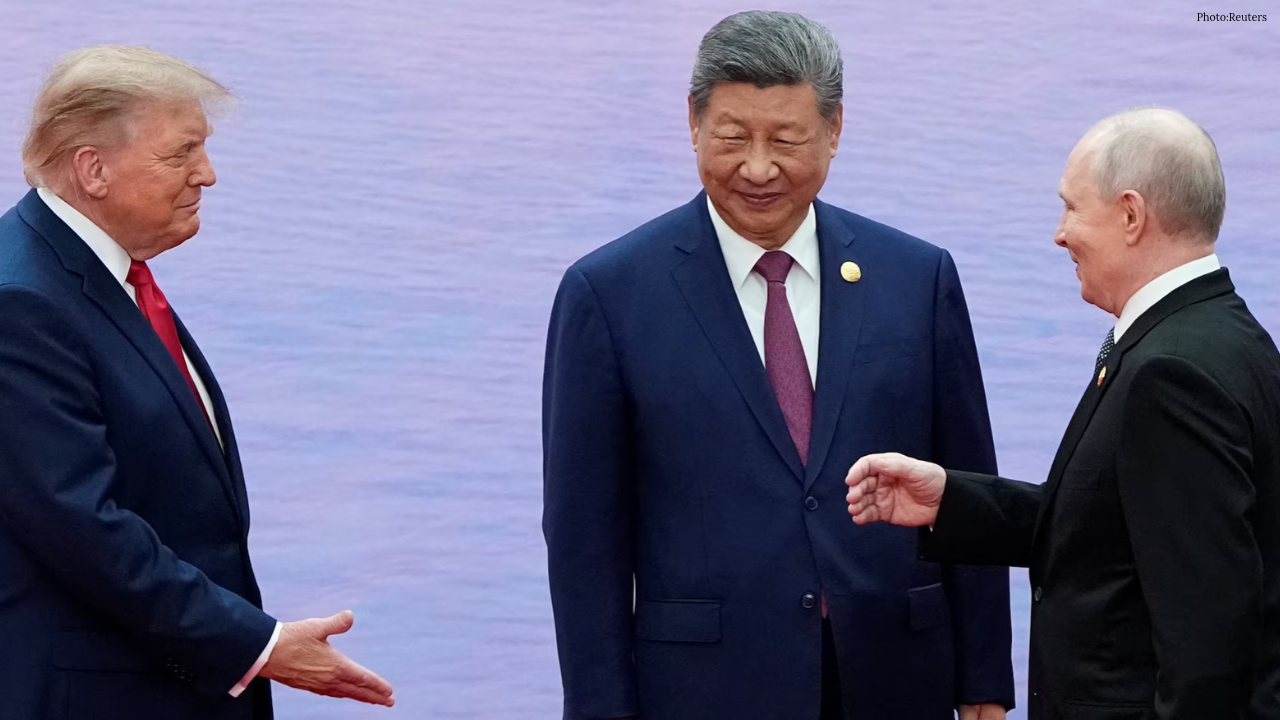
SHENZHEN, China: US President Donald Trump arrived in Shenzhen, China, on November 18, 2026, for the Asia-Pacific Economic Cooperation (APEC) summit and a series of high-level diplomatic engagements. His visit has attracted international attention because of the planned first-ever formal trilateral meeting involving the leaders of the United States, China and Russia. Chinese President Xi Jinping personally welcomed Trump at Shenzhen Bao'an International Airport after Air Force One landed. The reception included a red-carpet welcome and a ceremonial military honour guard. A flypast involving five aircraft was also reported during the arrival ceremony, highlighting the diplomatic importance Beijing attached to the visit. Russian President Vladimir Putin also arrived in Shenzhen on November 18. He was welcomed by senior Chinese official Cai Qi. Later, Trump and Putin exchanged a handshake at the APEC welcome reception, with Xi standing alongside them. The three leaders also appeared together for a group photograph with other international representatives. The most closely watched part of the visit is the trilateral summit scheduled for November 19 on the sidelines of the APEC leaders' meeting. The proposed gathering is significant because it would bring the sitting leaders of the three major global powers together in a formal three-way discussion for the first time.
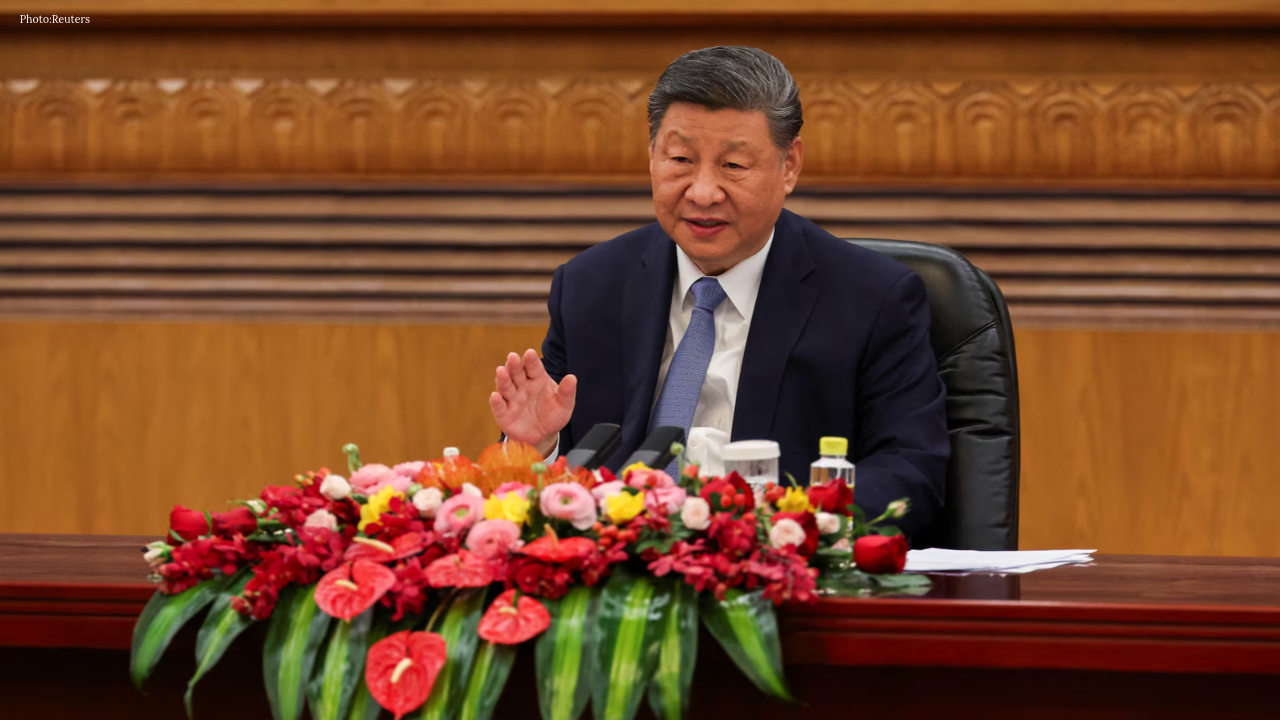
The planned meeting between Trump, Xi and Putin is one of the central diplomatic events surrounding this year's APEC gathering. The three countries hold significant influence over international security, global trade, energy markets and the wider geopolitical balance. According to reports ahead of the meeting, discussions are expected to cover nuclear weapons, international security and the situation involving Iran. Trump has expressed interest in discussing ways to reduce nuclear arsenals and address the risks associated with the spread of nuclear weapons. The Kremlin also indicated that consultations were taking place over a possible joint statement following the meeting. Russian presidential aide Yuri Ushakov said that discussions on the draft text were under way and that Moscow had communicated its position to Beijing. However, it remained uncertain whether all three countries would agree on a common statement. If no joint document is adopted, the countries may present their own assessments of the discussions. This uncertainty reflects the differences in their diplomatic priorities and positions on several international issues. The importance of the proposed summit goes beyond the symbolic presence of three powerful leaders in one room. Any progress on strategic security, nuclear risks or communication between the governments could influence future diplomatic engagement.
Trump's arrival in Shenzhen received particular attention because Xi Jinping personally attended the airport reception. The Chinese president greeted the US leader as he stepped off Air Force One at Shenzhen Bao'an International Airport. The welcome included a red carpet, a military honour guard and a formal reception involving officials and representatives from both countries. A five-aircraft flypast was also reported as part of the ceremony. Such diplomatic welcomes carry symbolic importance, particularly when relations between the countries involve sensitive economic and strategic disagreements. The personal reception offered an opportunity for both governments to project a willingness to maintain communication despite continuing differences. The relationship between Washington and Beijing has been influenced by disputes over tariffs, technology restrictions, market access and regional security. Both countries remain deeply connected through international trade and supply chains, even as competition between them has intensified. Putin's arrival added another major diplomatic dimension to the gathering. After being welcomed by Cai Qi, the Russian president joined the APEC-related events. Trump and Putin were seen shaking hands during the welcome reception, while Xi stood nearby.
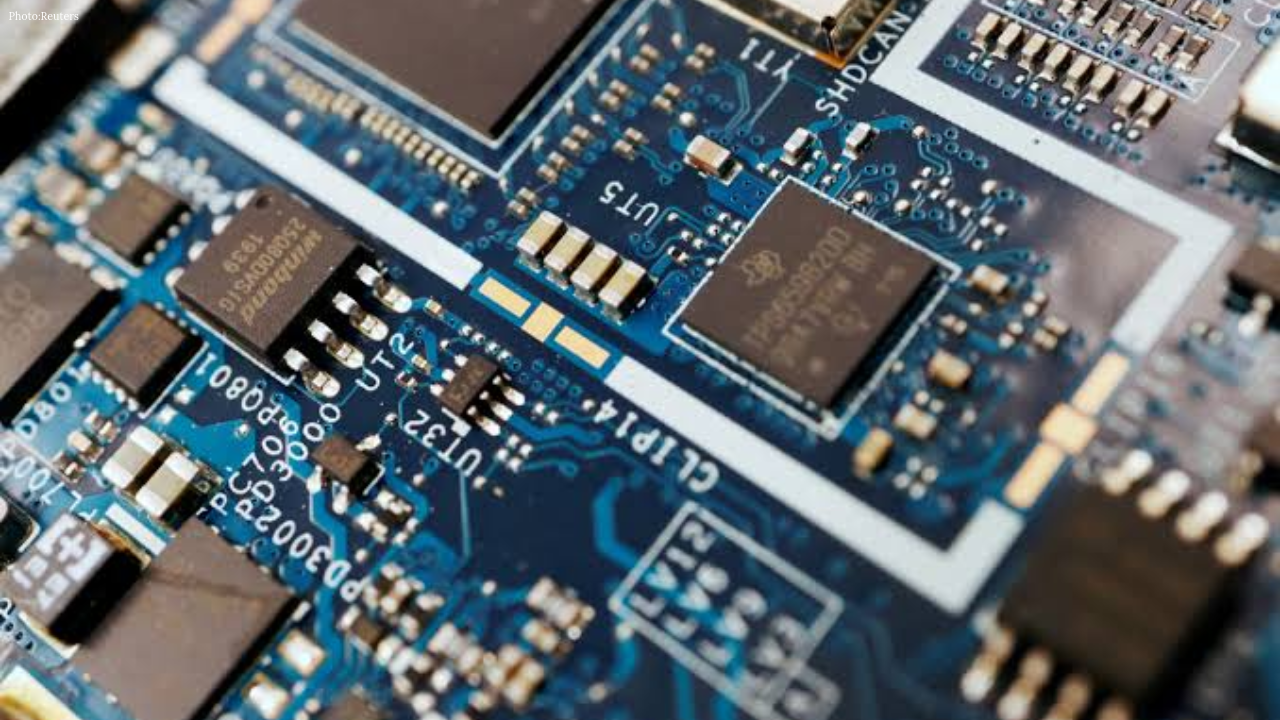
Economic relations between Washington and Beijing are among the most important issues surrounding Trump's visit. The United States and China are two of the world's largest economies, and decisions taken by their governments can influence international markets, manufacturers and global supply chains. Over recent years, the two countries have faced disputes involving import tariffs, export restrictions, technology access and market competition. Washington has introduced restrictions on certain advanced technologies, while Beijing has objected to measures it considers harmful to Chinese businesses and economic interests. Semiconductors are particularly important in this dispute. Advanced chips are essential for artificial intelligence systems, data centres, telecommunications, modern manufacturing and several defence-related technologies. Access to advanced chipmaking equipment and computing technology has therefore become a major point of strategic competition. The United States has sought to restrict China's access to certain advanced semiconductor technologies on national security grounds. China, meanwhile, has continued efforts to strengthen its domestic technology industry and reduce dependence on foreign suppliers.
Nuclear security is expected to be one of the most significant subjects during the proposed meeting. Trump has indicated that he wants to discuss reducing nuclear weapons and limiting the risks associated with their continued development. The United States and Russia possess the world's largest nuclear arsenals. China also maintains nuclear weapons and has been modernising its military capabilities. Their different security strategies and approaches to deterrence make any three-country arms-control arrangement a complicated diplomatic challenge. For Washington, bringing China into wider discussions on nuclear weapons has become an important strategic objective. US officials have argued that future arms-control arrangements should take account of the growing capabilities of all major nuclear powers. One important development is the expiry of the New Strategic Arms Reduction Treaty, commonly known as New START, between the United States and Russia in February 2026. The agreement had placed limits on the countries' deployed strategic nuclear arsenals and provided a framework for verification and transparency. Trump has expressed interest in a new and modernised arrangement that could involve China as well. However, Beijing has shown little enthusiasm for joining an agreement designed around the much larger nuclear arsenals of Washington and Moscow.
Putin's participation has also brought renewed attention to the Russia-Ukraine war, which began with Russia's full-scale invasion of Ukraine in February 2022. The conflict continues to influence European security, international diplomacy and relations between Russia and Western countries. The United States has been involved in diplomatic efforts aimed at finding a possible path towards ending the war. Trump and Putin have previously held direct discussions, including their meeting in Alaska in August 2025. However, that engagement did not produce an agreement to end the conflict. Ahead of the Shenzhen summit, officials indicated that Ukraine was not expected to be a central item on the formal agenda of the trilateral meeting. The issue could nevertheless remain part of wider diplomatic conversations, particularly during separate discussions between Washington and Moscow. China has called for a political settlement to the conflict while maintaining economic and diplomatic relations with Russia. Its position is important because Beijing has influence in Moscow and is a major international economic power.
Iran is another issue expected to receive attention during Trump's diplomatic engagements in China. The country's nuclear programme and its wider role in the Middle East have remained important subjects in international relations. Washington has repeatedly expressed concerns about Iran's nuclear activities and has sought to prevent Tehran from acquiring nuclear weapons. China and Russia, meanwhile, maintain diplomatic and economic relationships with Iran and have criticised some Western sanctions and pressure measures. The situation in the Middle East also has implications for international energy markets. The Strait of Hormuz is one of the world's most important routes for transporting oil and other energy supplies. Any disruption to shipping through the waterway can affect energy prices, trade and economic stability in several countries. Trump has said that the United States and China share an interest in keeping energy supplies flowing through the Strait of Hormuz and preventing Iran from obtaining a nuclear weapon. This suggests that energy security and Iran's nuclear programme could form part of the wider discussions between Washington and Beijing. However, the three countries have different relationships with Tehran and different views on how regional tensions should be managed. Any diplomatic progress would therefore depend on whether they can identify areas of common interest without setting aside their broader policy differences.
Artificial intelligence is another major subject surrounding the APEC summit. Governments increasingly view AI as a strategic technology that can influence economic growth, industrial development, national security and international competitiveness. The United States and China are competing in areas such as advanced computing, semiconductor production, data centres and AI research. Both countries are investing in technologies that could shape future industries and influence their positions in the global economy. Trump has expressed opposition to international regulatory approaches that he believes could slow down AI development and innovation. His position reflects a broader debate over how governments should balance technological progress with safeguards. As AI becomes more widely used, concerns about data protection, cybersecurity, misinformation and the responsible use of automated systems are also growing. Governments and businesses are trying to establish policies that encourage innovation while addressing potential risks. APEC provides a platform for member economies to discuss digital development, technology cooperation and the role of innovation in regional economic growth. These discussions are particularly relevant for countries seeking to expand their technology sectors and attract investment.
The Asia-Pacific Economic Cooperation forum, commonly known as APEC, is a regional economic platform established in 1989. It brings together 21 member economies to promote trade, investment, economic cooperation and regional development. The forum includes major economies such as the United States, China, Japan, South Korea, Australia, Canada and Russia, along with several economies from Southeast Asia and the Pacific region. India is not a member of APEC. China is hosting the 33rd APEC Economic Leaders' Meeting in 2026, with the main events taking place in Shenzhen on November 18 and 19. Shenzhen is one of China's leading technology and manufacturing centres. The city is known for its electronics industry, telecommunications companies, digital technology businesses and advanced manufacturing sector. Its role as the host city also reflects China's focus on innovation and economic development. APEC's wider purpose is to encourage cooperation among economies that have strong trade and investment connections. The forum provides an opportunity for leaders to discuss regional challenges, improve economic coordination and explore areas of shared interest.
The diplomatic engagement between the United States, China and Russia is important for countries beyond the three participants. Their decisions and relations can influence international trade, energy supplies, security arrangements and the balance of power across different regions. For India, relations with all three countries carry strategic importance. New Delhi has strong defence, technology and trade ties with the United States. Russia has remained a longstanding partner for India in defence and energy, while China is an important trading partner as well as a country with which India has unresolved border and security concerns. Any major shift in relations among Washington, Beijing and Moscow could therefore have implications for India's diplomatic calculations and regional security environment. The wider Asia-Pacific region also has a direct interest in stable economic relations between the United States and China. Both countries play major roles in manufacturing, technology, investment and international trade. A prolonged dispute between them could affect businesses and supply chains across the region. European countries, meanwhile, are closely watching developments involving Russia and Ukraine. Middle Eastern countries are concerned about regional security and energy transportation, while global markets are sensitive to changes in relations among major powers.
Read Also: GTA 6 Launches Worldwide After 13 Years With a New Vice City Story
Trump's arrival in Shenzhen, Xi Jinping's personal welcome, Putin's presence and the three leaders' appearance together at the APEC reception have made the summit one of the most closely watched diplomatic events of November 2026. The proposed trilateral meeting on November 19 has the potential to create an important channel of communication among the United States, China and Russia. Nuclear security, Iran, international stability and the wider geopolitical situation are among the issues expected to shape the discussions. However, the three governments have different priorities and continue to disagree on several major questions. Trade restrictions, technology competition, military policy and international conflicts are unlikely to be resolved through a single meeting.






GTA 6 Launches Worldwide After 13 Years With a New Vice City Story
GTA 6 arrives after 13 years with Jason and Lucia, a new Vice City world, immersive gameplay, major

Arda Guler Signs Six-Year Real Madrid Contract Extension Until 2032
Arda Guler signs a new six-year Real Madrid deal, extending his stay until 2032 after an impressive

APEC Members Emphasise Safe and Responsible Use of Artificial Intelligence
APEC members discuss responsible AI use, digital innovation and data governance as China and the US

Union of European Clubs Challenge UEFA and EFC Over EU Competition Rules
UEC files an EU competition complaint against UEFA and EFC, challenging club representation, governa

Mohammed Shami Retires From Test Cricket, Eyes White-Ball Career
Mohammed Shami retires from Test cricket after 13 years, with 229 wickets. He will continue playing

Singapore Warns Users About Privacy and Security Risks of AI Agents
Singapore warns users about AI agent security risks, data privacy, online scams and unauthorised acc