
You have not yet added any article to your bookmarks!
Join 10k+ people to get notified about new posts, news and tips.
Do not worry we don't spam!
Post by : Meena Ariff
Photo: Reuters
Human trafficking is growing fast in Southeast Asia, but not in the usual way most people think of it. According to the United Nations, hundreds of thousands of people are now being tricked, kidnapped, or forced into working in online scam centres. These people are made to commit crimes, often without any choice, and the situation is getting worse every day.
On World Day Against Trafficking in Persons, the head of the UN’s migration agency, Amy Pope, said that this kind of trafficking is now a major global crisis. She warned that the world is not doing enough to help these people.
A Business Worth Billions, Fueled by Fear
Amy Pope explained that trafficking is not just about human rights violations — it's also a huge illegal business. She said, “It’s a massive global business that fuels corruption, spreads fear, and preys on the most vulnerable.”
The online scam centres, also called scam compounds, make an estimated US$40 billion (around RM170 billion) every year. These centres are run by criminal groups that often operate in areas with weak laws or civil unrest, like parts of Myanmar.
Who Are the Victims?
Most of the people trapped in these scam operations are not criminals — they are victims. They include:
Many are lured by fake job offers promising high pay and good working conditions. Once they arrive, they are locked up in heavily guarded buildings, their phones and passports taken away. They are forced to run online scams — pretending to be in love or offering fake investment deals — to cheat people into sending money through untraceable cryptocurrency payments.
Myanmar's Role in the Crisis
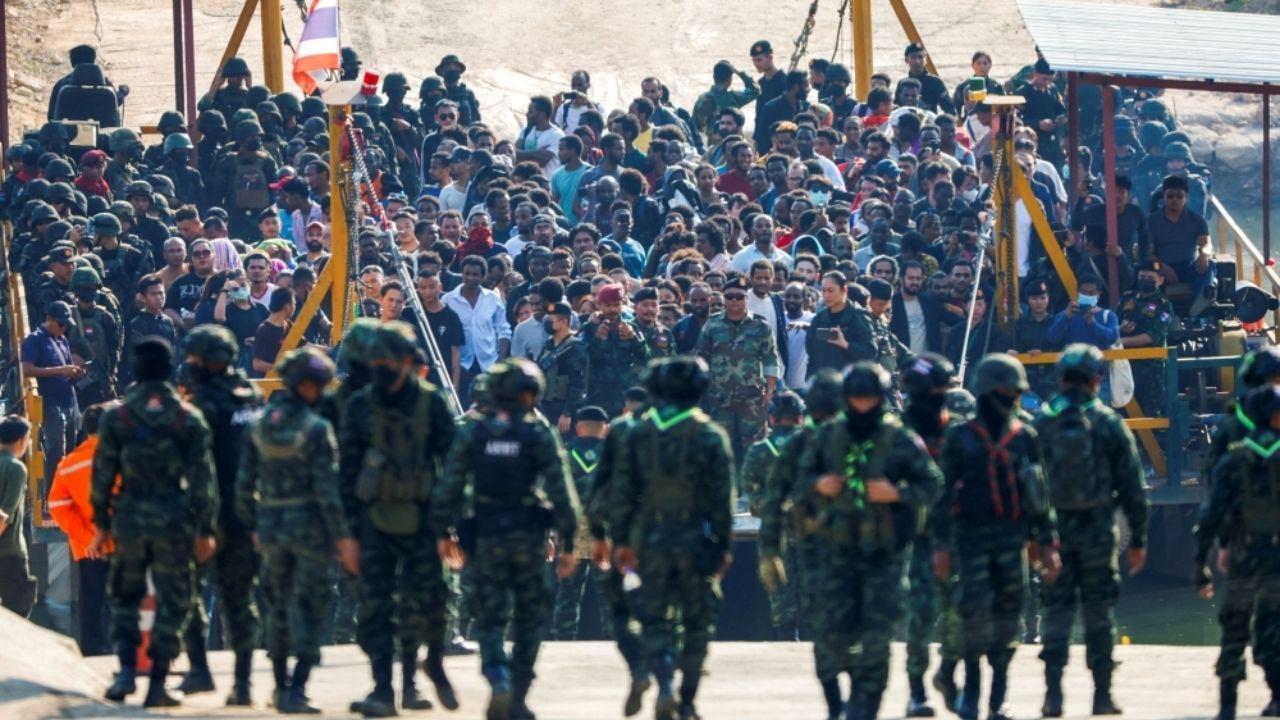
One of the biggest problem areas is Myanmar, where a civil war has been going on since a military coup in 2021. Because of the fighting and the lack of government control, criminal groups have set up fraud factories in border areas.
These fraud centres are often protected with guards, gates, and weapons. The people inside are treated more like prisoners than workers. Many victims say they were beaten, threatened, or even tortured if they refused to take part in the scams.
Wrongly Treated as Criminals
One of the most troubling things Amy Pope pointed out is that, instead of being rescued or helped, many of these victims are being treated like criminals. When police raid these scam centres, the trafficked workers are sometimes arrested, prosecuted, and punished for the crimes they were forced to commit.
“To make matters worse, instead of getting help, they’re often arrested and punished,” Pope said. “Let me be clear: No one should be jailed for something they were forced to do.”
UN Urges Action and Legal Change
Amy Pope called on governments, law enforcement, and society to work together to stop this growing crisis. She asked for laws to be changed so that survivors of trafficking are protected, not punished. She also urged countries to focus on catching the real criminals — the traffickers — instead of blaming their victims.
“We need to go after the traffickers and protect the people they exploit,” she said.
Help Provided, But More Needed
Since 2022, the UN’s International Organization for Migration (IOM) has helped almost 3,000 victims. They have assisted people who were rescued from scam centres and helped them return home safely. Some of these victims were from the Philippines, Vietnam, Thailand, and Myanmar.
The IOM provides counseling, health services, and job training to help victims rebuild their lives. But according to Pope, there are still thousands more people who remain trapped and need help urgently.
Scams on Social Media
The scam centres often train their victims to run fake online schemes. These include:
Many of the victims are told to speak specific languages to target people from different countries. The whole setup is made to look professional, so the scams are hard to detect.
A Call to Protect the Innocent
The UN is now sounding the alarm: this is not just a local problem in Southeast Asia — it’s a global issue that needs attention. Every day, more people are falling into these traps. And every day, innocent people are being made to commit crimes they don’t want to commit.
Amy Pope’s message was clear: “Trafficking must be stopped. Victims must be saved. And traffickers must be punished.”
This issue reminds us that behind every scam message or fake online profile, there could be someone crying for help — someone who didn’t choose this life.
Act Now, Not Later
Human trafficking in the form of forced online crime is a growing danger. While organizations like the UN are working to help victims, the world needs to act faster and smarter.
We must make sure the laws protect victims, not punish them. We must support people who escape these terrible conditions. And most importantly, we must stop the criminals who run these scam centres and use people like tools.










PM Modi Pays Tribute to Mahatma Gandhi, Urges People to Support Khadi
PM Modi pays tribute to Mahatma Gandhi on Gandhi Jayanti and urges citizens to support Khadi and the

Amazon Seeks to Offload $8 Billion in Nvidia Chips to Investors
Amazon plans to move $8 billion in Nvidia chips to investors, using a new financing model to strengt

Samsung Raises Galaxy S26 Prices as Memory Chip Costs Rise
Samsung raises Galaxy S26 prices in South Korea as rising memory chip costs put pressure on smartpho

Lewis Hamilton Calls Singapore Grand Prix One of F1's Toughest Races
Lewis Hamilton discusses the demanding Singapore Grand Prix and brings Plus44 and Almave to Singapor

Denmark's Pandora Opens World's Largest Jewellery Factory in Vietnam
Pandora opens its largest jewellery factory in Vietnam, expanding global production, strengthening s

Gautam Gambhir Questions Batting-Friendly Pitches After India's Record ODI Chase
Gautam Gambhir questions batting-friendly ODI pitches after India’s record chase, calling for a bett

