
You have not yet added any article to your bookmarks!
Join 10k+ people to get notified about new posts, news and tips.
Do not worry we don't spam!
Post by : Saif Rahman
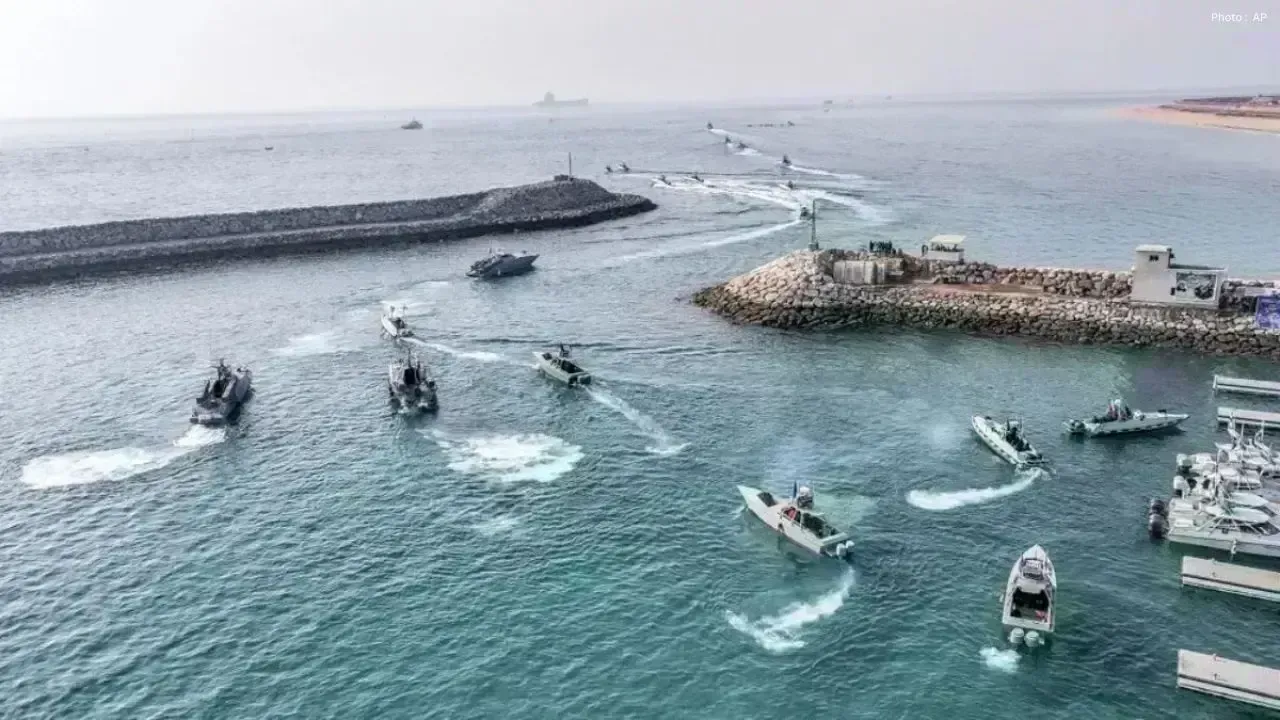
The United States military has reportedly executed airstrikes against Iranian installations close to Qeshm Island and the Goruk region, focusing on facilities associated with drone operations. This move comes as security concerns in the Gulf intensify, marking another critical episode in the ongoing standoff between Washington and Tehran. The operation has garnered international attention due to the area's strategic significance and the potential fallout for regional stability.
These strikes reportedly targeted sites that US officials believe contribute to drone-related activities. Unmanned aerial vehicles have increasingly become vital in modern warfare, shaping military strategies throughout the Middle East. This latest operation signifies the growing emphasis on thwarting drone threats that may jeopardize military bases, commercial shipping routes, or allied interests within the region.
Strategically located near the Strait of Hormuz, Qeshm Island plays a pivotal role in one of the globe's busiest maritime corridors. A large portion of international oil shipments navigates through this narrow passage daily. Consequently, any military engagement in or around this region attracts immediate global attention, given the potential for disruptions affecting energy markets and global trade.
Beyond immediate military objectives, the action symbolizes the ongoing complex dynamics in US-Iran relations. The two nations have grappled with strained ties for years, characterized by discord over security, regional dominance, military actions, and nuclear negotiations. Each incident serves to complicate an already intricate relationship.
Military strategists increasingly regard drone networks as a significant security menace. Unmanned systems often come at lower costs, evade detection more effectively, and can strike distant targets, leading many nations to invest heavily in drone technologies. Disruption of these capabilities is becoming an integral aspect of modern military strategy.
The site of the operation further amplifies its importance; the waters surrounding Qeshm Island are among the world's most security-sensitive areas. This region connects energy-producing nations with global markets, and heightened military activity raises alarms among governments, investors, and shipping companies reliant on stable maritime trading routes.
Economic ramifications are also noteworthy. Global energy markets typically respond swiftly to Gulf developments. Even minor military engagements can create uncertainty concerning oil supplies and transport routes. Investors carefully monitor the area since shifts in security landscapes can affect fuel prices, shipping expenses, and overall economic confidence.
For nations heavily dependent on energy imports, ensuring stability in the Gulf is paramount. Any disruption of shipping through the Strait of Hormuz could have repercussions extending far beyond the Middle East. This underscores why military activities in this region become international concerns instead of isolated regional disputes.
The strikes highlight the changing face of warfare, where traditional confrontations increasingly incorporate advanced technology like drones, missile defense, and cyber capabilities. Countries worldwide are reformulating their defense strategies to tackle these evolving threats. This operation serves as a testament to how technology is central to contemporary conflicts.
On the diplomatic front, the incident is expected to rekindle calls for moderation. Many international watchers believe that ongoing military exchanges heighten the potential for miscalculations. Even when limited in scope, these actions can provoke reactions that spiral into broader conflicts. Maintaining communication during tense periods is often deemed crucial for avoiding escalation.
Regional authorities are closely observing the developments. Numerous Middle Eastern nations possess vested economic and security interests tied to Gulf stability. A drawn-out confrontation could adversely impact investment, trade, tourism, and regional development plans, prompting neighboring states to favor diplomatic solutions as tensions evolve.
The humanitarian aspect is equally significant. Although military actions are often presented through a strategic lens, prolonged conflicts can generate uncertainty for everyday citizens. Families, local businesses, and whole communities may experience disruptions in economic opportunities and heightened security concerns.
The targeting of Iranian assets near Qeshm Island marks an essential event in the continuum of security challenges in the Middle East. Beyond immediate military aims, this operation brings to light broader issues surrounding maritime safety, drone warfare, regional stability, and global energy supplies. It reinforces the reality that events in the Gulf can greatly affect concerns far beyond its borders.
As governments analyze the implications of this recent action, the question of whether diplomatic avenues can avert further escalation remains open. While military actions may address short-term security needs, lasting stability is more likely rooted in dialogue, prudent decision-making, and efforts to reduce the likelihood of broader conflict. The coming days will warrant careful observation by policymakers, investors, and global citizens alike, as they consider the ramifications of this latest development for the region's future.










PM Modi Pays Tribute to Mahatma Gandhi, Urges People to Support Khadi
PM Modi pays tribute to Mahatma Gandhi on Gandhi Jayanti and urges citizens to support Khadi and the

Amazon Seeks to Offload $8 Billion in Nvidia Chips to Investors
Amazon plans to move $8 billion in Nvidia chips to investors, using a new financing model to strengt

Samsung Raises Galaxy S26 Prices as Memory Chip Costs Rise
Samsung raises Galaxy S26 prices in South Korea as rising memory chip costs put pressure on smartpho

Lewis Hamilton Calls Singapore Grand Prix One of F1's Toughest Races
Lewis Hamilton discusses the demanding Singapore Grand Prix and brings Plus44 and Almave to Singapor

Denmark's Pandora Opens World's Largest Jewellery Factory in Vietnam
Pandora opens its largest jewellery factory in Vietnam, expanding global production, strengthening s

Gautam Gambhir Questions Batting-Friendly Pitches After India's Record ODI Chase
Gautam Gambhir questions batting-friendly ODI pitches after India’s record chase, calling for a bett

