
You have not yet added any article to your bookmarks!
Join 10k+ people to get notified about new posts, news and tips.
Do not worry we don't spam!
Post by : Rameen Ariff
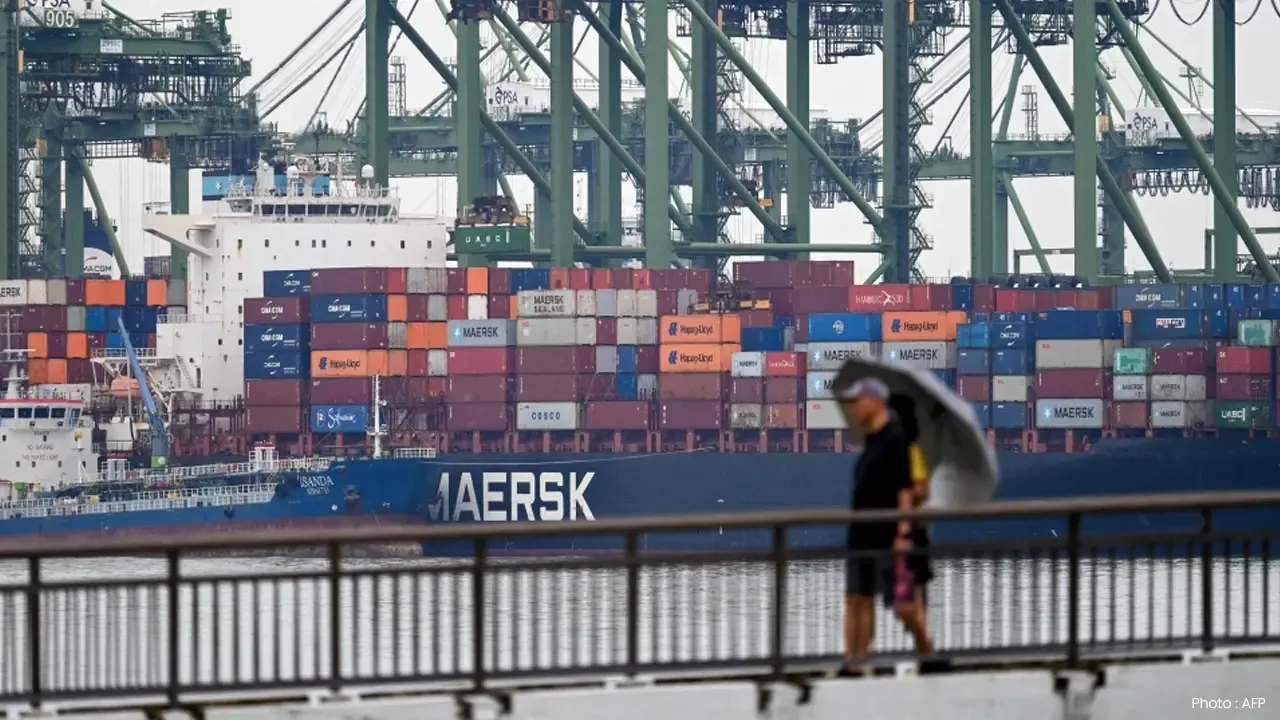
The United States has imposed a 12.5% tariff on around one-third of Singapore’s domestic exports, citing concerns related to forced labour practices.
The new trade measure came into effect on July 24, 2026, following a US Trade Representative (USTR) investigation into labour practices across multiple economies.
Singapore has strongly rejected the allegations, stating that it does not support forced labour and maintains strict enforcement measures to prevent illegal employment practices.
The US government said the new tariffs are linked to concerns over forced labour in international supply chains.
US Trade Representative Jamieson Greer said Washington has maintained a forced labour import ban for decades and expects trading partners to take stronger action against such practices.
The USTR investigation, which began in March and concluded in July, placed Singapore among 45 economies facing a 12.5% duty.
Several other countries were also affected, with some receiving lower tariff rates after adopting stronger forced labour restrictions.
Singapore’s Ministry of Trade and Industry (MTI) rejected claims that the country allows unfair trade practices.
The government said Singapore has a comprehensive legal framework and a strong record of enforcement against forced labour.
Officials highlighted that forced labour issues within global supply chains are complex international challenges that require cooperation between countries.
Singapore said it would continue discussions with international partners to address concerns while protecting its trade interests.
Singapore Foreign Minister Vivian Balakrishnan reportedly discussed the tariff issue with US Secretary of State Marco Rubio during meetings in Manila.
Singapore officials said they are seeking clarity on how the new tariff measures will be implemented and what impact they could have on businesses.
The US tariff does not apply to several important sectors and products.
Exempt categories include:
These exemptions reduce the immediate impact on some of Singapore’s key export industries.
The new tariff has created uncertainty among Singapore manufacturers that depend heavily on global trade.
Singapore Manufacturing Federation President Lennon Tan said the tariff decision does not reflect the standards followed by many Singapore companies.
Manufacturers are now considering strategies such as:
The US tariff action is part of a broader review of labour practices and trade policies affecting multiple economies.
Several Southeast Asian countries were also included in the US measures, raising concerns about possible effects on regional exports and supply chains.
The decision highlights growing pressure on Asian exporters to meet international labour standards while maintaining competitive trade relationships.










PM Modi Pays Tribute to Mahatma Gandhi, Urges People to Support Khadi
PM Modi pays tribute to Mahatma Gandhi on Gandhi Jayanti and urges citizens to support Khadi and the

Amazon Seeks to Offload $8 Billion in Nvidia Chips to Investors
Amazon plans to move $8 billion in Nvidia chips to investors, using a new financing model to strengt

Samsung Raises Galaxy S26 Prices as Memory Chip Costs Rise
Samsung raises Galaxy S26 prices in South Korea as rising memory chip costs put pressure on smartpho

Lewis Hamilton Calls Singapore Grand Prix One of F1's Toughest Races
Lewis Hamilton discusses the demanding Singapore Grand Prix and brings Plus44 and Almave to Singapor

Denmark's Pandora Opens World's Largest Jewellery Factory in Vietnam
Pandora opens its largest jewellery factory in Vietnam, expanding global production, strengthening s

Gautam Gambhir Questions Batting-Friendly Pitches After India's Record ODI Chase
Gautam Gambhir questions batting-friendly ODI pitches after India’s record chase, calling for a bett

