
You have not yet added any article to your bookmarks!
Join 10k+ people to get notified about new posts, news and tips.
Do not worry we don't spam!
Post by : Meena Ariff
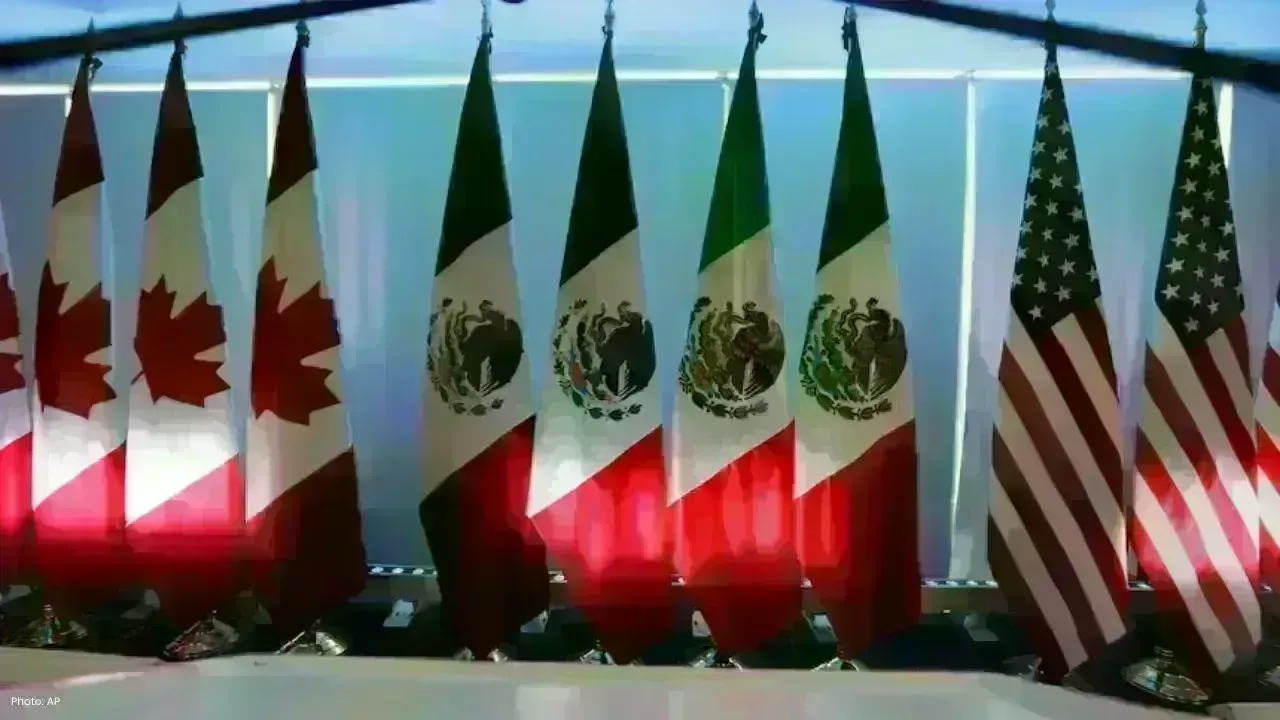
With the Canada-U.S.-Mexico Agreement (CUSMA) under mandatory review, prominent U.S. industries are fervently urging the administration to retain this vital trade agreement and eliminate tariffs on imports from Canada and Mexico. Public hearings scheduled in Washington this week will delve into the agreement's impact on North American trade.
Industry input highlights the extensive advantages that CUSMA brings to U.S. manufacturing, construction, automotive, and consumer goods industries. The National Association of Manufacturers refers to the deal as "the most pro-U.S. manufacturing trade agreement in history," underscoring its significance in boosting domestic production and enhancing global competitiveness.
International trade expert Julian Karaguesian reviewed several submissions, which exhibited strong backing for the agreement, with many proponents calling for tariff removal and sustained trilateral trade collaboration.
Construction associations, including the National Association of Home Builders, underline the critical role of Canadian softwood lumber in affordable housing projects. Leading car manufacturers like GM and Ford assert that CUSMA has spurred over $60 billion in investments across North America, thereby increasing their competitiveness against global players.
Retail and consumer goods representatives echoed these sentiments, citing benefits that the agreement provides to American consumers and supply chains. They warn that complete renegotiation could ignite trade disputes and create market upheaval.
While support for CUSMA is widespread, certain sectors, particularly steel and dairy, have raised concerns regarding specific clauses. Uncertainty looms over the agreement's future as President Trump, who was at the forefront of negotiating CUSMA in his first term, has expressed skepticism during his second term.
The upcoming tri-nation review, commencing July 1, may result in a possible extension of up to 16 years, renegotiation of essential aspects, or, if consensus isn't reached, a withdrawal. Analysts caution that frequent annual reviews risk denting investor confidence and destabilizing long-term economic planning within the region.










PM Modi Pays Tribute to Mahatma Gandhi, Urges People to Support Khadi
PM Modi pays tribute to Mahatma Gandhi on Gandhi Jayanti and urges citizens to support Khadi and the

Amazon Seeks to Offload $8 Billion in Nvidia Chips to Investors
Amazon plans to move $8 billion in Nvidia chips to investors, using a new financing model to strengt

Samsung Raises Galaxy S26 Prices as Memory Chip Costs Rise
Samsung raises Galaxy S26 prices in South Korea as rising memory chip costs put pressure on smartpho

Lewis Hamilton Calls Singapore Grand Prix One of F1's Toughest Races
Lewis Hamilton discusses the demanding Singapore Grand Prix and brings Plus44 and Almave to Singapor

Denmark's Pandora Opens World's Largest Jewellery Factory in Vietnam
Pandora opens its largest jewellery factory in Vietnam, expanding global production, strengthening s

Gautam Gambhir Questions Batting-Friendly Pitches After India's Record ODI Chase
Gautam Gambhir questions batting-friendly ODI pitches after India’s record chase, calling for a bett

