You have not yet added any article to your bookmarks!
Join 10k+ people to get notified about new posts, news and tips.
Do not worry we don't spam!
Post by : Anis Farhan
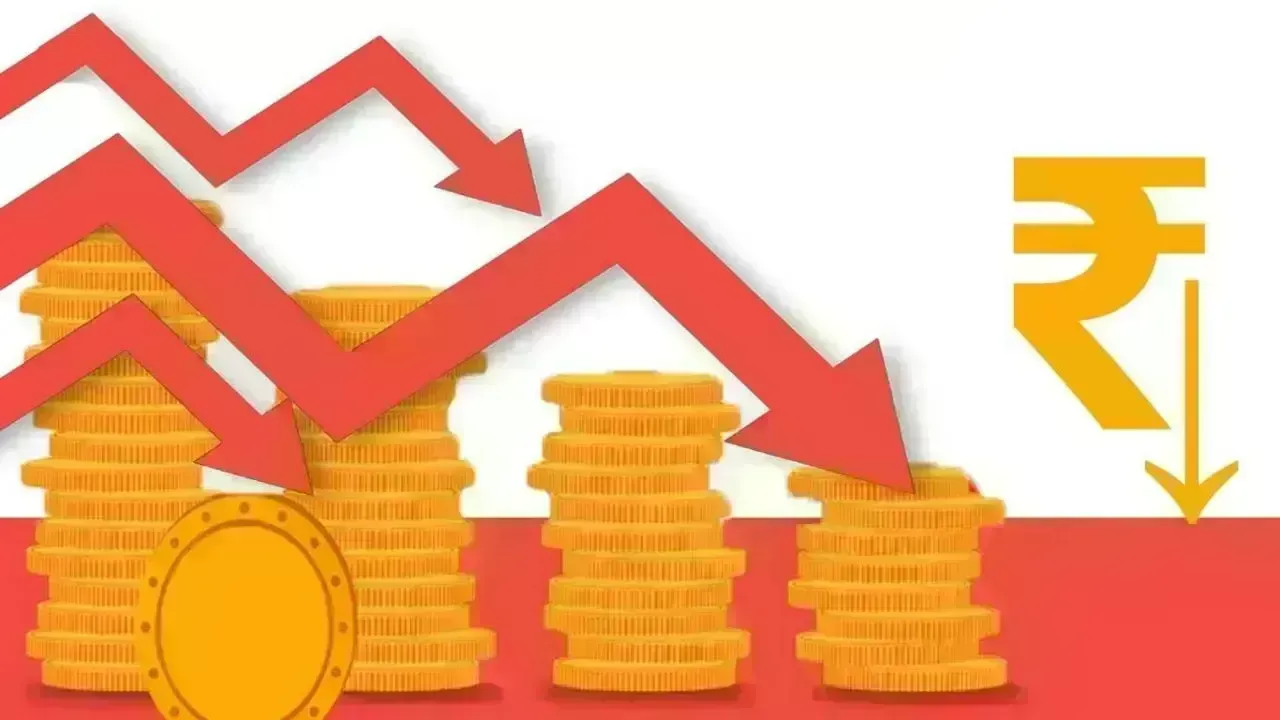
For years, Indian households have learned one simple investment rule: when the market rises, wealth rises. But today, the ground feels unusually shaky. equity indices are touching new highs, yet the rupee continues to slide, talking of import costs, foreign investor exits, and currency pressure fills the news. To many families, it feels like mixed messages from the economy’s dashboard.
On one hand, you hear stories of record stock market valuations, rising portfolios, and optimism around growth. On the other, the rupee falling against the dollar seems like an economic warning signal. Grocery prices feel heavier, foreign travel becomes costlier, and imported products chew into savings.
This contrast unsettles ordinary investors far more than outright bad news. When everything looks clearly negative, people tighten their budgets. When everything looks clearly positive, they loosen them. But when the economy sends mixed signals, indecision becomes the greatest risk.
Understanding what is actually happening — and why both things can exist together — is essential for financial calm. The truth is, a falling currency and rising markets are not always enemies. Sometimes, they are simply telling different parts of the same story.
The rupee weakening is not the result of a single problem. It is the result of several forces pulling in different directions — some global, some domestic.
The US dollar remains the most powerful currency in the world. When global uncertainty rises — due to interest rates, wars, or economic fears — money typically runs toward dollars. This makes the dollar stronger against almost every other currency, including the rupee.
Indian households may not feel the dollar directly, but its strength affects everything from oil imports to electronics pricing.
When global investors feel nervous about emerging markets, they pull money back toward safer assets. Even when India remains fundamentally strong, foreign capital can flow out simply to rebalance global portfolios.
This outflow increases demand for dollars and adds pressure on the rupee.
India imports much of what powers daily life — fuel, machinery, chips, fertilisers, and raw materials. A weaker rupee means India pays more for the same imports in dollar terms. That raises costs inside the country and affects inflation.
Reserve Bank of India manages currency stability but cannot manipulate currency freely without consequences. If it supports the rupee too aggressively, it risks draining foreign reserves. If it does nothing, inflation may rise.
So often, the central bank allows gradual movement while softening extreme swings — making the rupee weak but not in free fall.
At first glance, markets and currency should move together. But in practice, they often react to different triggers.
India’s corporate earnings remain resilient. Manufacturing, infrastructure, banking, technology, and consumption sectors continue expanding. Even if the rupee weakens, domestic business profits remain strong.
For stock markets, earnings matter more than dollar value.
India no longer depends only on global money to support its market. Millions of middle-class individuals now invest regularly through systematic investment plans and digital platforms. This steady inflow cushions foreign exit.
Indian money is anchoring Indian markets.
When the rupee falls, Indian exporters earn more rupees for the same dollars. IT companies, pharmaceutical exporters, specialty manufacturers, and engineering firms benefit directly.
Their profits grow when currency weakens — and their stocks often rise faster.
As interest rate hikes near a peak globally, investors rush into equities in anticipation of future growth. Markets thrive not on today’s economy alone, but on hopes of tomorrow.
Markets rising while currency falling creates confusion at the household level. But understanding impact areas can restore calm.
Weak currency may raise inflation by making imported goods more expensive. Over time, this erodes the real value of savings.
Fixed deposits feel safe, but their purchasing power shrinks if inflation rises faster than interest earned.
Anything involving foreign content becomes expensive: phones, laptops, medicines, fuel, and even aircraft tickets.
Families feel this in school fees for international boards, medical tourism, fuel, and online subscriptions.
Studying abroad becomes significantly more expensive. Tuition, housing, and everyday expenses increase in rupee terms.
Similarly, vacations outside India eat deeper into savings.
Export-driven industries often grow faster during weak currency cycles, while import-heavy businesses face higher costs.
Employees in technology services, pharmaceuticals, and manufacturing often face better salary stability than those in purely domestic sectors strained by input expenses.
Currency headlines trigger fear. Stock market headlines trigger greed. Acting on either emotion creates loss.
Markets reward discipline, not reaction.
Regular investment keeps timing mistakes away. When markets are high, you accumulate less. When markets dip, you accumulate more.
Trying to “outsmart the rupee” often backfires.
Holding all wealth in one asset class invites volatility. Diversification remains essential.
Balance between equity, debt, gold, and liquid assets protects long-term peace of mind.
Rising prices require higher cash buffers. If inflation increases, emergency funds should also rise accordingly.
Three months of expenses last year may not cover three months today.
Gold has traditionally been India’s hedge against uncertainty. A weakening rupee boosts gold value domestically.
Households that hold gold benefit when currency weakens — not necessarily as profit, but as protection.
Gold does not grow wealth. It preserves purchasing power.
Currency weakness cycles repeat. Markets correct. Economies reform.
Past decades show that investing with patience always beats reacting with fear.
People who stayed invested during currency crises historically accumulated the most.
Those who rushed in and out suffered emotional taxation greater than financial loss.
Capital movement is temporary.
Domestic demand fuels India’s economy more than foreign money today.
Even when FIIs sell, Indian institutions absorb shock.
Long-term wealth grows from business profit, not daily headlines.
If you have foreign loans or education debt abroad, weakening rupee increases burden.
It may be wise to:
Prepay when possible
Lock exchange rates
Avoid heavy foreign debt when rupee looks unstable
Local loans remain largely unaffected.
Globally, central banks carefully manage interest rates to stabilize inflation and growth.
US Federal Reserve heavily influences currency flows. When it tightens policy, dollars grow stronger. When it loosens, emerging markets benefit.
This slow tug-of-war shapes rupees and markets alike.
People do not lose money because markets fall.
They lose money because fear makes them sell when markets fall.
The currency may move today. The market may move tomorrow.
But panic compounds both.
Calm is profit.
India’s fundamentals remain strong:
Young population
Infrastructure spending
Digital adoption
Manufacturing growth
Consumption momentum
Short-term currency dips do not erase long-term progress.
Wealth grows in decades, not in news cycles.
Imported lifestyle inflation sneaks in quietly. Reduce unnecessary foreign spending.
Small changes create long-term security.
If foreign education or travel is upcoming, hedge early.
Rupee rarely strengthens suddenly.
Health inflation rises faster than lifestyle inflation.
Insurance protects more than portfolios during stress.
Fear burns wealth faster than inflation.
Those who remain steady during uncertainty are the ones who accumulate returns.
Every economy goes through cycles.
Those who survive cycles emerge rich.
A falling rupee and rising market are not contradictions.
They are stories from two different parts of the financial system.
One reacts to global forces. The other reacts to domestic strength.
For ordinary households, the key is emotional discipline.
Stay invested.
Stay diversified.
Stay patient.
Markets reward those who endure confusion more than those who chase clarity.
Wealth grows quietly while people argue loudly.
Disclaimer:
This article is for informational purposes only and does not constitute financial advice. Market conditions and currency movements involve risk. Readers should consult certified financial professionals before making investment decisions. The content reflects general trends and principles, not personalized recommendations.










Beauden Barrett Opens Up About Mental Struggles During All Blacks Exile
Beauden Barrett discusses his confidence struggles after missing six tests, his return against Austr

IMF Says AI Investment Supports Global Growth Despite Energy Shock
IMF says AI investment is supporting global growth near 3%, with Asian economies benefiting from ris

Will O'Rourke Ruled Out of New Zealand's India Series
New Zealand fast bowler Will O'Rourke will miss the India series with hamstring and calf injuries as

AI Companies Expected to Drive Most US Earnings Growth in Q3
AI companies are expected to drive US third-quarter earnings growth as investors assess tech profits

Money Market Funds See Record Inflows as Global Bond Selloff Intensifies
Global money market funds attract $153.81 billion as bond yields rise, inflation fears persist and i

Meta Bans TikTok Ads on Facebook and Instagram in Seven Countries
Meta has banned TikTok ads in seven countries, escalating competition over social media users, adver