You have not yet added any article to your bookmarks!
Join 10k+ people to get notified about new posts, news and tips.
Do not worry we don't spam!
Post by : Anis Farhan
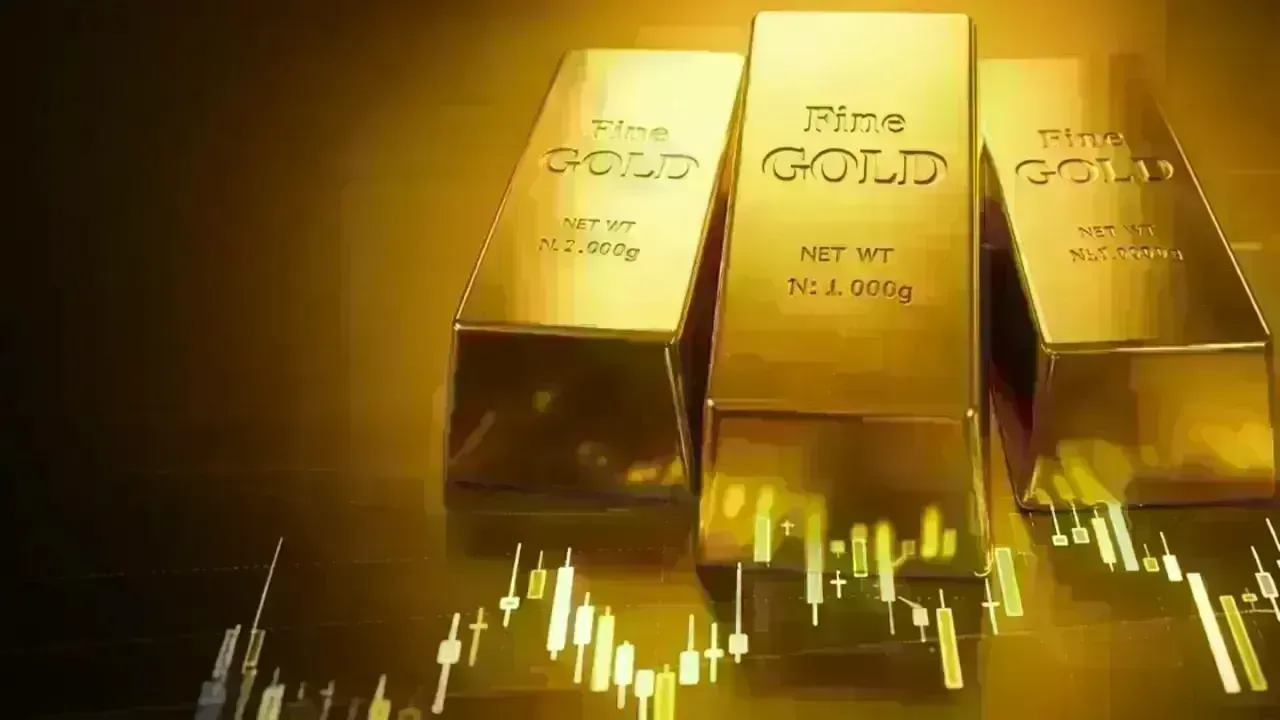
When gold rises sharply, it is rarely because of fashion or tradition alone. Gold is not a product launched with fanfare or a company beating quarterly expectations. It is a silent signal — a psychological thermometer for public trust. When people rush toward gold, it often means something more valuable is weakening: confidence.
Every major spike in gold’s value comes with an emotional undertone — anxiety about money, doubt about policies, uncertainty about the future. Unlike shares, gold doesn’t promise earnings. Unlike bonds, it doesn’t guarantee interest. Unlike property, it doesn’t offer shelter or rent.
And yet, when fear rises, people choose gold.
Why?
Because gold represents certainty in a world drowning in variables. It does not depend on profit margins, political stability, profit forecasts, or promises from institutions. It simply exists — unchanged for centuries. When currencies shake, economies wobble, and markets stagger, gold becomes the last emotional anchor.
A rising gold price is not merely data.
It is a message.
And that message often reads:
People are worried.
Gold does not grow wealth the way businesses do. It does not compound. It does not expand. It does not innovate.
It only preserves.
Gold protects value when money feels fragile. And right now, across the world, money — ironically — is what people trust the least.
Markets move on logic.
Gold moves on psychology.
Investors buy stocks to grow rich.
People buy gold to avoid becoming poor.
That difference changes everything.
When people stop believing that savings will remain valuable, they look for something older than banking systems — older than currency — older than governments.
They look for something that cannot be printed, altered, manipulated, or promised into existence.
They look for gold.
When everyday prices creep higher, salaries lag behind. What once cost ₹100 now costs ₹145. Over time, people realise that money itself is shrinking — not physically, but in power.
Gold becomes a shield.
If currency loses strength, gold absorbs that weakness and inflates in value accordingly.
The rise in gold is not wealth creation.
It is damage control.
When a nation’s currency struggles, imported goods become expensive. Inflation climbs silently. Savings lose meaning.
In such times, people escape to gold not out of greed, but survival instinct.
Gold is insurance against vanishing purchasing power.
Stock markets react violently to uncertainty. One announcement can destroy portfolio confidence.
Gold, on the other hand, moves slowly — and only when fear reaches a particular threshold.
When equity investments feel like gambling and bank savings feel like compromise, gold feels like safety.
People do not fear disaster first.
They fear mismanagement.
Central banks control interest rates and liquidity. But they no longer control emotion.
When inflation refuses to cool, when currency weakens despite policy statements, and when salaries fail to match cost of living, the public begins to doubt explanations.
This is when gold quietly absorbs savings.
When individuals lose trust in financial planning tools, they resort to emotional planning.
And gold is the emotional asset of choice.
Over the last few years, people have chased returns. Stocks, mutual funds, crypto, real estate — everyone wanted more tomorrow.
But something changed.
People now want safety today more than profit tomorrow.
When uncertainty rises, ambition shrinks.
Gold becomes comfort currency.
Gold is no longer bought only by parents and grandparents.
Young professionals now invest in gold digitally — not as jewellery, but as protection.
This reveals something troubling:
The new generation does not trust money to last.
They trust gold to remember value.
In a world full of apps, updates, subscriptions, and algorithms, gold feels old.
And that is exactly why it feels reliable.
Gold has:
No operating system
No password
No server
No expiry date
It survives when systems fail.
When people choose gold, they are choosing simplicity over complexity.
And right now, complexity feels dangerous.
Gold does not vote.
Gold does not protest.
Gold does not collapse.
Governments change. Policies reverse. Taxes rise. Wars spread. Alliances collapse.
Gold doesn’t care.
And when the world’s political environment looks unstable, people withdraw trust from paperwork and place it into something physical.
Gold is politically neutral wealth.
When people lose trust in banks, they usually don’t shout.
They withdraw silently.
But instead of pulling out cash, they convert digitally into gold.
This is not a traditional bank run.
This is a psychological migration.
Savings are moving — quietly — from bank screens into tangible assets.
Gold does not depend on banking hours.
It is permanently liquid.
Gold doesn’t predict events.
But it senses shifts.
It reacts to global unease before statistics do.
When gold rises steadily:
Inflation fears exist
Currency weakening is expected
Market volatility is feared
Geopolitical risk feels unresolved
Financial instruments feel untrustworthy
Gold does not jump instantly.
It climbs when fear starts settling — not when panic begins.
And that is when it matters most.
In India, gold is not merely investment.
It is:
Inheritance
Insurance
Emotion
Memory
Marriage
Stability
Families trust gold more than bank statements.
It is passed hand-to-hand, not account-to-account.
Gold is wealth that doesn’t require explanation in Indian households.
And when global fear rises, Indian households act faster.
Gold re-enters importance quietly, but firmly.
The middle class stands where economic pressure is most intense.
Not poor enough for aid.
Not rich enough for immunity.
When gold prices surge, it shows:
Middle-class anxiety
Shrinking confidence
Rising cost-of-living pressure
Fear of future instability
Gold is chosen when emergency funds feel insufficient.
It becomes the ultimate fallback.
Gold will not grow wealth.
But it will protect it when systems wobble.
Gold will not replace income.
But it will prevent income loss from becoming devastation.
It is not strategy.
It is shelter.
And shelters matter when storms last longer than forecast.
The world functions on agreements:
Currency trust
Loan repayment
Bank credibility
Government obligations
When those weaken, people run not toward opportunity, but toward certainty.
Gold is not a dream.
It is a defence mechanism.
Gold moving up suggests:
People are preparing psychologically
Global stability is under question
Economic confidence is thinning
Inflated economies feel fragile
Gold rises when hope feels unreliable.
And today, hope is under pressure.
The right question is not:
“Will gold rise?”
The right question is:
“Do I trust money to hold value the way it is?”
If the answer is uncertain, gold becomes logical.
If the answer is confident, gold becomes optional.
Gold does not glitter for decoration alone.
It shines when people are scared.
It doesn’t rise because it is attractive.
It rises because money feels fragile.
Stocks signify growth.
Salary signifies effort.
Property signifies settlement.
Gold signifies survival.
And when survival becomes priority, logic changes.
Gold does not scream crisis.
It whispers doubt.
It does not announce disaster.
It hints at discomfort.
When gold prices rise, it is not because gold changed.
It is because trust did.
Trust in:
Currency
Institutions
Growth
Stability
Policy certainty
And that loss of trust is what fuels the greatest shift of all.
Not economic.
Psychological.
Until confidence returns, gold will continue to climb.
Not because it is valuable.
But because everything else feels vulnerable.
Disclaimer:
This article is intended for general informational purposes only and does not constitute financial or investment advice. Readers are strongly advised to consult certified financial professionals before making decisions related to investments, assets, or financial planning.





Beauden Barrett Opens Up About Mental Struggles During All Blacks Exile
Beauden Barrett discusses his confidence struggles after missing six tests, his return against Austr

IMF Says AI Investment Supports Global Growth Despite Energy Shock
IMF says AI investment is supporting global growth near 3%, with Asian economies benefiting from ris

Will O'Rourke Ruled Out of New Zealand's India Series
New Zealand fast bowler Will O'Rourke will miss the India series with hamstring and calf injuries as
AI Companies Expected to Drive Most US Earnings Growth in Q3
AI companies are expected to drive US third-quarter earnings growth as investors assess tech profits
Money Market Funds See Record Inflows as Global Bond Selloff Intensifies
Global money market funds attract $153.81 billion as bond yields rise, inflation fears persist and i
Meta Bans TikTok Ads on Facebook and Instagram in Seven Countries
Meta has banned TikTok ads in seven countries, escalating competition over social media users, adver