You have not yet added any article to your bookmarks!
Join 10k+ people to get notified about new posts, news and tips.
Do not worry we don't spam!
Post by : Anis Farhan
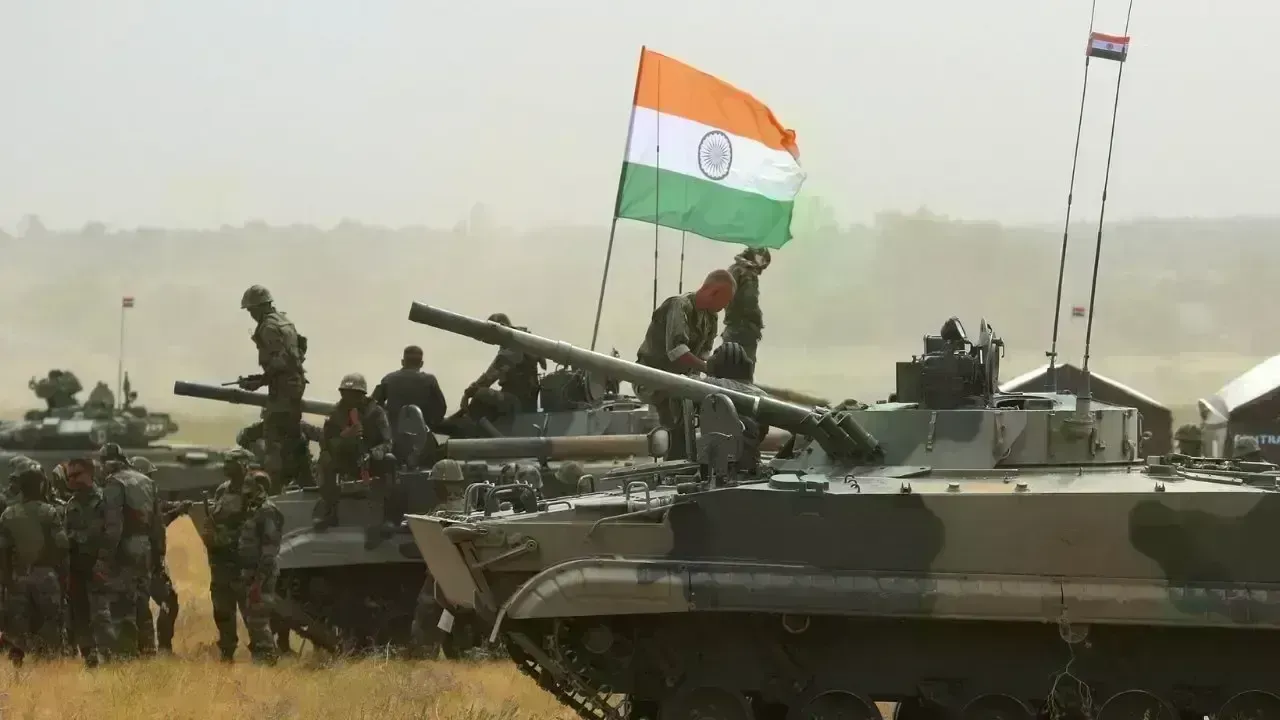
India’s defence decisions rarely go unnoticed, but some moves attract sharper scrutiny than others. The latest development in India’s defence landscape has triggered widespread discussion not just within the country, but across international strategic circles. Analysts, diplomats, and military observers are dissecting the move for what it reveals about India’s evolving priorities, threat perceptions, and long-term ambitions.
This is not merely about weapons, troop movement, or military spending. It is about signalling intent in an increasingly unstable world where power balances are shifting, alliances are being redefined, and security challenges are becoming more complex.
The world is currently witnessing simultaneous conflicts, rising great-power competition, and growing regional instability. Traditional security frameworks are under strain, and nations are reassessing how best to protect their interests.
In such an environment, every major defence decision carries layered meaning. For a country like India—positioned at the crossroads of multiple strategic theatres—defence moves are closely examined for broader implications.
Modern security challenges are no longer confined by geography. Cyber warfare, space security, maritime threats, and supply chain vulnerabilities mean that a defence decision in one country can have ripple effects far beyond its borders.
India’s defence posture, therefore, is not just a national matter; it is a global variable.
India sits at the heart of the Indo-Pacific, a region that has emerged as the focal point of global strategic competition. Its proximity to major sea lanes, contested borders, and critical trade routes gives its defence posture added weight.
Any adjustment in India’s military planning is seen as a response to both immediate threats and long-term strategic calculations.
India faces a unique security challenge: managing land borders with two nuclear-armed neighbours while simultaneously securing vast maritime interests. This multi-front reality shapes defence decisions that are inherently complex and carefully calibrated.
At its core, the move signals India’s intent to strengthen preparedness rather than react to crises. Defence planning is increasingly focused on deterrence, readiness, and rapid response capabilities.
This reflects lessons drawn from past standoffs and global conflicts, where delayed preparedness proved costly.
Rather than short-term fixes, the move underscores a preference for sustained capability development. Whether through procurement, restructuring, or doctrinal changes, the emphasis is on creating enduring military strength.
This long-term outlook is particularly relevant as threats evolve in unpredictable ways.
One of the most closely watched aspects of India’s defence policy in recent years has been its push toward self-reliance. The latest move reinforces this trend by prioritising domestic capacity and reducing strategic vulnerabilities linked to foreign dependence.
For global observers, this signals a shift in how India views defence partnerships and autonomy.
India has traditionally been one of the world’s largest defence importers. Any step toward indigenisation affects global defence manufacturers and alters competitive dynamics in the arms market.
This explains why international defence companies and governments are paying close attention.
Defence decisions are also strategic messages. India’s move sends a clear signal about its resolve to protect sovereignty and respond decisively to security challenges.
This messaging is aimed at deterrence, not escalation, but it reshapes calculations across the region.
For India’s partners, the move demonstrates commitment to shared security objectives. A stronger, more capable India is seen as a stabilising force in a volatile region.
This strengthens India’s credibility as a security partner without tying it into rigid alliances.
India’s defence posture increasingly reflects the importance of maritime security. Protecting sea lanes, ensuring freedom of navigation, and countering non-traditional threats have become core priorities.
Observers see the latest move as part of a broader strategy to enhance India’s role as a net security provider in the Indo-Pacific.
India’s approach remains distinct. Rather than joining military blocs, it focuses on strategic alignment while preserving decision-making autonomy.
This nuanced stance is closely studied by nations seeking alternatives to binary alliance structures.
Modern warfare extends beyond conventional battlefields. Cyber threats, space-based assets, drones, and electronic warfare are now central to defence planning.
India’s move reflects an awareness that future conflicts may be shorter, more intense, and technologically driven.
The emphasis on technology signals a shift toward smarter, networked, and integrated defence systems. This aligns India with global trends in military modernisation.
For analysts, this suggests India is preparing not just for today’s threats, but for tomorrow’s wars.
Defence decisions often have economic consequences. Increased focus on domestic production supports manufacturing, innovation, and skilled employment.
This aligns defence policy with broader economic objectives, making the move politically and economically significant.
Rather than viewing defence spending purely as expenditure, India increasingly frames it as investment in security, technology, and industrial capability.
This perspective resonates with policymakers seeking sustainable growth alongside national security.
Any enhancement of India’s defence capability influences regional power balances. Major powers assess how this affects deterrence dynamics, regional stability, and strategic competition.
India’s rise as a capable military power introduces new variables into existing equations.
Beyond hardware, defence moves reveal intent. Observers analyse whether India is becoming more assertive, more defensive, or more globally engaged.
The current move suggests calculated confidence rather than aggression.
One reason the move carries weight is the broad consensus behind it. Defence decisions that enjoy political and institutional backing are seen as more durable and credible.
This continuity reassures both allies and adversaries about India’s strategic direction.
Public awareness of national security has increased in recent years. Defence moves are no longer confined to policy circles; they shape national discourse.
This public dimension adds another layer to why the move is closely observed.
While strengthening defence capabilities is essential, it also requires careful signalling to avoid miscalculation. India’s challenge lies in balancing deterrence with restraint.
Observers will watch how this balance is maintained.
Defence decisions are only as effective as their implementation. Integration across services, timely execution, and technological adaptation will determine long-term success.
Global analysts will track not just announcements, but outcomes.
The move marks a shift from reactive responses to proactive planning. This evolution reflects maturity in strategic thinking and institutional learning.
It positions India as a country shaping its security environment rather than merely responding to it.
More than an isolated step, the move fits into a larger pattern of defence modernisation, strategic autonomy, and regional engagement.
This continuity is what makes it significant.
India’s latest defence move is being closely watched because it encapsulates much more than military preparedness. It reflects a country recalibrating its role in a rapidly changing world, balancing autonomy with cooperation, and aligning security with economic and technological ambitions.
For global observers, the move offers insight into how India sees its future—confident, cautious, and increasingly influential. For India, it represents another step in building a defence posture suited to the realities of the 21st century.
As geopolitical uncertainty persists, such moves will continue to shape how India is perceived not just as a regional power, but as a key pillar of global stability.
Disclaimer:
This article is for informational purposes only and does not constitute defence, security, or policy advice. Strategic assessments may evolve with new developments.







IMF Says AI Investment Supports Global Growth Despite Energy Shock
IMF says AI investment is supporting global growth near 3%, with Asian economies benefiting from ris

Will O'Rourke Ruled Out of New Zealand's India Series
New Zealand fast bowler Will O'Rourke will miss the India series with hamstring and calf injuries as

AI Companies Expected to Drive Most US Earnings Growth in Q3
AI companies are expected to drive US third-quarter earnings growth as investors assess tech profits

Money Market Funds See Record Inflows as Global Bond Selloff Intensifies
Global money market funds attract $153.81 billion as bond yields rise, inflation fears persist and i

Meta Bans TikTok Ads on Facebook and Instagram in Seven Countries
Meta has banned TikTok ads in seven countries, escalating competition over social media users, adver
ASML and Zeiss Target Next-Generation Chip Technology in 10 Years
ASML and Carl Zeiss are developing Hyper NA technology to print smaller chip circuits, with the next