You have not yet added any article to your bookmarks!
Join 10k+ people to get notified about new posts, news and tips.
Do not worry we don't spam!
Post by : Anis Farhan
The Winter Olympics return to Italy in 2026, marking one of the most anticipated global sporting events of the decade. Officially known as the 2026 Winter Olympics, the Games will be co-hosted by Milan and Cortina d'Ampezzo, alongside several iconic alpine venues.
This edition is historic for more than one reason. It introduces a multi-city, regionally distributed Olympic model, blending a global fashion and finance capital with one of the world’s most celebrated mountain resorts. The result is expected to be a Winter Olympics that feels both traditional and contemporary—deeply rooted in alpine sport while embracing modern sustainability and infrastructure planning.
Unlike compact Olympic hosts of the past, Milan–Cortina 2026 is spread across northern Italy. Events will take place across Lombardy, Veneto, and Trentino-Alto Adige, using existing venues wherever possible.
This decentralised model reflects a shift by the International Olympic Committee toward cost control, sustainability, and legacy-driven planning after years of criticism over oversized Olympic infrastructure.
Few Winter Games have combined urban life and alpine sport so seamlessly. Milan brings culture, connectivity, and ceremony, while Cortina and the Alps deliver snow, speed, and spectacle.
Milan will host the opening ceremony, ice hockey, speed skating, and several indoor events. Known globally for fashion, design, and finance, the city offers world-class transport, accommodation, and media infrastructure.
The urban setting is expected to attract new audiences to winter sports, particularly younger viewers and first-time Olympic fans.
Cortina d’Ampezzo, often called the “Queen of the Dolomites,” previously hosted the 1956 Winter Olympics. In 2026, it returns to the spotlight as the centre for alpine skiing, curling, and sliding sports.
Its dramatic mountain landscapes are expected to provide some of the most visually striking moments of the Games.
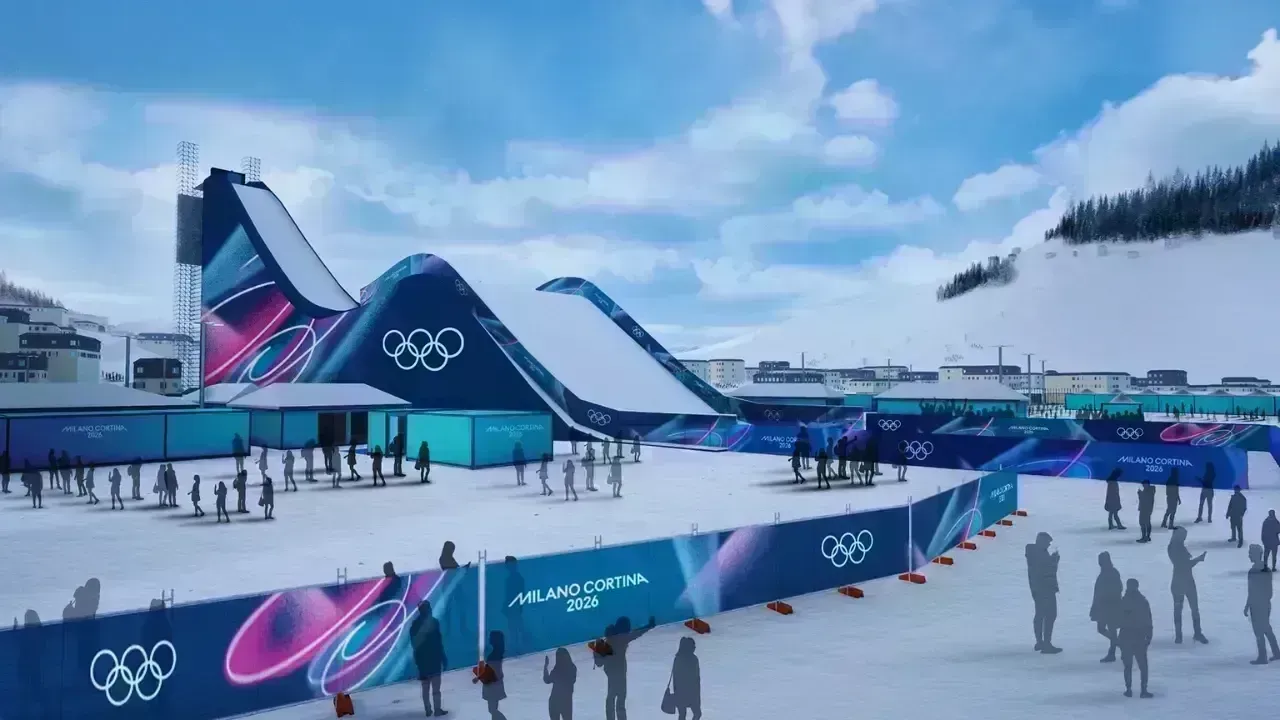
One of the defining features of the 2026 Winter Olympics is the reliance on existing or temporary venues. Historic ski runs, modern ice arenas, and upgraded facilities will host competitions, reducing environmental and financial impact.
Italy has invested heavily in rail, road, and digital infrastructure to ensure smooth movement between venues. High-speed trains will connect Milan to alpine regions, reinforcing long-term regional development.
Fans can expect all traditional Winter Olympic sports, including:
Alpine skiing
Cross-country skiing
Biathlon
Figure skating
Ice hockey
Speed skating
Ski jumping
Each discipline will be staged in locations best suited to performance and safety.
Freestyle skiing and snowboarding continue to grow in popularity, particularly among younger audiences. Milan–Cortina 2026 is expected to place renewed emphasis on these high-energy events.
Traditional winter sports powerhouses from Europe, North America, and East Asia are expected to dominate medal tables. At the same time, emerging nations are closing the gap through improved training and investment.
The Italian Alps provide a familiar environment for European athletes, potentially intensifying competition.
Italy will enjoy strong home support, particularly in alpine skiing and sliding sports. Expectations are high for Italian athletes to deliver memorable performances on home snow.
Sustainability is a central theme of Milan–Cortina 2026. The organisers have committed to reducing carbon emissions, limiting new construction, and restoring natural landscapes after the Games.
Temporary venues and venue reuse are designed to avoid “white elephant” infrastructure.
With climate change threatening snow reliability worldwide, the 2026 Games will also serve as a test of how winter sports can adapt to warming conditions.
Advanced broadcasting, immersive viewing experiences, and real-time data analytics are expected to transform how fans engage with the Games.
Digital ticketing, smart crowd management, and interactive viewing platforms will play a major role.
The Winter Olympics are increasingly consumed through digital platforms rather than traditional television, and 2026 is expected to set new benchmarks for global reach.
Italy expects the Olympics to drive long-term tourism, especially in alpine regions that rely heavily on seasonal visitors.
The global exposure is likely to reinforce Italy’s image as both a winter sports destination and a cultural powerhouse.
From food and fashion to architecture and heritage, the Games provide a global stage for Italian culture, blending sport with storytelling.
Security planning for Milan–Cortina 2026 involves coordination across multiple regions. Italian authorities are working closely with international partners to ensure athlete and spectator safety.
Organisers are applying lessons from recent Olympics to manage crowd flow, cybersecurity, and emergency response.
Large-scale infrastructure projects always carry risk. Keeping budgets in check and meeting construction deadlines remain ongoing challenges.
Despite Italy’s strong winter sports tradition, unpredictable weather patterns remain a concern, requiring robust contingency planning.
The success or failure of this decentralised hosting model will influence how future Winter Olympics are planned.
If successful, Milan–Cortina 2026 could become a blueprint for sustainable, region-based Olympic hosting.
The 2026 Winter Olympics are not just about medals and records. They are about redefining how mega sporting events integrate with cities, landscapes, and communities.
By combining Milan’s global energy with the alpine heritage of Cortina, Italy aims to deliver a Winter Olympics that feels authentic, responsible, and unforgettable.
As athletes prepare and countdowns begin, anticipation continues to build. The opening ceremony in Milan is expected to blend tradition, innovation, and Italian flair—setting the tone for weeks of world-class competition.
The Milan–Cortina 2026 Winter Olympics represent a turning point for the Olympic movement. They promise elite sport without excess, global celebration without permanent scars, and a future-focused vision grounded in heritage.
As the world turns its eyes to Italy, the 2026 Winter Olympics are poised to be more than a sporting event—they could redefine what the Winter Games stand for in the modern era.
This article is intended for informational and editorial purposes only. Event schedules, venues, and operational details may change as the Games approach. Readers are advised to follow official Olympic and organising committee announcements for the most accurate and up-to-date information.








Meta Bans TikTok Ads on Facebook and Instagram in Seven Countries
Meta has banned TikTok ads in seven countries, escalating competition over social media users, adver

ASML and Zeiss Target Next-Generation Chip Technology in 10 Years
ASML and Carl Zeiss are developing Hyper NA technology to print smaller chip circuits, with the next

Rabada Misses First Australia Test as South Africa Pick Two Spinners
Kagiso Rabada misses the opener as South Africa vs Australia begins, with Anrich Nortje returning an

Starc Compares Australia's Tough Year to McIlroy's Major Sweep
Mitchell Starc says Australia winning three away Test series and the World Cup would match Rory McIl

France’s Sesterce Plans $11 Billion AI Data Centre in Finland
Sesterce plans a $11 billion AI data centre in Finland, with major expansion, green energy plans and

Danaher to Launch AI-Powered Autonomous Research Lab in 2027
Danaher plans an AI research lab for 2027, combining robotics and automation to speed up drug discov