You have not yet added any article to your bookmarks!
Join 10k+ people to get notified about new posts, news and tips.
Do not worry we don't spam!
Post by : Rameen Ariff
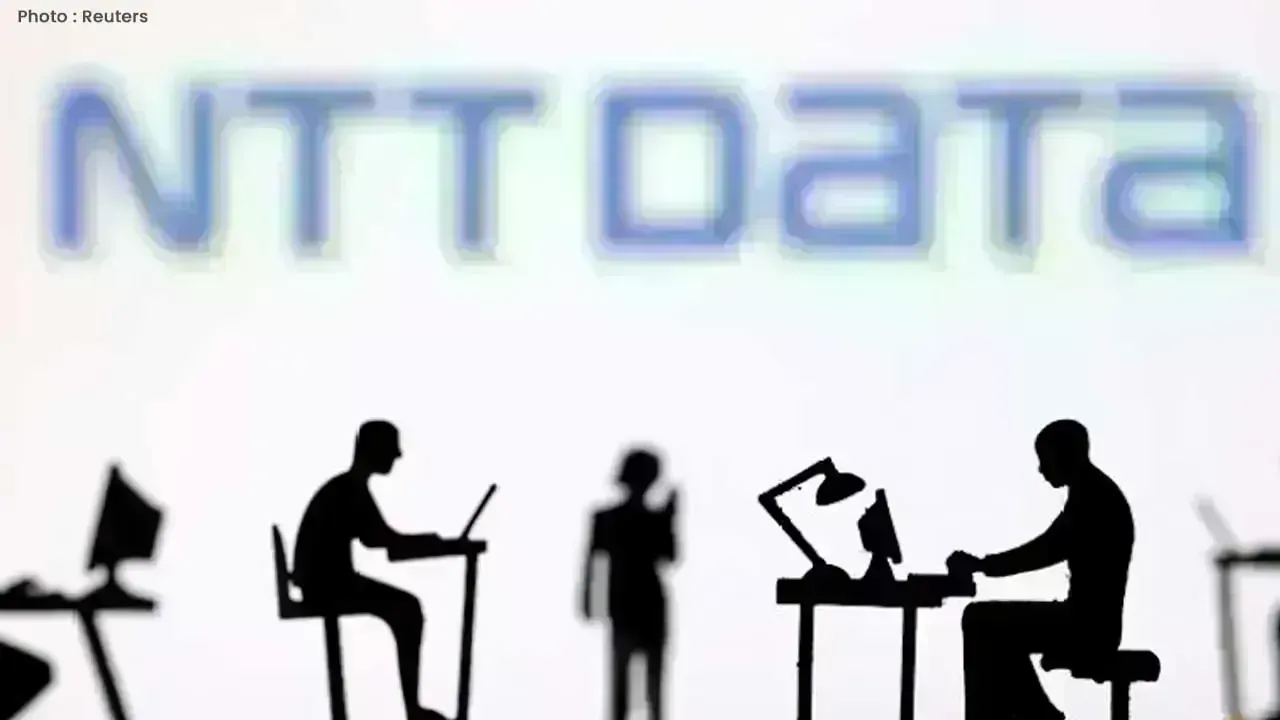
The rapid rise of artificial intelligence technologies may see a short-lived bubble, but it is expected to emerge stronger in the coming years as corporate adoption catches up with infrastructure investments, according to Abhijit Dubey, CEO of Japanese IT giant NTT DATA Inc.
Speaking to the Reuters Global Markets Forum, Dubey acknowledged concerns around supply chains but emphasized that the long-term direction of AI is clear. “There is absolutely no doubt that in the medium- to long-term, AI is a massive secular trend,” he said. “Over the next 12 months, we may see a brief normalization. It’ll be a short-lived bubble, and AI will come out of it stronger.”
Dubey noted that demand for computing power continues to outpace supply, with supply chains largely committed for the next two to three years. This imbalance has shifted pricing power toward chipmakers and hyperscalers, reflecting their high valuations in public markets.
The growth of AI has sparked the biggest technological transformation since the internet, attracting trillions of dollars in investments and driving significant equity gains. At the same time, it has contributed to memory chip shortages, intensified regulatory scrutiny, and raised questions about the future of work.
As chief AI officer at NTT DATA, Dubey revealed that the company is rethinking recruitment strategies in response to AI-driven shifts in labor markets. “There will clearly be an impact,” he said, adding that over the next five to 25 years, significant workforce adjustments are likely. Despite this, the firm continues to hire across locations globally.
At the Reuters NEXT conference in New York, AI experts highlighted the potential disruption to jobs and workforce growth. May Habib, CEO of AI startup Writer Inc., noted that some clients are already seeking to cut staff immediately after implementing AI projects.
However, a recent PwC survey shows that real-world use of generative AI has yet to match corporate expectations. Daily usage remains much lower than anticipated, even as employees with AI skills command an average wage premium of 56 percent — more than double last year’s figure. The survey also pointed to a widening skills gap, with only about half of non-managerial employees having access to training resources, compared with roughly three-quarters of senior executives.
Despite short-term uncertainties, industry leaders like Dubey believe that AI’s long-term impact will transform businesses, create new opportunities, and continue to drive global technological progress.









Josh Kerr and Jakob Ingebrigtsen Set for 1,500m Rivalry Rematch
Josh Kerr and Jakob Ingebrigtsen will renew their 1,500m rivalry at the Ultimate Championship in Bud

PSG Coach Luis Enrique Urges Players to Step Outside Comfort Zone
PSG coach Luis Enrique says players must leave their comfort zone and keep improving as the club tar

China’s Tiangong Sets New 400m Record at Robot Olympics
China’s Tiangong robot sets a new 400m record at the Robot Olympics, beating a South African robot i

George Russell Wins Dutch GP Sprint, Boosts Mercedes Morale
George Russell wins the Dutch GP Sprint from pole as Mercedes teammate Kimi Antonelli extends his F1

Australia 50/3 After Bangladesh Bowled Out for 64 in Second Test
Australia reached 50/3 after Bangladesh were bowled out for 64 in the second Test, with Mitchell Sta

Jordan Burroughs Returns to Wrestling with 2028 Olympic Dream
Jordan Burroughs returns to wrestling with Real American Freestyle as the Olympic champion eyes a po