
You have not yet added any article to your bookmarks!
Join 10k+ people to get notified about new posts, news and tips.
Do not worry we don't spam!
Post by : Anis Farhan
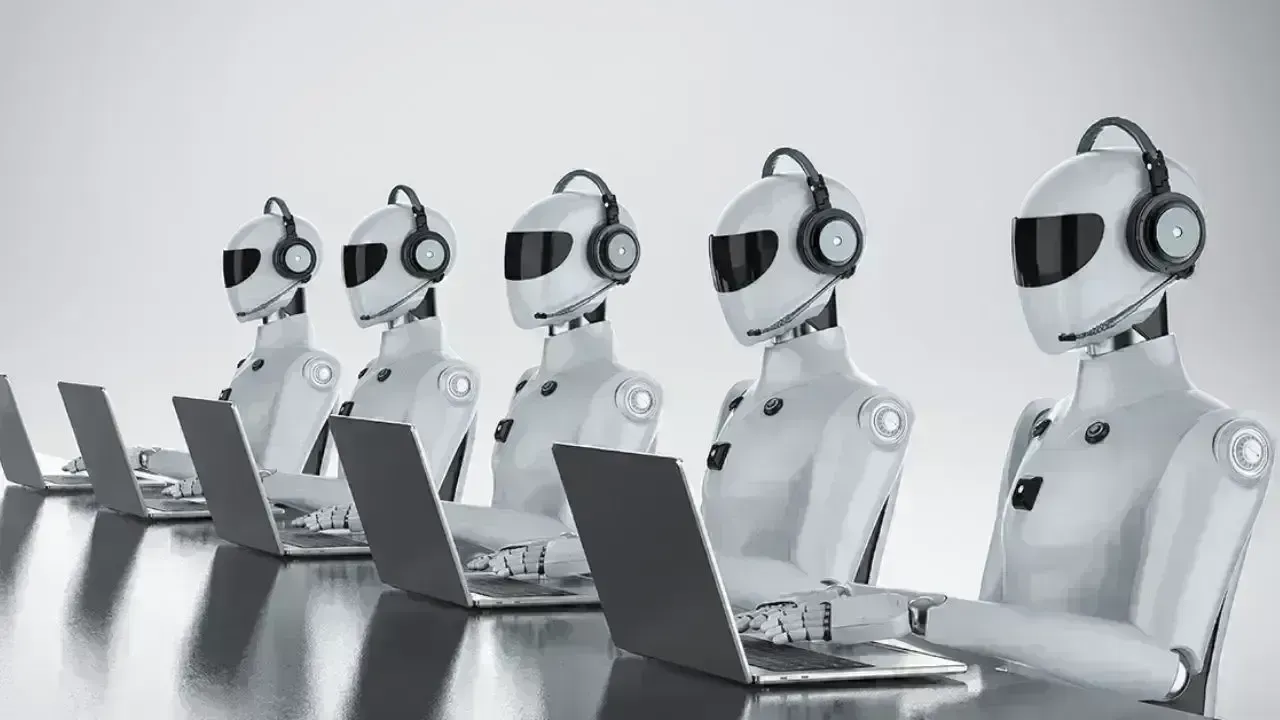
For decades, a phone call meant one thing: a real human voice speaking from the other end. Even in automated systems, there was always a limit to how “human” a machine could sound. That line is now disappearing.
Today, voices can be generated artificially with breath, emotion, hesitation, accents, and tone all carefully replicated. A machine can now speak in a voice that sounds warm, tired, friendly, or concerned. It can mimic a regional accent. It can copy a real person’s voice perfectly.
And it is already entering customer service.
When you receive a reminder call, a service update, or a support verification request, the question you never had to ask now becomes important:
Is this a person… or a program?
AI voice cloning refers to software that can reproduce a human voice using artificial intelligence. Given enough voice data, a system can recreate someone’s speech pattern, emotional range, and pronunciation style with surprising accuracy.
The technology does not “record and replay.” It synthesises speech from text by building a digital replica of voice behaviour.
Instead of playing a recording, it generates speech in real time.
That difference is critical.
Real-time generation allows:
Dynamic responses
Conversation memory
Emotional tone shifts
Language changes
Continuous interaction
You are no longer listening to a recorded robot.
You are interacting with a voice simulation.
The system breaks down how a person speaks into mathematical patterns. It learns:
Pitch and tone
Speed and rhythm
Emphasis patterns
Silence gaps
Stress reactions
Emotional fluctuations
Once trained, the AI can recreate that voice saying things the original speaker never said.
And it can do so convincingly.
Customer support is expensive.
Companies spend massive amounts on call centres, training, infrastructure, and human resources. AI voice systems promise to reduce that cost dramatically.
Companies turn to voice clones because they:
Scale instantly
Never sleep
Don’t demand wages or breaks
Never get angry
Respond safely to scripts
Handle multiple calls at once
Don’t suffer fatigue
From a business perspective, it feels like the perfect solution.
From a human perspective, it is unsettling.
Basic robotic systems frustrate customers.
Press one. Press two. Repeat.
Voice cloning feels conversational.
It handles:
Natural questions
Complaints
Unscripted input
Language switching
Emotional reaction
That improvement leads companies to deploy it aggressively.
The voice sounds human.
The patience feels human.
The speed is inhuman.
The reason voice cloning works is the same reason it is risky.
Humans trust voices.
A familiar voice lowers psychological defences.
A calm tone increases compliance.
A friendly accent increases comfort.
When a machine speaks like a person, the listener lowers suspicion.
And in customer service, people already expect authority.
When the voice says it is “calling from your bank” or “updating your delivery” — trust activates automatically.
Visually, people learn to identify fake images.
Auditory deception is harder.
The brain evolved to trust spoken language.
When we hear:
Breath patterns
Emotional inflection
Natural pauses
we assume authenticity.
Voice cloning exploits a deep neurological shortcut.
It feels real because nature trained us to believe it is.
Criminals do not wait for regulation.
They use innovation faster than governments can react.
Voice cloning scams are rising globally.
Scam calls now:
Mimic family members
Impersonate company staff
Copy managers’ voices
Simulate officials
Fake emergency situations
A scammer may clone a loved one’s voice and call with a crisis story.
A victim hears familiarity.
Panic overrides logic.
Money transfers quickly.
The deception succeeds.
Texts can be questioned.
Emails can be examined.
Voices are personal.
When someone calls sounding like your brother, mother, or colleague, doubt disappears.
Fear enters.
Voice cloning attacks emotions directly.
Companies argue that voice cloning improves service.
And sometimes, it does.
It can:
Reduce waiting times
Improve multilingual support
Maintain consistent service
Operate 24/7
Handle high call volumes
But emotion cannot be automated safely.
An algorithm does not understand genuine distress.
It reacts according to data.
That difference matters.
Human agents notice:
Tone changes
Hesitation
Confusion
Fear
Emotional breakdown
AI processes the words.
Not the soul.
In emergencies, nuance saves lives.
Automated voices can fail there.
Customer service rests on one foundation:
Trust.
When voices are fabricated, that trust weakens.
If customers cannot tell:
Who is real
Who represents a company
Who may be a fraud
then the phone becomes hostile terrain.
People stop answering calls.
Support lines lose credibility.
Even legitimate companies become suspect.
Widespread voice cloning may erode public confidence in voice communication itself.
Voice cloning lives in legal grey areas.
The questions are harsh:
Who owns a person’s voice?
Can it be used without permission?
Who is responsible for harm caused by cloned speech?
How do you prove misuse?
How do you claim identity theft when identity is synthetic?
Law moves slowly.
Technology moves fast.
Victims wait in between.
Previously, identity theft involved documents.
Now it involves voice.
Your voice is now a password.
And it can be stolen without your knowledge.
Trust in communication is collapsing.
People are becoming suspicious of:
Unknown callers
Automated messages
Recorded warnings
Digital voices
Communication anxiety is increasing.
The phone no longer feels safe.
The moment a voice sounds “too perfect,” discomfort follows.
Society is quietly developing digital paranoia.
Voice cloning is not evil.
It is powerful.
Like all power, it needs boundaries.
Ethical deployment requires:
Consent from voice owners
Clear disclosure to consumers
No impersonation
Strong fraud prevention
Transparent policies
User opt-out rights
If a voice is artificial, users must be told.
Silence is deception.
When companies announce:
“This call uses synthetic voice technology for assistance,”
trust remains intact.
It is secrecy that damages credibility.
People must now treat phone calls with caution.
Practical steps include:
Never trusting urgent demands over phone
Confirming requests through official apps
Hanging up and calling back using known numbers
Creating family verification codes
Never sharing OTPs or account details
Avoiding emotional reaction during calls
Questioning any financial urgency
The era of blind trust is over.
Most people do not understand how advanced AI voices are.
Schools don’t teach it.
Workplaces don’t explain it.
Families remain unaware.
This knowledge gap is dangerous.
Digital literacy must now include audio awareness.
Not just internet safety.
Regulation is slow.
But harm is fast.
Authorities must:
Criminalise identity voice cloning
Enforce disclosure rules
Penalise misuse
Demand authentication standards
Establish consent frameworks
Technology without law becomes chaos.
And voice is too intimate to leave unprotected.
Internal communication will not be immune.
Voice cloning may be used for:
Meeting summaries
Training modules
Instructional calls
Customer messaging
But also exploited for:
Fake managerial orders
Internal fraud
Impersonation
Corporate manipulation
Organisations must secure voice approval systems the same way they secure passwords.
Possibly.
Humans adapt.
But acceptance will come with discomfort.
People may grow used to not knowing if a voice is real.
That is not progress.
That is loss of certainty.
Technology should improve life.
Not confuse it.
Voice cloning can help:
Disabled individuals
Elder support systems
Language access
Emergency management
It can also:
Destroy identity
Manipulate trust
Commit fraud
Spread fear
The tool itself is neutral.
Its usage is not.
The world is not prepared.
Not legally.
Not socially.
Not emotionally.
Voice cloning arrived without warning.
It entered quietly.
It disguised itself as convenience.
But behind comfort hides consequence.
Until strong safeguards exist, trust will continue to erode.
And when trust disappears…
Communication breaks down.
Voice cloning may be one of the most important technology debates of this decade.
Because when humans can no longer trust voices…
What remains sacred?
DISCLAIMER
This article is intended for educational and informational purposes only. It does not provide legal, cybersecurity, or technical advice. Readers are advised to seek professional guidance for security-related decisions and stay updated with regulations regarding artificial intelligence technologies.










Jacob Bethell Returns as England Name Squads for Australia Tour
England name ODI and T20 squads for the Australia tour, with Jacob Bethell returning from injury and

Beauden Barrett Opens Up About Mental Struggles During All Blacks Exile
Beauden Barrett discusses his confidence struggles after missing six tests, his return against Austr
IMF Says AI Investment Supports Global Growth Despite Energy Shock
IMF says AI investment is supporting global growth near 3%, with Asian economies benefiting from ris

Will O'Rourke Ruled Out of New Zealand's India Series
New Zealand fast bowler Will O'Rourke will miss the India series with hamstring and calf injuries as

AI Companies Expected to Drive Most US Earnings Growth in Q3
AI companies are expected to drive US third-quarter earnings growth as investors assess tech profits

Money Market Funds See Record Inflows as Global Bond Selloff Intensifies
Global money market funds attract $153.81 billion as bond yields rise, inflation fears persist and i

