You have not yet added any article to your bookmarks!
Join 10k+ people to get notified about new posts, news and tips.
Do not worry we don't spam!
Post by : Anis Farhan
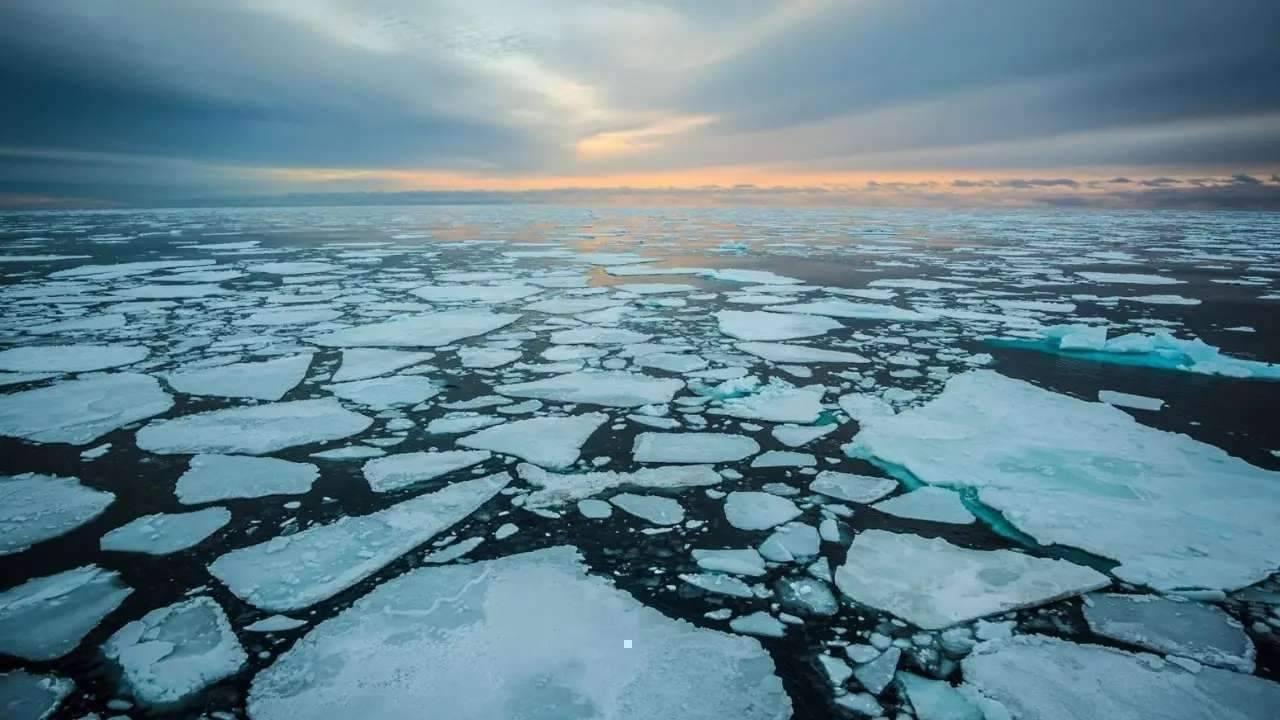
The Arctic, long regarded as Earth’s frozen buffer zone, is undergoing a transformation that is both startling and alarming. New satellite data released in recent assessments shows that ice melt in the region is accelerating faster than previously predicted. What was once anticipated to occur over several decades is now unfolding in a matter of years.
This accelerated melt is not just a regional phenomenon — it signals profound implications for global climate patterns, sea-level rise, ecosystems and geopolitical stability. The Arctic is often considered the planet’s early warning system; when it changes, the entire world feels the impact.
These latest findings reveal that humanity is approaching critical climate thresholds faster than expected. The data offers clear scientific evidence: the Arctic is warming at more than twice the global average, and its ice loss is reshaping weather systems, marine habitats and international power dynamics.
New high-resolution satellite sensors show a significant drop in sea ice thickness across the Arctic basin. Areas that traditionally held multi-year ice have melted to record lows, replaced by thinner, seasonal ice that melts more quickly.
Scientists note that:
multi-year ice has declined dramatically
winter ice formation is starting later
summer melt is starting earlier
ice sheets are more fragmented
This shift signals a weakening of the Arctic’s natural resilience.
Satellite imagery highlights drastic reductions in ice cover, especially in:
the Beaufort Sea
the Chukchi Sea
the Laptev Sea
These regions, once stable ice zones, are now experiencing warm-water intrusions and prolonged ice-free periods, impacting ocean currents and marine life.
The newest datasets show that summer melt rates have surpassed multiple previous records. Some areas are losing ice at rates nearly 50% faster than the historical average, suggesting an accelerated feedback loop driven by warming oceans and atmosphere.
One of the main drivers is Arctic amplification, a process in which rising global temperatures cause disproportionately higher warming in the Arctic. As ice melts, darker ocean water absorbs more heat, triggering further warming and faster melt cycles.
Oceanic heat transport plays a major role. Warmer waters from the Atlantic and Pacific are moving farther into the Arctic each year, weakening sea ice from below and preventing thick ice formation.
Shifts in atmospheric circulation, such as altered jet stream patterns, have contributed to:
heatwaves in the Arctic region
prolonged warm air masses
unusual storm tracks over ice zones
These events accelerate melt and increase fragmentation.
Soot particles from industrial regions settle on the ice, darkening the surface and reducing its reflectivity. This leads to higher heat absorption and faster melt during the summer season.
Sea ice supports a vast ecological network. Its rapid decline affects:
plankton populations
fish migration patterns
seal and walrus breeding grounds
polar bear hunting behavior
As ice disappears, species either adapt, migrate or face population losses.
Indigenous Arctic populations depend on stable ice conditions for:
hunting
fishing
transportation
cultural traditions
The accelerated melt threatens their livelihoods and forces significant adaptations.
Satellite data also reveals changes in species distribution. For example:
fish are moving farther north
predators are turning to alternative and less nutritious food sources
migratory birds are altering flight patterns
These shifts can destabilize long-standing ecological balances.
Melting Arctic ice contributes to sea-level rise, especially when large sections of ice shelves collapse or when glaciers accelerate their descent into the ocean.
Key impacts include:
increased coastal flooding
erosion of shorelines
threats to island nations
saltwater intrusion into freshwater sources
The loss of Arctic ice influences the jet stream, leading to unusual weather events such as:
prolonged heatwaves
colder winters in some regions
heavier rainfall
stronger storms
These disruptions are becoming more frequent as the Arctic warms.
The Arctic plays a critical role in regulating Earth’s temperature. As ice melts, its ability to reflect solar radiation decreases, adding more heat to the system and accelerating global warming.
As ice melts, new navigable routes such as the Northern Sea Route are opening for longer periods. This shifts global trade dynamics, offering shorter pathways between continents but also raising environmental and political concerns.
The Arctic is believed to contain significant reserves of:
oil
natural gas
rare minerals
Melting ice makes extraction more feasible, sparking competition among nations in the region.
Countries bordering the Arctic — and even those outside the region — are increasing their military presence as new trade routes and resource opportunities emerge.
The stalled diplomatic coordination in recent years adds risks of:
territorial disputes
security tensions
environmental damage
Climate scientists warn that the accelerated melt may push the Arctic toward irreversible tipping points. Once multi-year ice disappears completely, recovery becomes exponentially more difficult.
Arctic melt triggers several dangerous feedback loops:
darker ocean surfaces absorb more heat
permafrost thaw releases methane
warming oceans accelerate polar ice collapse
These loops could significantly speed up global climate change.
Methane, a potent greenhouse gas, is being released as Arctic permafrost thaws. This accelerates global warming even further, creating a self-reinforcing cycle.
Earlier predictions placed the first ice-free Arctic summer around the mid-2030s. New satellite data suggests this could happen much sooner if melt rates continue to accelerate.
Once ice-free conditions begin:
storms may intensify
ocean heat circulation may alter dramatically
biodiversity loss will accelerate
human migration pressures may rise
The ripple effects will be felt globally.
To slow the trajectory, experts recommend actions such as:
rapid reduction of greenhouse gas emissions
stricter regulations on industrial pollutants
accelerated renewable energy adoption
enhanced conservation efforts
Without coordinated action, the consequences may become unmanageable.
The new satellite data paints a stark picture: the Arctic is losing ice at a pace that far exceeds earlier predictions. This is not just a scientific observation — it is a global hazard affecting ecosystems, sea levels, weather patterns and geopolitical stability.
The acceleration of Arctic ice melt demands immediate attention from governments, industries and communities worldwide. Failure to address the issue could push the planet into irreversible climate territory, with consequences that will shape humanity’s future.
Disclaimer:
This article is based on current satellite observations, climate research and environmental analysis. It is intended for informational and editorial purposes only.







Beauden Barrett Opens Up About Mental Struggles During All Blacks Exile
Beauden Barrett discusses his confidence struggles after missing six tests, his return against Austr

IMF Says AI Investment Supports Global Growth Despite Energy Shock
IMF says AI investment is supporting global growth near 3%, with Asian economies benefiting from ris

Will O'Rourke Ruled Out of New Zealand's India Series
New Zealand fast bowler Will O'Rourke will miss the India series with hamstring and calf injuries as

AI Companies Expected to Drive Most US Earnings Growth in Q3
AI companies are expected to drive US third-quarter earnings growth as investors assess tech profits

Money Market Funds See Record Inflows as Global Bond Selloff Intensifies
Global money market funds attract $153.81 billion as bond yields rise, inflation fears persist and i

Meta Bans TikTok Ads on Facebook and Instagram in Seven Countries
Meta has banned TikTok ads in seven countries, escalating competition over social media users, adver