
You have not yet added any article to your bookmarks!
Join 10k+ people to get notified about new posts, news and tips.
Do not worry we don't spam!
Post by : Shweta
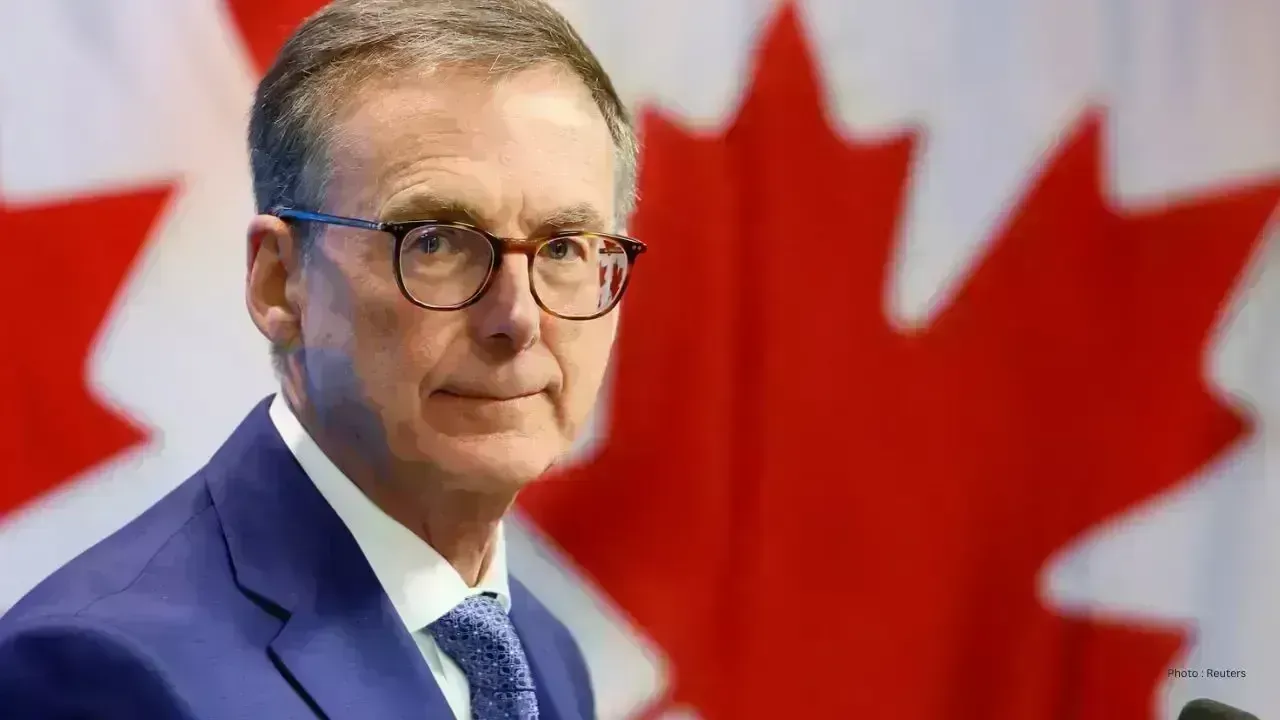
As economic uncertainties rise from global tensions and trade dynamics, the Bank of Canada is predicted to keep its benchmark interest rate steady. Analysts expect that Governor Tiff Macklem and his team will maintain the key rate at 2.25% for the fourth straight time during their upcoming meeting.
The central bank is navigating a delicate balance between inflation driven by escalating oil prices due to the Iran conflict and an economic slowdown induced by US tariffs affecting Canadian exports. This challenging scenario complicates policymakers' decisions regarding interest rates.
Recent statistics indicate that Canada's inflation reached 2.4% in March, primarily due to soaring gasoline costs. However, core inflation—excluding volatile items—holds steady at 1.9%, suggesting that broader inflationary pressures are under control. This context provides the central bank an avenue to proceed cautiously without rushing to raise rates.
Officials have hinted at their intent to “look through” transient inflation spikes caused by external shocks, such as sudden oil price increases. Nonetheless, concerns are mounting that sustained higher energy costs could start affecting long-term inflation expectations, prompting tighter monetary policy in the future.
Canada's economic growth has exhibited signs of softening, with an estimated expansion of approximately 1.5% in the first quarter. This is primarily due to the adverse effects of US tariffs on critical exports like steel, aluminum, and automobiles. Additionally, slower population growth has further weakened economic momentum.
Economists argue that the central bank will likely adopt a wait-and-see strategy at this juncture. With minimal signs of persistent inflationary pressures and continuous threats to growth, there's little motivation to alter the current policy direction. The geopolitical instability and variable oil prices reinforce this cautious approach.
As a significant energy producer, Canada stands to gain from rising oil prices through heightened revenues that could bolster economic activity. However, analysts caution that such benefits hinge on whether businesses reinvest these gains back into the economy, which has yet to be seen.
The forthcoming monetary policy report is anticipated to shed light on the Bank of Canada's outlook on inflation and economic growth trajectories in the upcoming months. However, with global conditions remaining unpredictable, strong guidance on future rate adjustments is unlikely.
In summary, the central bank appears poised to sustain its policy stability while closely observing changing economic conditions, indicating a strategic balance between managing inflation and fostering growth.










PM Modi Pays Tribute to Mahatma Gandhi, Urges People to Support Khadi
PM Modi pays tribute to Mahatma Gandhi on Gandhi Jayanti and urges citizens to support Khadi and the

Amazon Seeks to Offload $8 Billion in Nvidia Chips to Investors
Amazon plans to move $8 billion in Nvidia chips to investors, using a new financing model to strengt

Samsung Raises Galaxy S26 Prices as Memory Chip Costs Rise
Samsung raises Galaxy S26 prices in South Korea as rising memory chip costs put pressure on smartpho

Lewis Hamilton Calls Singapore Grand Prix One of F1's Toughest Races
Lewis Hamilton discusses the demanding Singapore Grand Prix and brings Plus44 and Almave to Singapor

Denmark's Pandora Opens World's Largest Jewellery Factory in Vietnam
Pandora opens its largest jewellery factory in Vietnam, expanding global production, strengthening s

Gautam Gambhir Questions Batting-Friendly Pitches After India's Record ODI Chase
Gautam Gambhir questions batting-friendly ODI pitches after India’s record chase, calling for a bett

