
You have not yet added any article to your bookmarks!
Join 10k+ people to get notified about new posts, news and tips.
Do not worry we don't spam!
Post by : Shweta
The conversation surrounding a Canadian province's potential to secede has resurfaced, notably with recent discussions in Alberta regarding sovereignty. Legal professionals assert that, according to Canadian law, a province is not empowered to exit the nation independently. Such a move would necessitate extensive constitutional dialogue involving the federal government and other provinces.
This issue is rooted in the 1998 Supreme Court decision titled “Reference re Secession of Quebec.” In that pivotal ruling, the court indicated that unilateral declarations of independence lack legal standing under Canadian and international law. Nevertheless, it emphasized that should a province conduct a referendum with a clear majority in favor of separation, the federal government would need to initiate negotiations.
Post-Supreme Court ruling, the Canadian government enacted the Clarity Act in 2000. This legislation empowers the federal Parliament to evaluate whether a referendum question regarding separation is sufficiently clear and if the results represent an unequivocal majority. The Act does not specify a percentage threshold for separation, meaning the federal government must assess the prevailing political context before acknowledging any referendum results.
Experts highlight that even with voter backing for independence, the separation process would be fraught with complexities. Crucial national concerns—including borders, citizenship, Indigenous treaty rights, trade agreements, currency, natural resources, military obligations, and national debt—would all necessitate careful negotiation. Constitutional amendments may also be essential, potentially requiring acceptance from Parliament and various provinces throughout Canada.
Historically, the conversation around provincial separation has largely centered on Quebec, which held independence referendums in 1980 and 1995, both of which failed. The 1995 referendum was particularly close, with the “No” side narrowly prevailing. These events prompted the federal government to seek legal clarity from the Supreme Court regarding a province’s legal ability to secede.
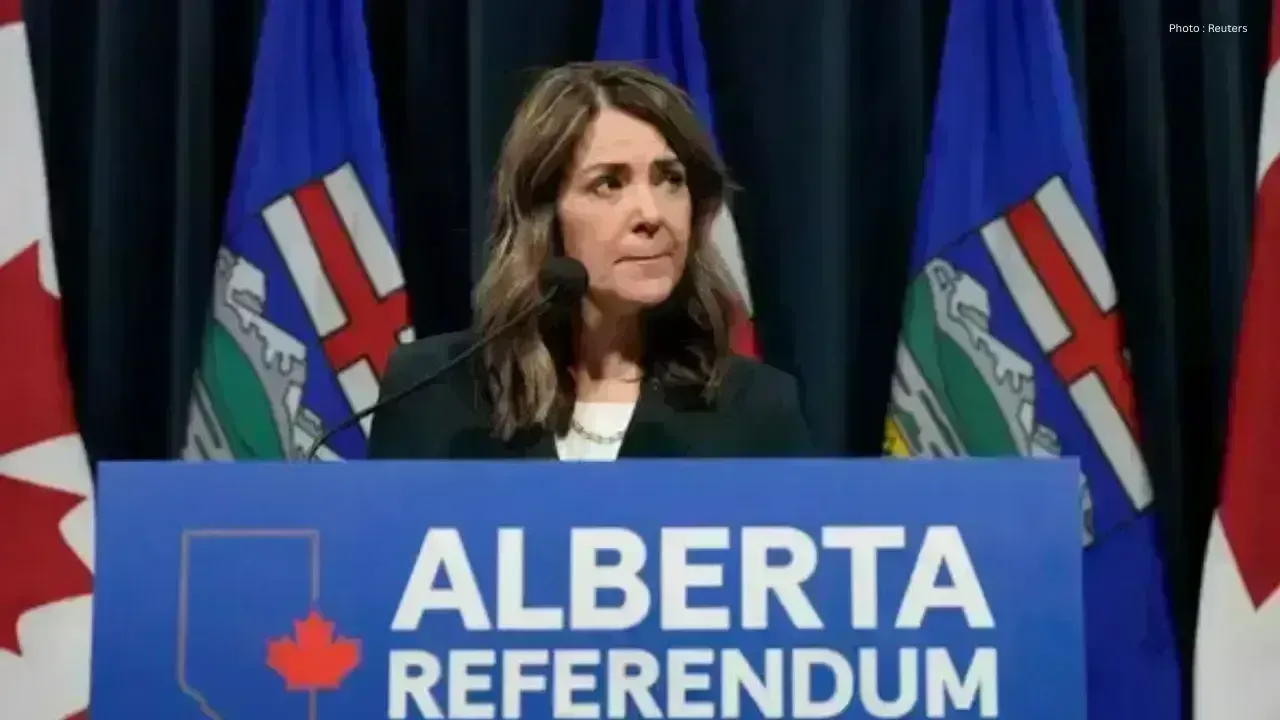
Recently, Alberta has become a focal point for separation discussions, as some political factions claim the province is unfairly treated by the federal government, particularly regarding energy policies, environmental regulations, and taxation. Proponents of separation express a desire for Alberta to control its resources and political decisions more autonomously. Nevertheless, Alberta Premier Danielle Smith consistently voices her support for a unified Canada despite ongoing debates.
Experts caution that discussions of separation could breed uncertainty among businesses, investors, and financial markets. Many corporations prefer stable political climates before committing to significant investments, and economists warn that lingering uncertainty may negatively impact job creation, trade, and economic advancement. Analysts also highlight that Canada's provinces are intricately linked through banking systems, transportation networks, trade agreements, and federal institutions.
An additional critical element involves Indigenous communities and treaty rights. Legal scholars assert that Indigenous nations could have significant stakes in any separation discourse, given that many treaties were established with the Canadian government rather than individual provinces. Several Indigenous leaders have previously declared their need for constitutional protections in future negotiations.
Political experts contend that while debates surrounding separation may continue in certain provinces, the actual process of leaving Canada would present legal challenges, political sensitivities, and economic intricacies. Currently, Canadian law firmly establishes that a province cannot simply exit with a single decision or vote. Any aspiration for independence would entail prolonged negotiations, constitutional modifications, and consensus across multiple government tiers in Canada.










PM Modi Pays Tribute to Mahatma Gandhi, Urges People to Support Khadi
PM Modi pays tribute to Mahatma Gandhi on Gandhi Jayanti and urges citizens to support Khadi and the

Amazon Seeks to Offload $8 Billion in Nvidia Chips to Investors
Amazon plans to move $8 billion in Nvidia chips to investors, using a new financing model to strengt

Samsung Raises Galaxy S26 Prices as Memory Chip Costs Rise
Samsung raises Galaxy S26 prices in South Korea as rising memory chip costs put pressure on smartpho

Lewis Hamilton Calls Singapore Grand Prix One of F1's Toughest Races
Lewis Hamilton discusses the demanding Singapore Grand Prix and brings Plus44 and Almave to Singapor

Denmark's Pandora Opens World's Largest Jewellery Factory in Vietnam
Pandora opens its largest jewellery factory in Vietnam, expanding global production, strengthening s

Gautam Gambhir Questions Batting-Friendly Pitches After India's Record ODI Chase
Gautam Gambhir questions batting-friendly ODI pitches after India’s record chase, calling for a bett

