
You have not yet added any article to your bookmarks!
Join 10k+ people to get notified about new posts, news and tips.
Do not worry we don't spam!
Post by : Rameen Ariff
Photo : AFP
Afghanistan has once again been shaken by tragedy. A powerful earthquake late at night has killed more than 800 people and injured at least 2,800 others, leaving families broken and villages destroyed. The quake struck the eastern provinces of Kunar and Nangarhar, two mountainous regions close to the border with Pakistan.
The earthquake, measured at magnitude 6, hit shortly after midnight. Within seconds, entire homes made of mud and stone collapsed, burying families inside. The ground shook so violently that many people had no chance to escape. Survivors later described how the shaking came suddenly, like a loud roar from under the earth, giving them no warning.
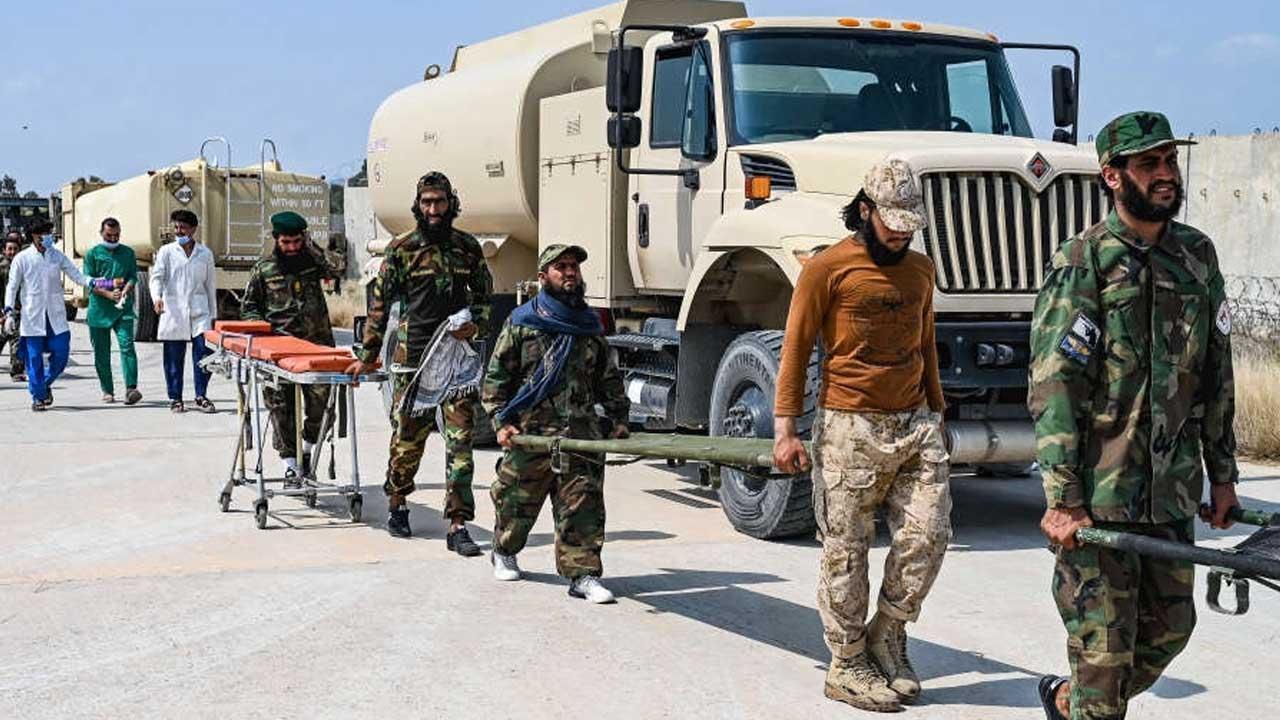
Rescue teams are now racing against time, digging through the rubble with their hands and simple tools. Helicopters have been flying back and forth, carrying the wounded to hospitals in nearby cities. But in these remote mountain villages, with narrow dirt roads and weak mobile phone networks, reaching survivors is slow and difficult.
The worst damage has been reported in Kunar province, where at least 610 people have died. Three villages were completely flattened, and many others have suffered heavy destruction. In Nangarhar, at least 12 people were confirmed dead, though the number is likely to rise as more villages are reached.
Eyewitnesses described heartbreaking scenes. Families sat in silence next to the ruins of their homes, mourning loved ones buried beneath the debris. Children cried for parents they could not find. Survivors dug desperately with shovels, sticks, and even their bare hands, hoping to pull out someone alive.
The Afghan defense ministry said that its soldiers had been deployed to assist in rescue efforts. Forty helicopter flights have already carried more than 420 dead and wounded from remote areas to hospitals. “All our teams have been mobilized,” said Abdul Maten Qanee, spokesperson for the health ministry, adding that food, tents, and medical aid were being rushed to the disaster zones.
Afghanistan’s health ministry has openly appealed for outside help. Sharafat Zaman, spokesperson for the ministry in Kabul, told reporters:
“We need urgent support. Many people lost their homes and families. Our hospitals are stretched, and the injured need medicine, surgery, and food.”
So far, the Taliban-led government has said that no foreign government has sent rescue teams or aid directly. The Afghan foreign office confirmed this on Monday, raising concerns that the disaster could worsen without international support.
Later, China said it was willing to provide relief assistance “within its capacity and according to Afghanistan’s needs.” The United Nations Secretary General, Antonio Guterres, also posted on social media, saying the UN mission in Afghanistan was preparing to help those affected.
However, diplomats and aid workers note a difficult reality: many countries have reduced funding to Afghanistan since the Taliban returned to power in 2021. International donors are frustrated with Taliban policies, especially restrictions on women, including women aid workers. This has led to a dramatic fall in humanitarian aid.
The earthquake has struck a nation already struggling with multiple crises. Since 2021, Afghanistan has faced:
Sharp cuts in foreign aid – Before the Taliban takeover, international aid made up nearly 75% of the government’s budget. Today, most of that money has vanished.
Economic collapse – Sanctions and frozen foreign reserves have left the Afghan economy broken. Unemployment is high, and millions live below the poverty line.
Humanitarian emergency – According to the United Nations, more than half of Afghanistan’s population needs urgent humanitarian aid. That is about 24 million people.
Natural disasters – In the last three years alone, Afghanistan has been struck by multiple deadly earthquakes and floods. Each disaster leaves families poorer, weaker, and less able to recover.
Even humanitarian assistance, which is supposed to bypass political disputes and reach people directly, has shrunk dramatically. In 2022, aid agencies delivered about $3.8 billion worth of support. This year, that amount has dropped to just $767 million — not even one-fourth of what was available before.
Afghanistan lies on a major fault line where the Indian and Eurasian tectonic plates meet. This region, known as the Hindu Kush mountains, is one of the world’s most earthquake-prone areas.
Because most Afghan homes are made of mud, clay, or unreinforced stone, even moderate earthquakes cause heavy destruction. Unlike wealthy countries with earthquake-resistant buildings, Afghanistan’s fragile structures collapse easily, trapping families inside.
This is not the first time disaster has struck:
June 2022 – A 6.1-magnitude quake in eastern Afghanistan killed more than 1,000 people. It was the first major natural disaster faced by the Taliban government after taking power.
October 2023 – A series of earthquakes in Herat province left thousands dead and injured. Even today, many survivors still live in tents or temporary shelters.
Past decades – Smaller but frequent earthquakes have repeatedly hit Afghanistan, making it one of the most disaster-prone countries in Asia.
These repeated tragedies show how unprepared the country is for natural disasters. Years of war have destroyed infrastructure, while lack of money has left little investment in safer housing or early warning systems.
While statistics show the scale of destruction, the human stories reveal the pain of this disaster.
In one village in Kunar, a man who lost five family members told reporters that he dug with his hands for hours in the cold night, hoping to find his children alive. “I could hear voices, but the walls were too heavy,” he said, breaking down in tears.
In another area, women carried babies wrapped in blankets to makeshift camps, waiting for medical care. Many children were separated from their parents in the chaos. Local mosques opened their doors to house the displaced, while volunteers cooked simple meals like bread and rice for the homeless.
Doctors in local hospitals said they were overwhelmed. Many injured had broken bones, head wounds, and internal bleeding. “We don’t have enough medicine, and we don’t have enough beds,” said one surgeon in Jalalabad. Some patients had to be treated on the floor.
One of the biggest concerns is the slow international response. Unlike past disasters, where aid rushed in from all sides, this time the world has been largely silent.
Aid officials explain why:
Donor fatigue – With crises in Ukraine, Gaza, Sudan, and other parts of the world, international donors are stretched thin.
Political concerns – Many governments do not want to work directly with the Taliban due to its policies, especially those restricting women’s rights.
Sanctions and banking issues – Even when countries want to send money, financial restrictions make it difficult to transfer funds to Afghanistan.
Still, humanitarian groups insist that politics should not block help. “It is ordinary Afghan people who are suffering. They should not be punished for political reasons,” one.
The earthquake has left Afghanistan facing yet another humanitarian nightmare. Thousands of families are now without homes, food, or clean water. With winter approaching, the risk of disease and hunger is high.
Rescue workers warn that the number of dead may still rise, as many villages remain cut off. Landslides caused by the quake have blocked roads, slowing aid delivery.
For survivors, rebuilding will be nearly impossible without outside support. The Afghan economy is too weak, and local resources are too limited. Many families who lost their homes in previous quakes are still living in tents two years later. Now, even more people are homeless.
Afghanistan has lived through four decades of war, foreign invasions, and internal conflict. Natural disasters like this earthquake only deepen the suffering of ordinary people.
The images from Kunar and Nangarhar — collapsed homes, injured children, grieving parents — are a reminder that the Afghan people continue to pay the heaviest price.
Humanitarian agencies say the world must not turn away. Afghanistan’s crisis may no longer dominate headlines, but millions of lives are at risk. As one aid worker put it:
“Earthquakes don’t wait for politics. And people cannot survive without solidarity.”










PM Modi Pays Tribute to Mahatma Gandhi, Urges People to Support Khadi
PM Modi pays tribute to Mahatma Gandhi on Gandhi Jayanti and urges citizens to support Khadi and the

Amazon Seeks to Offload $8 Billion in Nvidia Chips to Investors
Amazon plans to move $8 billion in Nvidia chips to investors, using a new financing model to strengt

Samsung Raises Galaxy S26 Prices as Memory Chip Costs Rise
Samsung raises Galaxy S26 prices in South Korea as rising memory chip costs put pressure on smartpho

Lewis Hamilton Calls Singapore Grand Prix One of F1's Toughest Races
Lewis Hamilton discusses the demanding Singapore Grand Prix and brings Plus44 and Almave to Singapor

Denmark's Pandora Opens World's Largest Jewellery Factory in Vietnam
Pandora opens its largest jewellery factory in Vietnam, expanding global production, strengthening s

Gautam Gambhir Questions Batting-Friendly Pitches After India's Record ODI Chase
Gautam Gambhir questions batting-friendly ODI pitches after India’s record chase, calling for a bett

