You have not yet added any article to your bookmarks!
Join 10k+ people to get notified about new posts, news and tips.
Do not worry we don't spam!
Post by : Rohit Dhiman
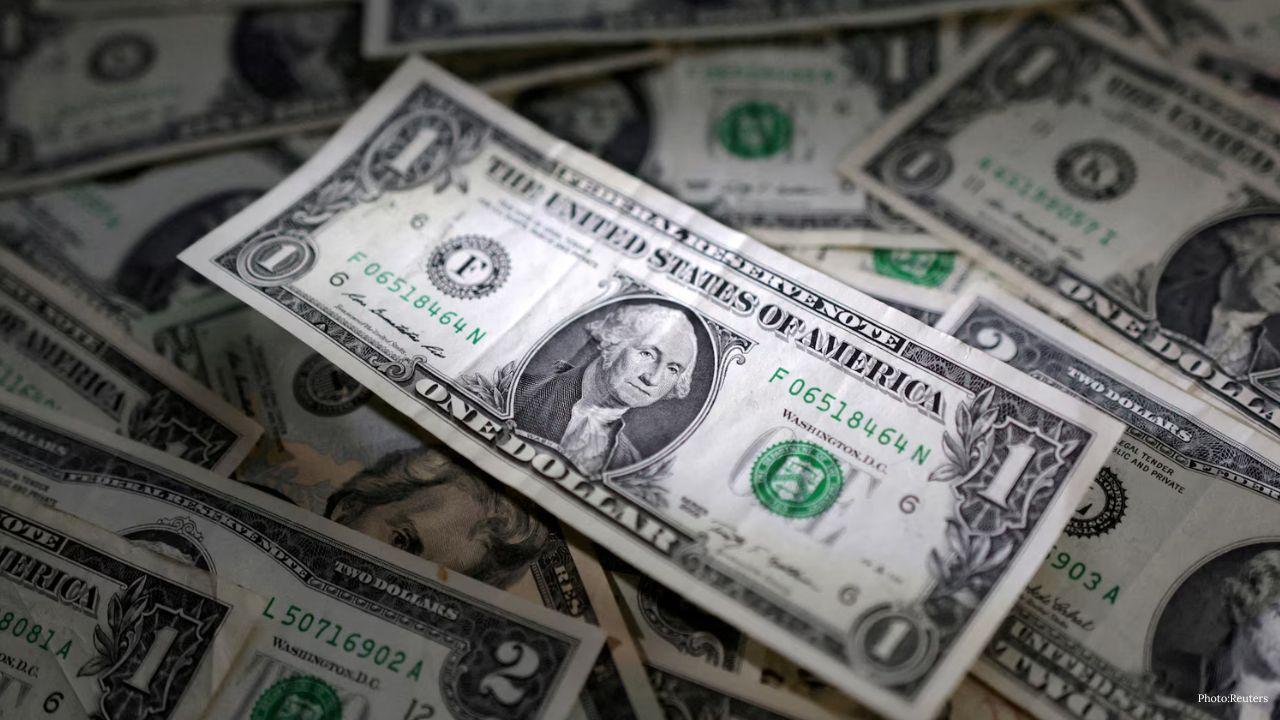
The US dollar remained close to its highest level in around 18 months on Monday, October 12, as escalating tensions in the Middle East and uncertainty surrounding upcoming US inflation figures kept investors cautious. Currency markets were closely monitoring geopolitical developments, energy prices and the potential direction of American interest rates. The US dollar has attracted renewed interest as financial markets respond to risks beyond the United States. Concerns about the Gulf region, rising energy costs and uncertainty over the global economic outlook have encouraged investors to reassess their exposure to currencies and other financial assets. Although the dollar eased slightly during Monday's trading session, it continued to trade near the levels reached last week. The movement reflected a market environment in which investors were weighing the relative safety of the US currency against the possibility of further economic and geopolitical shocks.
Developments across the Middle East have become an important factor influencing currency and commodity markets. The latest escalation involving Yemen's Iran-backed Houthi group, which intensified attacks on Saudi Arabia, has added to concerns about regional stability. Two tankers were also attacked over the weekend, increasing attention on maritime security and the potential risks to energy transportation. Any prolonged disruption to shipping routes or oil supplies could affect international trade, raise transportation costs and put additional pressure on economies that rely heavily on imported energy. For investors, the concern extends beyond the immediate impact of individual attacks. A wider regional conflict could create uncertainty over oil production, shipping insurance, delivery schedules and the cost of moving goods between major markets. The relationship between geopolitical risk and the dollar is therefore not automatic. The currency's continued strength will also depend on whether upcoming US economic data supports expectations that American interest rates will remain comparatively attractive.
Oil markets continued to react to developments in the Gulf and wider geopolitical environment. Brent crude futures were trading around US$104 per barrel on Monday, down approximately 0.5% at the time covered by the report. Despite the modest daily decline, the benchmark remained nearly 45% above its level before the conflict began, according to the supplied market report. Prices in some physical oil markets were reported to have reached around twice their pre-conflict levels, highlighting the pressure on certain parts of the energy supply chain. The latest movement followed an announcement by President Donald Trump concerning an energy ceasefire between Ukraine and Russia. The announcement added another factor for traders to assess as they considered the potential effects of diplomatic developments on energy supply expectations. For oil-importing countries, sustained price increases can also place pressure on trade balances, currencies and government finances. At the same time, oil-exporting economies may receive additional revenue, although the wider effects depend on production levels, domestic spending and other economic conditions.
Read Also: Beauden Barrett Opens Up About Mental Struggles During All Blacks Exile
The dollar index, which measures the US currency against a basket of six major currencies, slipped slightly to 102.16 on Monday. However, it remained close to the highest levels recorded over the previous 18 months. The index provides investors with a broad indication of the dollar's performance against major international currencies. Its movements can influence exchange rates, commodity prices, international borrowing costs and the value of investments held across different markets. Recent data from the US markets regulator showed that investors had significantly increased their bullish positions on the dollar. Net positioning rose to approximately US$36 billion in the week ending October 7, compared with US$8.4 billion three weeks earlier. The increase suggested a stronger preference for dollar exposure among the investors covered by the positioning data. The shift was largely made at the expense of the euro, which has faced pressure from concerns about France's public finances and political outlook.
The next major focus for currency traders is the US consumer inflation report scheduled for Wednesday. The release is particularly important because it comes shortly before the Federal Reserve's next policy meeting this month. The US inflation data will help investors assess whether price pressures are easing or remaining persistent. Inflation trends influence household purchasing power, business costs and the central bank's decisions about monetary policy. If inflation comes in higher than expected, traders may reconsider how quickly interest rates could fall or whether policymakers might need to keep borrowing costs elevated for longer. Such a result could support the dollar by strengthening expectations that US interest rates will remain relatively high. A softer inflation reading could have the opposite effect. If price pressures show signs of easing, markets may become more confident that the Federal Reserve can maintain its current policy stance without introducing additional increases. Investors will be examining the inflation figures alongside other economic indicators rather than treating a single release as conclusive evidence of the economy's direction.
The Federal Reserve raised interest rates in September for the first time since 2023, according to the report. Since then, traders have closely followed economic data to determine whether another increase is possible and how policymakers may respond to persistent inflation. Market pricing cited in the report showed an 81% probability that the central bank would leave rates unchanged at its October meeting. A month earlier, the probability stood at 51%. The shift suggests that investors have become more confident that the Fed will pause rather than deliver another immediate increase. However, expectations can change quickly when inflation figures, energy prices or geopolitical developments surprise the market. Chris Weston, head of research at Pepperstone, said the threshold for an October rate increase was high. He added that a stronger-than-expected inflation reading could prompt traders to consider whether another increase might come earlier than previously anticipated. Investors are particularly interested in the timing of any potential policy adjustment. The market outlook could shift if inflation remains stubborn, with traders reassessing whether a future increase might occur in December or January rather than March.
Global bond markets have experienced significant selling pressure in recent weeks, adding another source of uncertainty for investors. Bond prices generally fall when yields rise, and higher yields can increase borrowing costs for governments, businesses and households. Market concerns have included persistent inflation, expensive energy and rising government debt. These factors have raised questions about how much governments and central banks can do to support economic growth without worsening inflationary pressures or increasing financial risks. Higher borrowing costs can affect housing markets, corporate investment and public spending. Businesses may delay expansion plans when financing becomes more expensive, while households can face increased costs on loans and mortgages.
The euro remained around US$1.12 on Monday after recording five consecutive weeks of losses. The common currency has been affected by investor concerns over France's public finances and the political uncertainty surrounding the country's approach to fiscal policy ahead of the 2027 presidential election. The gap between French 10-year government bond yields and the yields on comparatively safer German bonds widened to 138 basis points. The spread was close to its highest level since 2012, reflecting the additional return investors were demanding to hold French government debt compared with German debt. Bond-yield differences can offer clues about how investors assess the financial and political risks associated with individual countries. When concerns about public debt or political uncertainty increase, investors may demand higher yields to compensate for perceived risks. However, the long-term impact on the euro will depend on whether France can address fiscal concerns and maintain investor confidence.
The US dollar traded at approximately 158.41 yen, showing little change during a session affected by holiday-thinned trading in Japan. The yen's performance remains closely linked to the difference between interest rates in Japan and the United States, as well as investor demand for currencies during periods of uncertainty. When US interest rates are comparatively attractive, investors may prefer dollar-denominated assets. However, expectations for changes in Japanese monetary policy, currency-market intervention and movements in global bond yields can also influence the exchange rate. The relatively quiet movement on Monday should be interpreted cautiously because trading activity was reduced. Lower market liquidity can sometimes magnify price movements when significant economic or geopolitical news emerges.
The British pound rose approximately 0.1% to US$1.3244 on Monday. Its modest advance came as the dollar remained close to its recent peak against a broader basket of currencies. The pound's movement illustrates how individual exchange rates can behave differently even when the dollar is generally firm. Currency pairs respond to the economic outlook, interest-rate expectations and political or fiscal developments affecting both countries. Traders will continue assessing the UK's inflation outlook, economic performance and central bank policy expectations when evaluating the pound's prospects. A small daily increase does not necessarily indicate a sustained reversal in the currency's broader trend. Investors generally look for confirmation from economic releases, changes in bond yields and sustained movements in trading activity.
The Indian rupee strengthened by approximately 1.1% to 95.7 against the US dollar, according to the report. Its rise came after the Reserve Bank of India took steps intended to ease pressure on the currency by directing oil companies' dollar purchases away from the spot market. Oil importers need dollars to pay for international energy purchases. When these companies buy substantial amounts of foreign currency in the spot market, their demand can put additional downward pressure on the rupee. Redirecting some of that demand can change the timing and location of dollar purchases, potentially reducing immediate pressure in the spot market. The effect on the currency's longer-term direction, however, will depend on broader demand and supply conditions. India's exchange rate is influenced by several factors, including crude oil prices, foreign investment flows, trade payments, domestic inflation and monetary policy. Higher oil prices can be particularly challenging for India because the country imports a significant share of its energy requirements.









Beauden Barrett Opens Up About Mental Struggles During All Blacks Exile
Beauden Barrett discusses his confidence struggles after missing six tests, his return against Austr

IMF Says AI Investment Supports Global Growth Despite Energy Shock
IMF says AI investment is supporting global growth near 3%, with Asian economies benefiting from ris

Will O'Rourke Ruled Out of New Zealand's India Series
New Zealand fast bowler Will O'Rourke will miss the India series with hamstring and calf injuries as

AI Companies Expected to Drive Most US Earnings Growth in Q3
AI companies are expected to drive US third-quarter earnings growth as investors assess tech profits

Money Market Funds See Record Inflows as Global Bond Selloff Intensifies
Global money market funds attract $153.81 billion as bond yields rise, inflation fears persist and i

Meta Bans TikTok Ads on Facebook and Instagram in Seven Countries
Meta has banned TikTok ads in seven countries, escalating competition over social media users, adver