
You have not yet added any article to your bookmarks!
Join 10k+ people to get notified about new posts, news and tips.
Do not worry we don't spam!
Post by : Saif Rahman
A cruise ship sailing across the Atlantic has become the center of a hantavirus outbreak, raising significant health alarms worldwide as multiple passengers have contracted the virus, leading to at least three deaths. Health authorities from various nations are actively tracing contacts and monitoring those affected to curb the spread of this rare virus.
The incident occurred aboard the MV Hondius, a Dutch-operated vessel carrying around 150 passengers and crew from South America toward Europe. Officials linked the infections to the Andes strain of hantavirus, primarily endemic to South America.
Concerns amplified as the Andes strain is among the few hantaviruses noted for limited human-to-human transmission. Although such occurrences are rare, health experts warn that the outbreak highlights broader fears regarding infectious disease transmission via international travel.
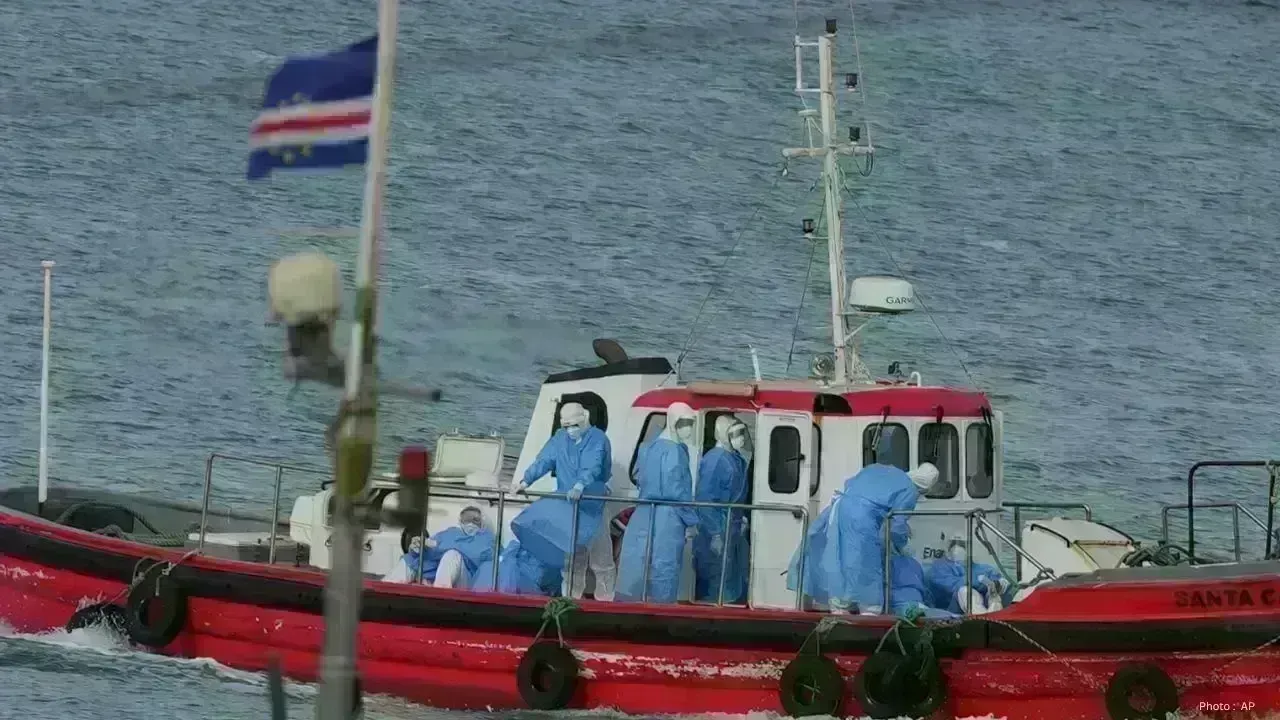
During the voyage, some passengers displayed severe respiratory symptoms. A few required emergency evacuations while others isolated themselves in their cabins en route to the Canary Islands, Spain.
The situation escalated following three confirmed deaths linked to the outbreak. A Dutch passenger died aboard the ship, while his wife later succumbed after being hospitalized in South Africa. In addition, another passenger's death has raised further alarm amongst health officials.
South African health authorities subsequently confirmed that two of the infected passengers tested positive for the Andes strain. Medical professionals point out that this strain is prevalent in Argentina and Chile, where rodents can harbor the virus.
Hantavirus transmission typically occurs through contact with infected rodent excretions. Infected individuals can contract the virus by inhaling particles in confined spaces. The comparative rarity of human-to-human transmission is what makes the cruise ship incident garner such extensive medical scrutiny.
According to the World Health Organization, while the outbreak poses serious concerns, it should not be equated with the COVID-19 pandemic due to the lower transmission rates of hantavirus. Currently, officials assert that the overall public health risk remains low.
The incident has illustrated the rapidity at which health emergencies can escalate to global issues in a connected world, as passengers traveled through multiple countries prior to symptoms manifesting. This has prompted contact-tracing initiatives in South Africa, Switzerland, Germany, the Netherlands, Spain, and the United Kingdom.
Health officials have managed to identify numerous individuals who may have encountered the infected passengers, with some returnees opting for self-isolation as a precautionary measure. So far, preliminary tests across several countries have shown negative results for many close contacts.
Investigation suggests that the outbreak could have originated before the cruise began. Medical experts suspect a Dutch couple might have come into contact with infected rodents while bird-watching in Ushuaia, Argentina, known for sporadic hantavirus cases.
This outbreak also raises questions about disease control measures on international cruise liners. Such vessels host a diverse crowd in confined environments for extended periods, complicating the mitigation of infectious diseases.
During the COVID-19 pandemic, cruise ships were significant in showcasing rapid disease spread through global transport systems. Though hantavirus behaves differently from COVID-19, experts assert that this latest outbreak still reveals vulnerabilities within international disease monitoring frameworks.
The longer incubation period of hantavirus further complicates identifying infected individuals, with symptoms that can appear weeks post-exposure. Initial signs often include fever, body aches, headache, fatigue, and cough. Severe cases may necessitate intensive medical intervention.
Currently, there is no specific treatment for hantavirus infection; care primarily focuses on supportive measures such as oxygen assistance and intensive care. Early detection and medical intervention are critical for enhancing survival rates.
Experts caution that climatic and environmental shifts may raise the risk of future hantavirus outbreaks, as changing weather patterns can influence rodent populations and virus propagation in certain areas of South America.
This outbreak aboard the MV Hondius is being scrutinized by international health agencies, with governments assuring the public that the overall threat remains minimal. Nevertheless, it underscores how rare diseases can swiftly escalate into global concerns amid modern travel and tourism.
The outbreak situation aboard the ship may yet be contained without further dissemination, but it serves as a crucial reminder of the urgent need for robust global health infrastructure, swift medical responses, and international collaboration during health emergencies.










PM Modi Pays Tribute to Mahatma Gandhi, Urges People to Support Khadi
PM Modi pays tribute to Mahatma Gandhi on Gandhi Jayanti and urges citizens to support Khadi and the

Amazon Seeks to Offload $8 Billion in Nvidia Chips to Investors
Amazon plans to move $8 billion in Nvidia chips to investors, using a new financing model to strengt

Samsung Raises Galaxy S26 Prices as Memory Chip Costs Rise
Samsung raises Galaxy S26 prices in South Korea as rising memory chip costs put pressure on smartpho

Lewis Hamilton Calls Singapore Grand Prix One of F1's Toughest Races
Lewis Hamilton discusses the demanding Singapore Grand Prix and brings Plus44 and Almave to Singapor

Denmark's Pandora Opens World's Largest Jewellery Factory in Vietnam
Pandora opens its largest jewellery factory in Vietnam, expanding global production, strengthening s

Gautam Gambhir Questions Batting-Friendly Pitches After India's Record ODI Chase
Gautam Gambhir questions batting-friendly ODI pitches after India’s record chase, calling for a bett

