
You have not yet added any article to your bookmarks!
Join 10k+ people to get notified about new posts, news and tips.
Do not worry we don't spam!
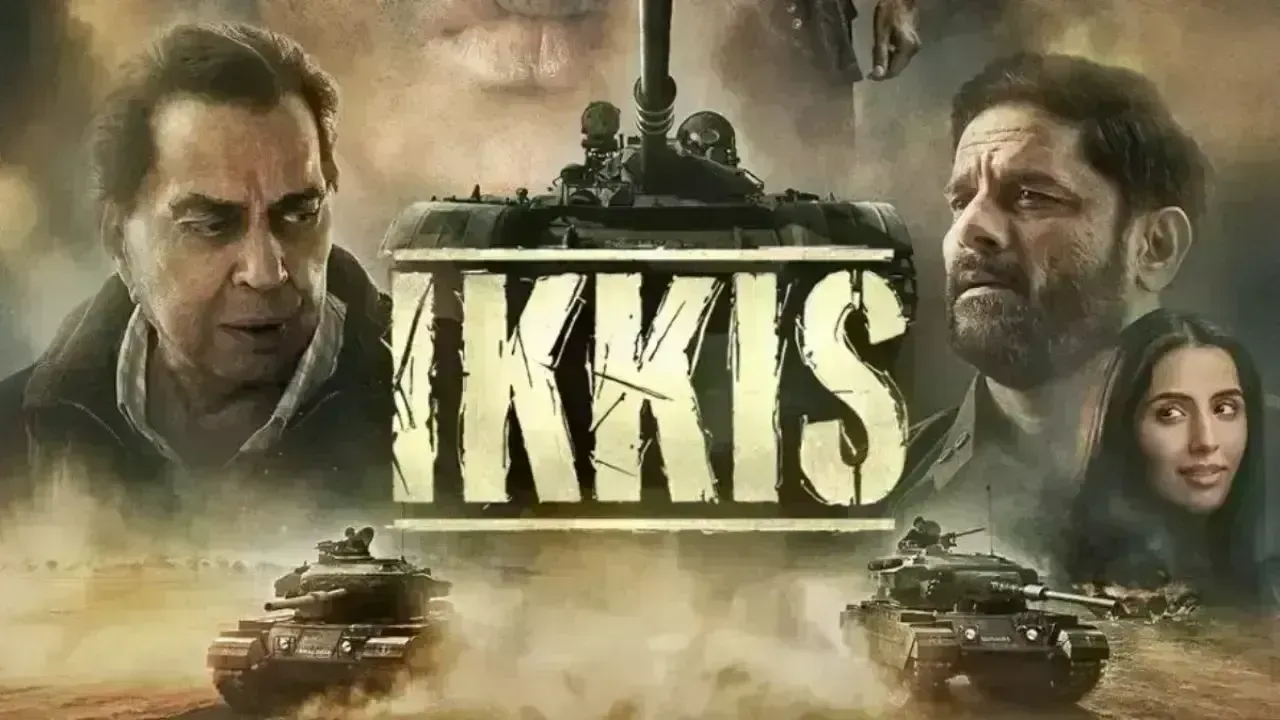
Post by : Anis Farhan
Hindi cinema has been undergoing a visible transition over the last few years, with audiences showing growing acceptance of films that prioritise storytelling, emotional depth, and thematic sincerity over scale and spectacle. Ikkis arrives squarely within this evolving space. Released nationwide amid moderate pre-release visibility, the film does not chase hype or mass frenzy. Instead, it quietly positions itself as a serious, emotionally resonant war drama rooted in character and memory.
For Agastya Nanda, Ikkis represents a significant step forward. The film places him in a role that demands restraint, vulnerability, and responsibility—qualities far removed from lighter, more contemporary characters. Sharing screen space with Dharmendra, whose presence naturally brings gravitas and lived-in emotion, the film gains a generational contrast that strengthens its core.
Unlike commercial war films that rely heavily on large-scale action set pieces and patriotic spectacle, Ikkis approaches its subject with calm intensity. It banks on its narrative weight, historical emotion, and gradual audience engagement to shape its box office journey. This restrained confidence defines the film’s opening day performance as well.
On its opening day, Ikkis recorded a modest yet stable Day 1 box office collection, aligning closely with expectations for a mid-budget, content-focused release. Without aggressive promotions, chart-topping music, or mass-appeal hooks, the film’s opening numbers reflect curiosity rather than frenzy.
Industry tracking indicates that the film’s earnings on Day 1 were consistent with similar genre-driven releases—neither underperforming nor delivering a breakout start. The opening suggests that audiences were willing to sample the film, particularly those inclined toward serious drama and war narratives, but mass walk-ins remained limited.
Morning shows started on a quieter note, which is typical for films of this nature. However, as the day progressed, there was a gradual improvement in occupancy, especially in multiplex-heavy urban centres. The trend points to a film that may rely more on steady accumulation than explosive daily jumps.
Morning shows for Ikkis opened with subdued occupancy across most regions. Early footfalls were largely driven by viewers specifically interested in war films, historical themes, or performance-led cinema. Advance bookings were present but modest, indicating awareness without overexposure.
This pattern is not unusual for films that do not position themselves as mass entertainers. The absence of a celebratory or high-energy tone meant that casual audiences largely stayed away during early hours.
As reviews and first reactions began circulating, afternoon and evening shows saw improved attendance. Multiplexes in metro cities and large urban pockets reported a noticeable pickup, particularly among audiences seeking content-driven cinema.
Night shows, while not sold out, performed better than morning slots, suggesting that Ikkis benefits from deliberative viewing rather than impulse-driven attendance. Single screens, however, remained relatively muted, reflecting the film’s niche appeal and restrained presentation.
For Agastya Nanda, Ikkis marks an important phase in his professional journey. This is not a film that leans on youthful charm or contemporary relatability. Instead, it demands emotional discipline, physical authenticity, and narrative responsibility—qualities that directly impact how audiences perceive him as a long-term performer.
Day 1 box office numbers suggest that while his name alone may not pull large crowds yet, audiences are open to watching him in a serious role. Trade observers believe that his performance will play a decisive role in shaping the film’s weekend trajectory.
Rather than opening as a star-driven vehicle, Ikkis positions Agastya as a performer in progress—one whose credibility will be built gradually through content and consistency.
Dharmendra’s role in Ikkis is not designed as a commercial hook, yet his presence adds undeniable emotional authority. His screen time, expressions, and understated delivery resonate strongly with audiences who appreciate layered, legacy performances.
Older viewers and cinema lovers have responded positively to his involvement, seeing it as a reminder of a generation that prioritised emotional truth over spectacle. While Dharmendra’s presence does not guarantee box office success, it deepens the film’s appeal and reinforces its seriousness.
In many ways, he acts as the emotional spine of the film—providing context, continuity, and quiet intensity.
War dramas have historically occupied a specific space in Hindi cinema. Unlike commercial entertainers, they often attract audiences seeking emotion, reflection, and narrative depth rather than escapism. Ikkis follows this tradition closely.
The restrained Day 1 collection reflects this reality. The film does not rely on adrenaline-fuelled action or patriotic spectacle; instead, it builds emotional stakes slowly. This approach limits immediate mass appeal but opens the door for word-of-mouth growth, particularly if audiences connect with its sincerity.
Such films typically show gradual momentum rather than sharp spikes, especially over weekends. Their success is measured not by opening-day fireworks but by sustained engagement.
Early responses to Ikkis have been mixed to positive, with many viewers appreciating the film’s intent and emotional grounding. Praise has largely centred around:
The film’s sincerity and grounded tone
Dharmendra’s understated, dignified performance
The respectful and non-sensational treatment of war and memory
However, some audience segments have pointed out that the film’s pacing may feel slow, especially for viewers expecting large-scale battle sequences or heightened drama. This divide between expectation and execution could influence how the film performs over the next few days.
Importantly, even critical voices acknowledge the film’s honesty, which may help it find steady acceptance rather than outright rejection.
When placed alongside other recent war and period dramas, Ikkis has opened within a familiar range. Films in this category rarely post massive Day 1 numbers unless driven by exceptional buzz or star power.
Instead, they depend on gradual audience discovery. Ikkis appears to be following this established pattern—opening modestly but leaving room for organic growth if word of mouth remains favourable.
For Ikkis, audience feedback will be the most critical driver. Positive recommendations focused on performances and emotional impact could translate into stronger footfalls over Saturday and Sunday.
The film’s performance is closely tied to multiplex audiences in metropolitan and Tier-1 cities. Growth in these centres could significantly improve weekend numbers.
With no major commercial release clashing immediately, Ikkis has breathing space. This allows it to hold screens and build momentum if audience reception remains stable.
Trade analysts currently classify Ikkis as a slow-burn theatrical release. A healthy weekend multiplier could push the film toward a respectable first-week total despite its modest opening.
However, if momentum fails to build, the film may lean more heavily on its post-theatrical digital run to reach a wider audience. This is a common trajectory for serious dramas that prioritise longevity over immediate impact.
The opening of Ikkis also reflects a larger shift in audience behaviour. Viewers are increasingly selective, often waiting for reviews and recommendations before committing to theatre visits—especially for films without mass appeal.
In this environment, a steady Day 1 is not necessarily a setback. For content-led cinema, survival and growth often matter more than opening-day dominance.
Ikkis has begun its box office journey with a calm and steady Day 1 performance, reflective of its niche appeal and serious tone. While it lacks the explosive opening of commercial entertainers, it has positioned itself as a story-first war drama with the potential to grow through audience goodwill.
For Agastya Nanda, the film serves as an important credibility milestone, testing his ability to carry emotionally demanding material. Dharmendra’s presence adds depth and dignity, reinforcing the film’s emotional core.
The coming days—particularly the weekend—will be crucial in determining whether Ikkis can translate its intent, performances, and sincerity into sustained box office momentum. For now, it stands as a reminder that in modern Hindi cinema, quiet beginnings can still lead to meaningful journeys.
Box office figures mentioned are early estimates based on industry tracking and may change as official data is updated. Audience reception and collections can vary significantly over subsequent days.










AI Companies Expected to Drive Most US Earnings Growth in Q3
AI companies are expected to drive US third-quarter earnings growth as investors assess tech profits

Money Market Funds See Record Inflows as Global Bond Selloff Intensifies
Global money market funds attract $153.81 billion as bond yields rise, inflation fears persist and i

Meta Bans TikTok Ads on Facebook and Instagram in Seven Countries
Meta has banned TikTok ads in seven countries, escalating competition over social media users, adver

ASML and Zeiss Target Next-Generation Chip Technology in 10 Years
ASML and Carl Zeiss are developing Hyper NA technology to print smaller chip circuits, with the next

Rabada Misses First Australia Test as South Africa Pick Two Spinners
Kagiso Rabada misses the opener as South Africa vs Australia begins, with Anrich Nortje returning an

Starc Compares Australia's Tough Year to McIlroy's Major Sweep
Mitchell Starc says Australia winning three away Test series and the World Cup would match Rory McIl

