
You have not yet added any article to your bookmarks!
Join 10k+ people to get notified about new posts, news and tips.
Do not worry we don't spam!
Post by : Anis Farhan
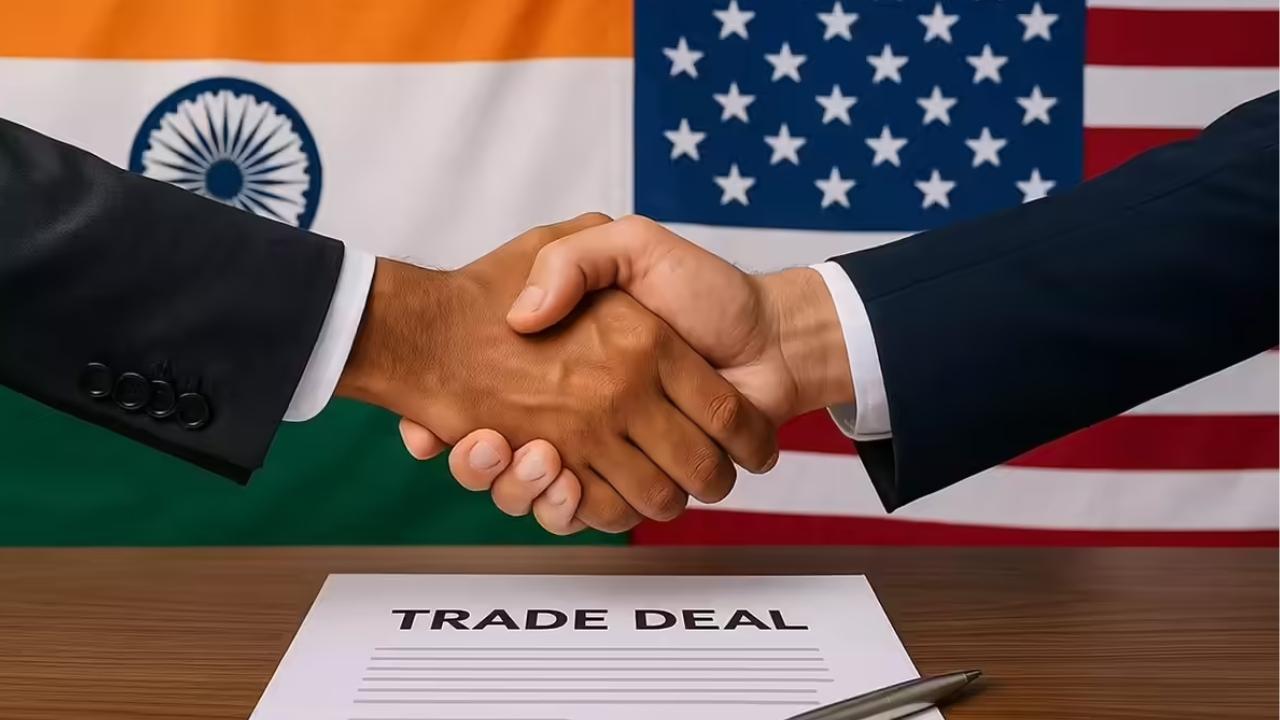
International trade relations received a historic jolt in early February 2026 when the Republic of India and the United States of America announced a sweeping trade agreement intended to reset decades of tariff disputes, market barriers, and diplomatic tensions. Announced jointly by US President Donald Trump and Indian Prime Minister Narendra Modi, the deal centres on significant tariff reductions, commitments to increase bilateral commerce, and wide-ranging economic expectations from both nations. The agreement marks a decisive shift from months of escalating trade tensions that saw punitive tariffs and strategic disagreements, towards cautious optimism rooted in mutual economic opportunity and geopolitical cooperation.
This extensive feature delves into the origins, structural terms, economic implications, stakeholder reactions, and broader global context of the India-US trade deal — providing a deeply nuanced understanding of one of the most consequential trade developments of 2026.
The lead-up to the trade deal was anything but smooth. Throughout 2025, tensions between India and the United States grew as tariff rates on Indian exports skyrocketed in response to a complex mix of geopolitical grievances and economic protectionism. Beginning with a baseline tariff and a reciprocal tariff, by mid-2025 the combined duties on many Indian products entering the US had reached levels as high as 50 per cent — among the steepest imposed by Washington on any partner. This was driven in part by disagreements linked to India’s energy import policy, especially its significant purchases of Russian crude, which Washington viewed unfavourably.
Such elevated tariffs threatened millions of dollars in trade, depressions in key sectors of Indian exports such as textiles, seafood, gems, apparel and mechanical goods, and widespread concern among market participants and policymakers on both sides. Indian exporters were forced to pivot to alternative markets, while worries about broader economic spillovers intensified.
Despite these economic headwinds, diplomatic channels between New Delhi and Washington remained open and active. Negotiations throughout late 2025 and into early 2026 reflected an awareness on both sides that systemic trade cooperation offered far greater advantages than prolonged conflict. This culminated in the high-profile announcement in early February 2026 in which both leaders signalled a new chapter for the bilateral economic partnership.
At the heart of the agreement lies a substantial reduction in reciprocal tariffs imposed by the United States on Indian goods. Previously effective tariffs — combining baseline duties, additional reciprocal tariffs, and punitive levies tied to geopolitical disagreements — were cumulatively high. Under the new deal, the US agreed to slash these tariffs to a uniform rate of 18 per cent on most Indian exports. This represents a significant concession from the punitive heights reached in 2025.
Importantly, the agreement also dismantled the additional 25 per cent penalties that had been tied specifically to India’s purchase of Russian energy. These punitive elements were rescinded, leaving the new tariff structure in place and significantly easing market access for Indian exporters.
From India’s perspective, the deal also included commitments to reduce or eliminate tariffs and non-tariff barriers on a broad swath of US imports — potentially moving towards zero tariffs on many categories — although exact timelines and products remain subject to further regulatory clarification and phased implementation.
Beyond traditional goods and services tariff negotiations, the agreement touched on energy commerce. India agreed to recalibrate its crude and liquid fuel import strategy, reducing its reliance on Russian supplies — a major sticking point with the US — and expanding purchases of American energy products. While specific volumes and timelines were not fully disclosed at the initial announcement, leaders emphasised that these energy discussions would translate into tens of billions of dollars in future transactions.
Such strategic energy cooperation, coupled with broader goals of deepening technological and agricultural trade, underpins both countries’ aspirations to push bilateral trade volumes toward ambitious targets over the coming decade.
Indian financial markets responded with marked enthusiasm following the announcement of the trade deal. The Indian rupee experienced substantial gains in non-deliverable forward (NDF) trading, signalling strong market confidence in the currency’s trajectory as tariff uncertainty dissipated. Futures markets suggested that the rupee was poised to strengthen against the US dollar, buoyed by foreign capital inflows and improved exporter sentiment.
Stock markets also reflected this optimism. Analysts from leading financial institutions noted that the removal of tariff overhangs could boost investor confidence, attract foreign portfolio flows, and improve valuations across sectors historically hindered by US tariff pressure.
Among the most immediate beneficiaries of the tariff reductions are exporters in India’s seafood, textile and apparel sectors, which had borne the brunt of the punitive tariff structure. Business leaders in these industries publicly welcomed the tariff cut, noting that lower duties could restore competitive pricing in the US market — long considered one of India’s most important export destinations.
Yet, the deal also presents complex supply chain adjustments. For example, Indian manufacturers might need to recalibrate sourcing to take advantage of preferential treatment, while American firms may assess how lowered entry barriers affect their competitive positions both domestically and in India.
Political leaders in both countries seized the moment to highlight the deal’s strategic and economic significance. US business advocacy groups, such as the US Chamber of Commerce, issued statements welcoming the agreement as long-sought progress that could benefit businesses and workers in both nations.
Officials in India lauded the tariff reductions as validation of New Delhi’s commercial strategies, while simultaneously emphasising the importance of maintaining strategic autonomy in energy and geopolitical matters.
Policy analysts offered more nuanced assessments, acknowledging the deal’s potential to unlock billions in trade while also urging careful calibration of implementation details. Some experts highlighted that sectors such as information technology, pharmaceuticals and machinery could see renewed opportunities, while others noted that headline tariff figures — although materially lower — still require clear timelines and regulatory mechanisms to translate into sustained trade flows.
The India-US trade agreement cannot be viewed in isolation. It arrives amid India’s broader push for diversified trade partnerships — including the proposed India-European Union Free Trade Agreement and recent deals with other global partners — signaling New Delhi’s strategic intent to integrate more fully into global supply chains.
For Washington, realigning tariff policy with India serves multiple purposes: aiding American exporters, deepening strategic ties in Asia, and countering influence from other major economies seeking deeper economic engagement with India.
The success of the India-US trade deal ultimately hinges on effective implementation. Key areas to watch include:
Detailed legislative and regulatory changes required to enact tariff reductions.
Sector-specific rules of origin and compliance frameworks.
Long-term strategic energy purchase agreements and supply shifts.
Broader integration with global trade norms and multilateral engagements.
While the announcement itself represents a historic diplomatic and economic milestone, the operationalization of commitments over months and years will determine its true legacy.
Disclaimer:
This article synthesises publicly available information and expert reporting on the India-US trade deal as of early February 2026. It reflects prevailing analysis at the time of writing and is subject to change as additional details and official documents become available.










PM Modi Pays Tribute to Mahatma Gandhi, Urges People to Support Khadi
PM Modi pays tribute to Mahatma Gandhi on Gandhi Jayanti and urges citizens to support Khadi and the

Amazon Seeks to Offload $8 Billion in Nvidia Chips to Investors
Amazon plans to move $8 billion in Nvidia chips to investors, using a new financing model to strengt

Samsung Raises Galaxy S26 Prices as Memory Chip Costs Rise
Samsung raises Galaxy S26 prices in South Korea as rising memory chip costs put pressure on smartpho

Lewis Hamilton Calls Singapore Grand Prix One of F1's Toughest Races
Lewis Hamilton discusses the demanding Singapore Grand Prix and brings Plus44 and Almave to Singapor

Denmark's Pandora Opens World's Largest Jewellery Factory in Vietnam
Pandora opens its largest jewellery factory in Vietnam, expanding global production, strengthening s

Gautam Gambhir Questions Batting-Friendly Pitches After India's Record ODI Chase
Gautam Gambhir questions batting-friendly ODI pitches after India’s record chase, calling for a bett

