
You have not yet added any article to your bookmarks!
Join 10k+ people to get notified about new posts, news and tips.
Do not worry we don't spam!
Post by : Anis Farhan
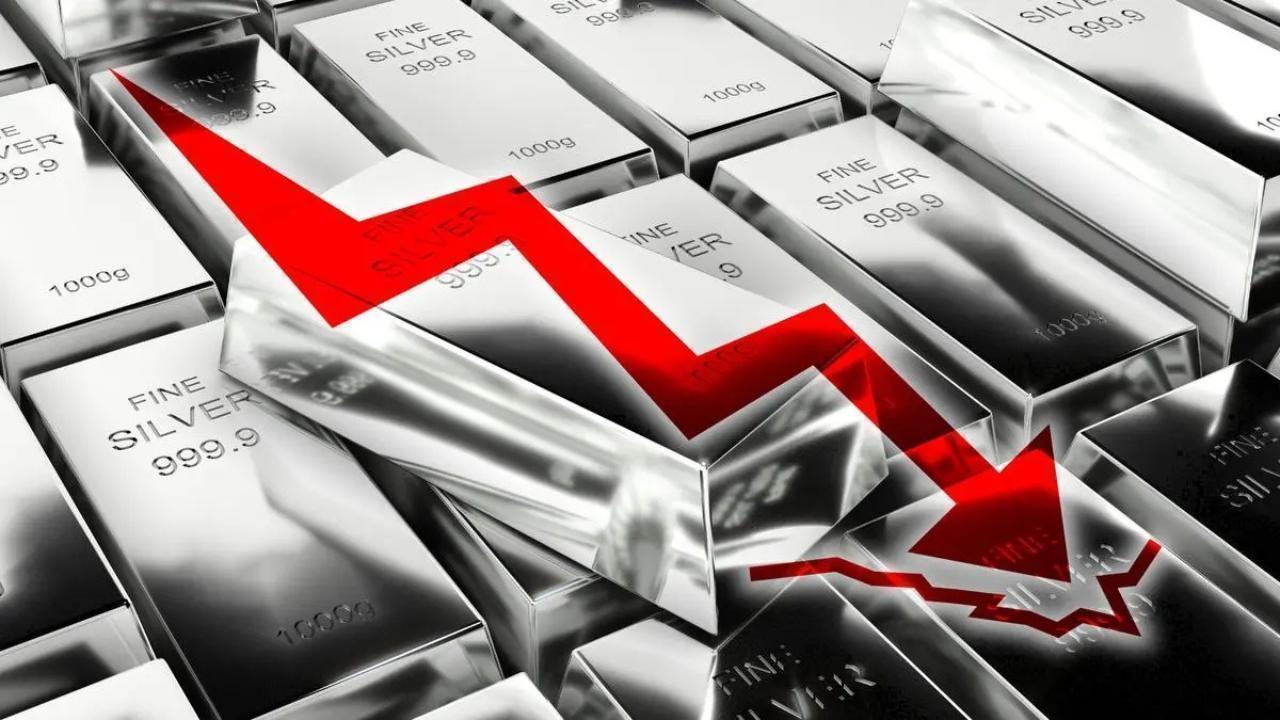
In February 2026, silver — often referred to as the “Cinderella metal” — experienced one of its most dramatic corrections in years, with prices falling over 26 % from recent highs. The magnitude of this drop was startling not only for long-term holders but also for active traders and market commentators. The decline occurred after a significant rally that had propelled silver to multi-year highs, only to reverse sharply, sparking questions about the fundamental drivers behind such volatility and the stories circulating within investor communities.
Understanding what drives such sharp price moves in a commodity like silver — which has both industrial and investment demand — requires dissecting market structure, speculative positioning, macroeconomic forces, and the narratives that often accompany speculative rallies. This article unpacks all of these elements, dispelling common misconceptions and offering a clearer picture of why silver dropped so sharply and what investors should keep in mind.
Silver had enjoyed a powerful rally leading up to the correction. Investors and traders were drawn to the metal for various reasons — including macroeconomic concerns, speculative interest, and the memory of other major rallies in commodities. During this rally, silver saw significant gains, with prices surging ahead of extended economic optimism.
However, the rally’s intensity brought its own risks. As prices climbed and positions became crowded, particularly among leveraged speculators and institutional players, the market became increasingly vulnerable to shifts in sentiment and technical triggers. When the upward momentum weakened and selling pressure built, these leveraged positions quickly unwound, exacerbating the price fall — a process commonly described as deleveraging.
This deleveraging was a key factor in the abrupt turnaround, emphasizing how markets that become overly concentrated in one direction can unwind just as violently when sentiment changes. Such pressure often doesn’t reflect a fundamental shift in the physical demand for silver, but rather a rebalancing of financial and speculative exposures.
A persistent theory in commodity discussions is that large financial institutions or banks deliberately short metals like silver to suppress prices and profit from declines. This narrative also sometimes suggests a planned “squeeze” similar to episodes in equity markets. However, such interpretations misrepresent how markets function.
In reality, while banks do engage in futures market trading — including taking short positions — much of that activity is commercial rather than speculative in nature. Banks often act as market-making intermediaries rather than directional speculators. When they take short positions in futures, they typically hedge by holding physical assets or engaging in offsetting trades, ensuring they are not exposed to directional price risk. This dynamic is part of standard commodities trading and does not imply coordinated price suppression.
Thus, attributing the drop to some covert manipulation oversimplifies market mechanisms and distracts from more substantial drivers such as leverage and sentiment shifts.
Another prevalent misconception is that futures markets for silver are inherently fraudulent because the total notional ounces represented by contracts exceed the physical metal available in exchange warehouses. Critics cite this imbalance as evidence of a fractional reserve structure designed to explode in a squeeze.
While it is true that futures markets often carry large notional positions relative to physical inventories, this does not by itself create a systemic flaw or guarantee a squeeze. Commodity futures markets are primarily used for speculative exposure and hedging rather than physical delivery. Most contracts never result in physical settlement — they are closed out or rolled over before delivery dates. Exchanges manage risk and liquidity through rules and risk controls that help prevent disorderly outcomes.
The idea that the paper market is a ticking bomb oversimplifies the distinction between financial exposure and actual physical commodity supply.
Many analysts and commentators point to supply-demand models suggesting long-term structural deficits in silver as a justification for perpetual price increases. While underlying supply constraints may exist in certain scenarios, equating these directly with sustained price rises overlooks how investors and industries use silver.
Silver has a dual identity: it serves industrial demand — particularly in sectors like electronics and solar panels — and also functions as an investment asset. Unlike truly consumable commodities whose production must meet ongoing demand (e.g., oil or crops), silver held by investors in bullion or exchange-traded products can be released back into the market. Additionally, industrial users have demonstrated the ability to adapt to price changes by increasing recycling efforts or seeking substitutes, especially in technologies where silver intensity can be reduced without hampering performance.
Treating silver purely through a supply-deficit lens fails to account for these broader dynamics.
One of the most important technical drivers behind the sharp decline was the unwinding of leveraged positions. As silver climbed and traders piled into speculative bets, many positions were held on margin — meaning they depended on borrowed funds. When prices began to reverse, margin calls forced traders to liquidate these positions quickly to meet requirements, amplifying downward momentum.
This kind of forced selling can generate steep price drops over short periods, even if the underlying fundamentals haven’t deteriorated significantly. In highly leveraged markets, sentiment shifts can trigger a cascade of exits that push prices away from equilibrium levels before stabilizing.
Although the LiveWire analysis emphasizes market structure, broader macroeconomic influences also shaped investor behavior. Many market participants cite the strengthening of the U.S. dollar and shifts in monetary policy expectations — such as speculation about a more hawkish central bank leadership — as pressures on precious metals pricing. A stronger dollar typically makes dollar-priced commodities like silver more expensive for holders of other currencies, reducing demand. Higher interest rates or expectations of tighter monetary policy also make yield-bearing assets more attractive relative to non-yielding commodities.
Combined with technical factors, these macro signals can sway investor sentiment, prompting reallocation away from metals toward other asset classes.
Despite the recent decline, some historical analysis suggests that major corrections in precious metals markets are often followed by recoveries over longer periods. Recent data comparing past sell-offs indicate that while silver can be especially volatile, modern corrections may still present potential for rebound over medium-term horizons. However, each cycle’s drivers differ, and past performance does not guarantee future outcomes.
Silver’s inherent volatility — stemming from its blended industrial and investment demand — means it can swing more dramatically than gold. For investors, this volatility can either introduce risk or present strategic entry points depending on investment goals and risk tolerance.
The silver price drop also underscores broader themes in commodities markets:
Narrative vs. Dynamics: Price narratives can diverge from market fundamentals, especially in periods of heightened retail participation and rapid speculative gains.
Role of Futures Markets: Futures contracts mediate exposure and liquidity, but they are subject to technical processes like margin calls that can magnify moves.
Investor Behavior: Herding behavior, leveraged positions and sentiment shifts play outsized roles in short-term pricing dynamics.
Understanding these forces helps investors contextualize price movements beyond sensational headlines and flawed analogies.
Silver’s recent 26 % price drop from its peak was not the result of a mysterious conspiracy or structural fraud, but rather a complex mix of leveraged positioning, technical market dynamics, and shifts in macroeconomic sentiment. Misunderstandings about how commodities markets function — including oversimplified narratives about manipulation and supply deficits — can cloud judgment and lead to misplaced expectations.
For long-term investors, recognizing the dual nature of silver as both an industrial metal and an investment asset is crucial. The metal’s volatility and market behavior reflect broader financial mechanisms as much as physical supply and demand. While short-term corrections can be sharp and unsettling, they often reveal the deeper mechanics that shape commodity price cycles — emphasizing the importance of informed, disciplined investing over reactionary speculation.
Disclaimer:
This article synthesizes market observations and commentary as of early February 2026. It is not financial or investment advice. Readers should independently research or consult a professional advisor before making investment decisions.










PM Modi Pays Tribute to Mahatma Gandhi, Urges People to Support Khadi
PM Modi pays tribute to Mahatma Gandhi on Gandhi Jayanti and urges citizens to support Khadi and the

Amazon Seeks to Offload $8 Billion in Nvidia Chips to Investors
Amazon plans to move $8 billion in Nvidia chips to investors, using a new financing model to strengt

Samsung Raises Galaxy S26 Prices as Memory Chip Costs Rise
Samsung raises Galaxy S26 prices in South Korea as rising memory chip costs put pressure on smartpho

Lewis Hamilton Calls Singapore Grand Prix One of F1's Toughest Races
Lewis Hamilton discusses the demanding Singapore Grand Prix and brings Plus44 and Almave to Singapor

Denmark's Pandora Opens World's Largest Jewellery Factory in Vietnam
Pandora opens its largest jewellery factory in Vietnam, expanding global production, strengthening s

Gautam Gambhir Questions Batting-Friendly Pitches After India's Record ODI Chase
Gautam Gambhir questions batting-friendly ODI pitches after India’s record chase, calling for a bett

