You have not yet added any article to your bookmarks!
Join 10k+ people to get notified about new posts, news and tips.
Do not worry we don't spam!
Post by : Sameer Farouq
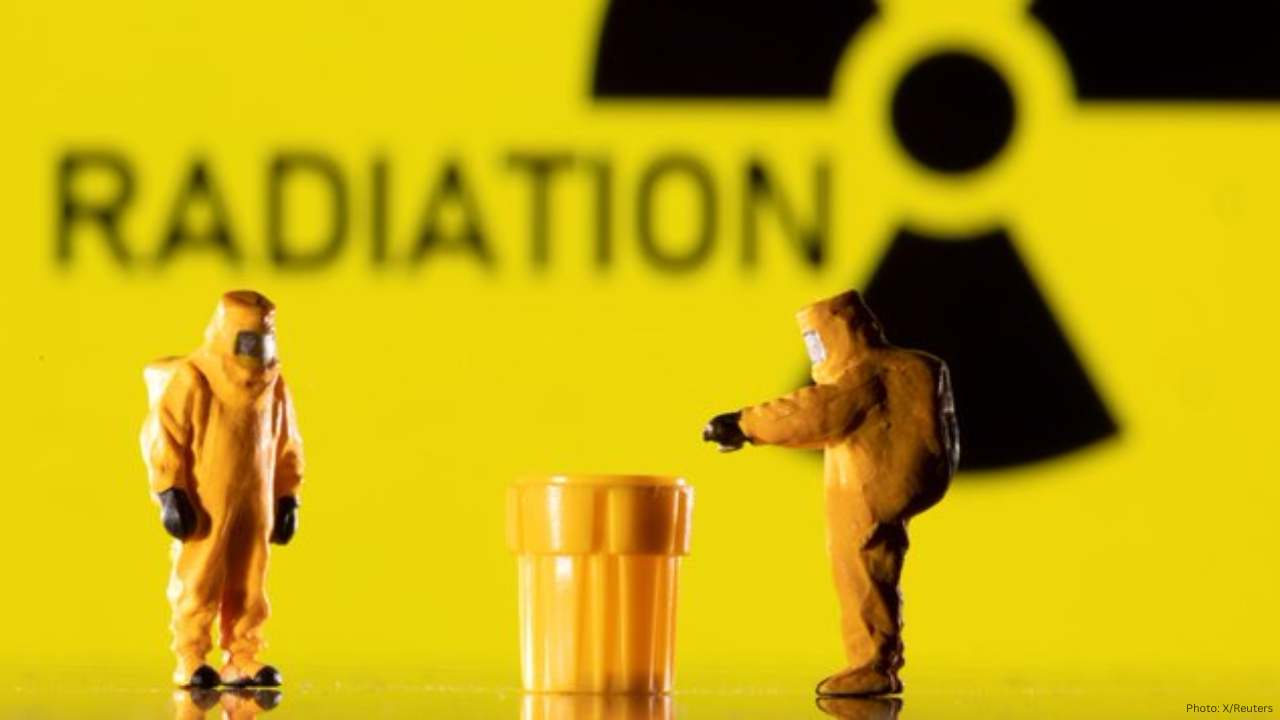
Indonesia's nuclear agency is actively investigating radioactive contamination at the Modern Cikande Industrial Estate, located near Jakarta. The contamination was first detected in August when cesium-137 traces were found in a shrimp shipment to the United States. Subsequent scans revealed high radiation levels at multiple locations within the industrial zone, prompting urgent decontamination efforts.
The initial detection occurred when a batch of shrimp processed at PT Bahari Makmur Sejati (BMS), a company based in the Cikande area, was found to contain cesium-137. This led to the suspension of BMS's exports to the U.S. and initiated a broader investigation into potential contamination sources. Authorities have since identified 10 points within the industrial estate exhibiting elevated radiation levels, up from an earlier count of six.
Investigations suggest that a foreign-owned scrap metal factory within the industrial estate may be the source of the contamination. Cesium-137, a radioactive isotope, is typically used in medical devices and industrial gauges and is not naturally present in the environment. Indonesia does not operate nuclear reactors or possess nuclear weapons, raising questions about how the material entered the industrial zone.
Over 1,500 individuals, including workers and residents in the vicinity, have undergone radiation screening. Nine individuals have been found to have been exposed to radiation and are receiving specialized medical treatment. The government has established a 5-kilometer perimeter around the affected area, restricting access and implementing decontamination procedures.
The contamination has had significant repercussions for Indonesia's shrimp industry. Following the incident, shrimp processing volumes have decreased by 30-35%, and prices have dropped by up to 35% in some regions. The United States, a major importer of Indonesian shrimp, has placed a red alert on products from BMS, further affecting market confidence.
Indonesian authorities are collaborating with the International Atomic Energy Agency (IAEA) and the U.S. Food and Drug Administration (FDA) to assess the full extent of the contamination and ensure the safety of exports. The government has emphasized the seriousness of the situation and is committed to resolving the issue promptly.
Disclaimer: This article is based on information available as of October 3, 2025. The situation is subject to change as investigations continue. Readers are advised to consult official sources for the most current information.









ASML and Zeiss Target Next-Generation Chip Technology in 10 Years
ASML and Carl Zeiss are developing Hyper NA technology to print smaller chip circuits, with the next

Rabada Misses First Australia Test as South Africa Pick Two Spinners
Kagiso Rabada misses the opener as South Africa vs Australia begins, with Anrich Nortje returning an

Starc Compares Australia's Tough Year to McIlroy's Major Sweep
Mitchell Starc says Australia winning three away Test series and the World Cup would match Rory McIl

France’s Sesterce Plans $11 Billion AI Data Centre in Finland
Sesterce plans a $11 billion AI data centre in Finland, with major expansion, green energy plans and

Danaher to Launch AI-Powered Autonomous Research Lab in 2027
Danaher plans an AI research lab for 2027, combining robotics and automation to speed up drug discov

Musk Welcomes German Support for Tesla Driver Assistance Tech as EU Approval Push Continues
Elon Musk welcomes Germany's backing for Tesla FSD as the company seeks EU approval amid speed, safe