
You have not yet added any article to your bookmarks!
Join 10k+ people to get notified about new posts, news and tips.
Do not worry we don't spam!
Post by : Shweta
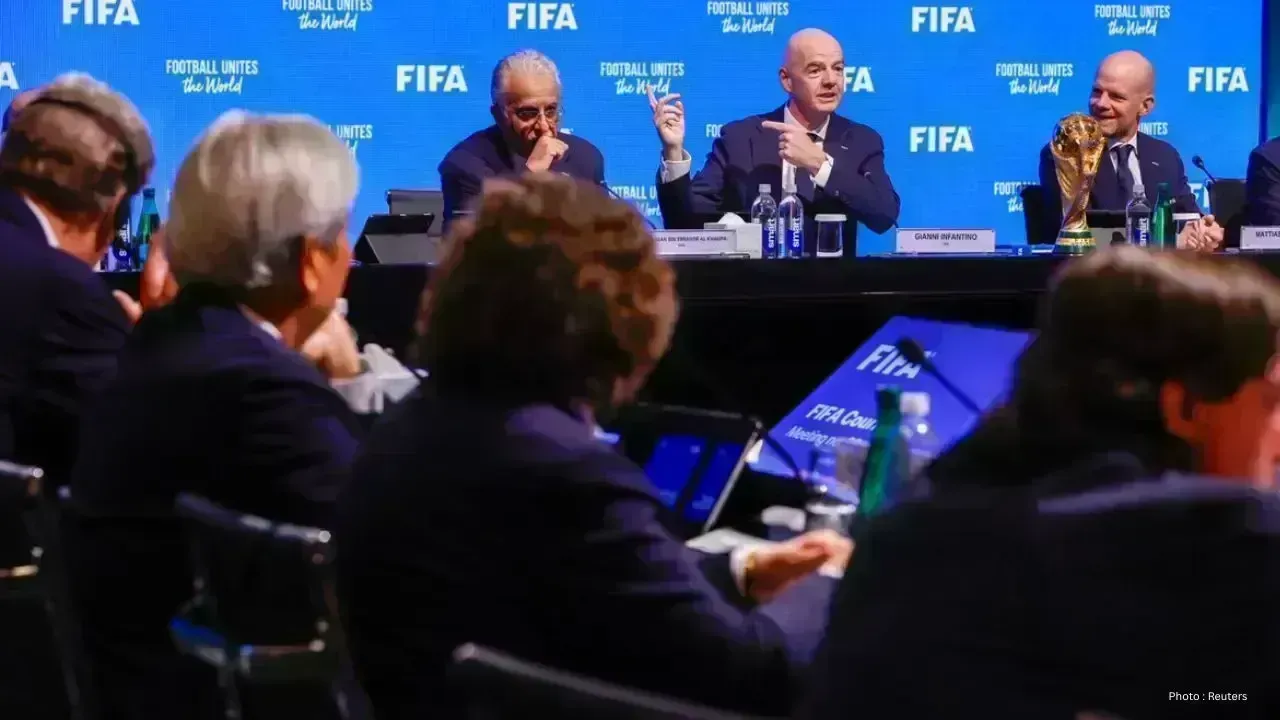
The FIFA Congress convened in Vancouver recently, putting a spotlight on the escalating divisions within the realm of international football leadership, just weeks ahead of Canada's co-hosting of the 2026 FIFA World Cup. While football officials from around the globe gathered, the event was overshadowed by political rifts, governance issues, and uncertainties surrounding significant topics related to the upcoming tournament.
Held at the Vancouver Convention Centre, the congress saw participation from delegates representing FIFA’s 211 member associations. Alongside senior football officials, sponsors, and organizational leaders, the event took place amidst ongoing preparations for the landmark World Cup set to be jointly hosted by Canada, the United States, and Mexico.
Despite FIFA's intentions to showcase the event as a demonstration of international football unity, tensions reportedly surfaced regarding governance reforms, tournament expansion, human rights matters, and financial issues. Several officials privately voiced concerns about how these political disputes might hinder preparations for what is billed as the largest World Cup to date.
A key topic of discussion centered on the growing apprehensions regarding FIFA’s commercial influence and decision-making framework under President Gianni Infantino. Critics from various national football associations voiced grievances over the centralization of FIFA leadership, arguing that smaller federations have been sidelined in crucial tournament decisions.
Human rights dilemmas also emerged as a focal point of conversation during the congress. Advocacy groups capitalized on the meeting to press FIFA to address issues concerning labor rights, the treatment of migrant workers, and broader anti-discrimination policies tied to international football events. Activists urged FIFA to improve its transparency and accountability measures before the commencement of the 2026 World Cup.
Political frictions between certain member nations further complicated discussions. As FIFA and other international sporting institutions strive to navigate global political tensions while upholding neutrality in competitions, officials admitted that it's becoming increasingly challenging to segregate geopolitical disputes from major sporting events.
Adding to the congress's ambiance of uncertainty, the future of the Vancouver Whitecaps loomed large. Reports surfaced regarding a relocation proposal for the team to Las Vegas, prompting protests outside the convention center. Supporters led a “Save the ’Caps” rally, imploring officials to safeguard the future of professional soccer in Vancouver as the World Cup approaches.
British Columbia Premier David Eby reiterated the province's commitment to retaining the Whitecaps in Vancouver, emphasizing the need for robust soccer infrastructure as the city braces for World Cup matches. This potential relocation issue further intensified the congress's atmosphere.
Discussions also focused on security, infrastructure, and financial strategies related to the 2026 tournament. This upcoming World Cup, expanding to 48 teams, will pose substantial logistical challenges, including transportation concerns, stadium management, crowd safety, and international travel coordination.
There are rising apprehensions among officials regarding the commercial pressures that accompany hosting major events. Critics argue that FIFA imposes mounting financial burdens on host cities while maintaining stringent control over sponsorship and revenue connected to the tournament.
In spite of these disputes, FIFA leaders assured that plans for the 2026 World Cup remain on track. Gianni Infantino praised the collaborative efforts among the three host nations and characterized the impending tournament as a pivotal moment for the growth of football across North America. FIFA officials also underscored the anticipated economic uplift and tourism benefits linked to the event.
Matches are scheduled to occur in Vancouver and Toronto for Canada, while the United States will be spearheading the majority of games, including the final. Mexico will host matches across several cities, marking a historic first for the joint organization of a FIFA World Cup among three nations.
Nevertheless, analysts argue that the discord viewed during the Vancouver congress illustrates how deeply intertwined modern international football has become with political, business, and social issues, reflecting larger global power dynamics. What was once predominantly a sporting affair now embodies significant diplomatic, economic, and cultural implications globally.
As the countdown to the 2026 World Cup progresses, FIFA is faced with the mounting challenge of navigating its internal conflicts while ensuring that the tournament remains focused on the spirit of the game rather than surrounding controversies. The Vancouver congress unveiled both the anticipation for the upcoming World Cup and the hurdles that could significantly influence the event in the future months.










PM Modi Pays Tribute to Mahatma Gandhi, Urges People to Support Khadi
PM Modi pays tribute to Mahatma Gandhi on Gandhi Jayanti and urges citizens to support Khadi and the

Amazon Seeks to Offload $8 Billion in Nvidia Chips to Investors
Amazon plans to move $8 billion in Nvidia chips to investors, using a new financing model to strengt

Samsung Raises Galaxy S26 Prices as Memory Chip Costs Rise
Samsung raises Galaxy S26 prices in South Korea as rising memory chip costs put pressure on smartpho

Lewis Hamilton Calls Singapore Grand Prix One of F1's Toughest Races
Lewis Hamilton discusses the demanding Singapore Grand Prix and brings Plus44 and Almave to Singapor

Denmark's Pandora Opens World's Largest Jewellery Factory in Vietnam
Pandora opens its largest jewellery factory in Vietnam, expanding global production, strengthening s

Gautam Gambhir Questions Batting-Friendly Pitches After India's Record ODI Chase
Gautam Gambhir questions batting-friendly ODI pitches after India’s record chase, calling for a bett

