You have not yet added any article to your bookmarks!
Join 10k+ people to get notified about new posts, news and tips.
Do not worry we don't spam!
Post by : Meena Ariff
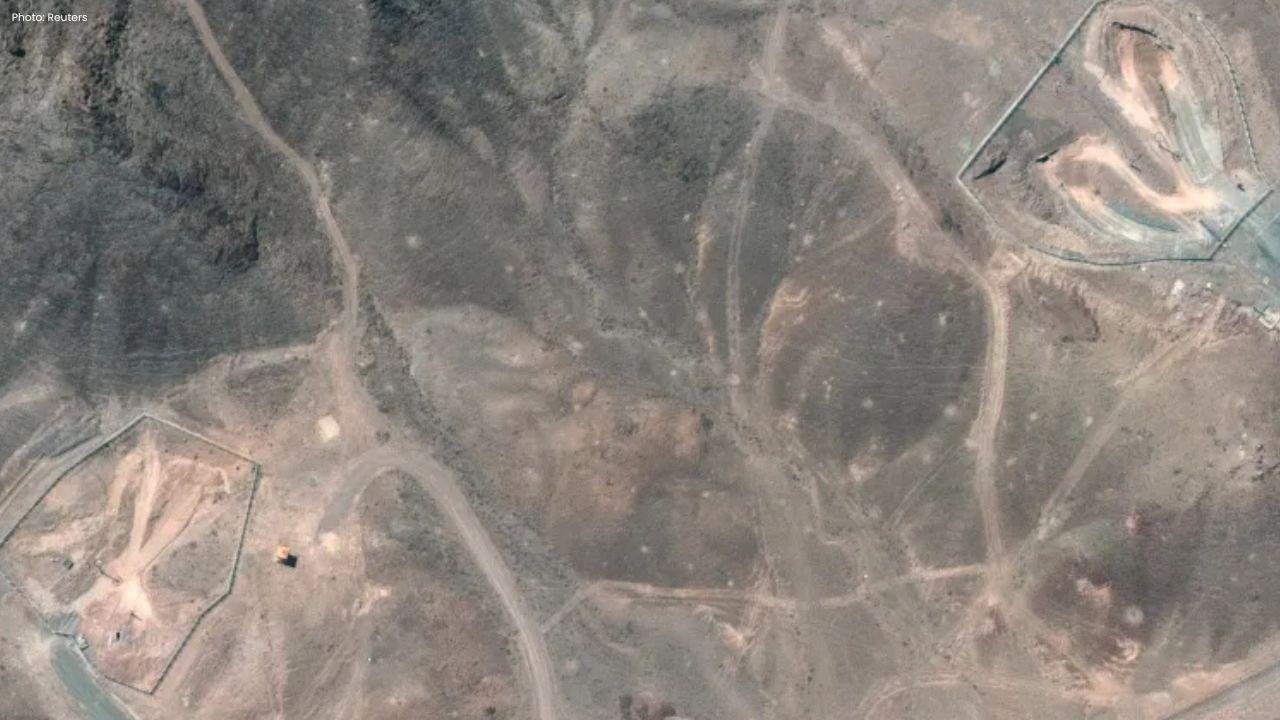
Amid rising tensions due to Iran’s brutal suppression of protests, recent satellite imagery reveals Tehran is taking covert steps to hide activity at two nuclear facilities damaged in last year’s strikes by Israel and the United States. Planet Labs PBC images show that Iran has constructed new roofs over bombed buildings at the Isfahan and Natanz sites, marking the first visible signs of work since the intense June conflict.
These new coverings block satellite views, making it harder to monitor what Iran is doing beneath the surface. The International Atomic Energy Agency (IAEA), which usually inspects these sites, has been denied access by Iran, increasing international concerns about what might be happening out of sight.
Experts analyzing the images say Iran is likely not repairing the facilities fully but trying to salvage any remaining nuclear materials, such as enriched uranium, without drawing attention. Andrea Stricker, an Iran specialist, notes Tehran’s apparent intent to recover valuable assets quietly to avoid detection by Israel or the U.S.
Before last year’s confrontations, Iran’s nuclear program centered on three key sites. Natanz, about 220 km south of Tehran, was the primary location for uranium enrichment, reaching levels close to weapons-grade uranium. Isfahan was mainly responsible for producing uranium gas used in the enrichment process. Both suffered major damage during coordinated airstrikes by Israel and the U.S.
The imagery also shows excavation activity near Natanz at a site called "Pickaxe Mountain," suggesting that Iran might be building a new underground nuclear facility to avoid future attacks. Near Isfahan, tunnels once filled with dirt for protection have been partially cleared and fortified, possibly to enhance security.
In addition to nuclear facilities, Iran appears to be rebuilding parts of its ballistic missile program, including rapid repairs at the Parchin complex southeast of Tehran. This site, hit by Israel in October 2024, is believed to house technology relevant to nuclear weapon development.
Overall, analysts say Iran is focusing on shielding remaining nuclear assets and strengthening site defenses rather than openly resuming its nuclear program. This discreet approach comes as the U.S. maintains military forces in the region amid ongoing threats and stalled diplomatic efforts.
With Iran limiting inspections, satellite surveillance remains crucial for tracking the country’s nuclear activities, even as Tehran moves to obscure its progress from the international community.








France’s Sesterce Plans $11 Billion AI Data Centre in Finland
Sesterce plans a $11 billion AI data centre in Finland, with major expansion, green energy plans and

Danaher to Launch AI-Powered Autonomous Research Lab in 2027
Danaher plans an AI research lab for 2027, combining robotics and automation to speed up drug discov

Musk Welcomes German Support for Tesla Driver Assistance Tech as EU Approval Push Continues
Elon Musk welcomes Germany's backing for Tesla FSD as the company seeks EU approval amid speed, safe

Microsoft and Nvidia CEOs to Unveil AI Laptop at San Francisco Event
Microsoft and Nvidia showcase a new AI laptop with RTX Spark chips as they push powerful local AI co

Man to face charges over perfume thefts at Changi Airport
A 47-year-old man faces charges over perfume theft at Changi Airport after six items worth nearly S$

Google Signs 3.6-GW Power Deal With Constellation Energy in US
Google signs a 3.6-GW power deal with Constellation Energy, including nuclear power upgrades to supp