You have not yet added any article to your bookmarks!
Join 10k+ people to get notified about new posts, news and tips.
Do not worry we don't spam!
Post by : Saif Rahman
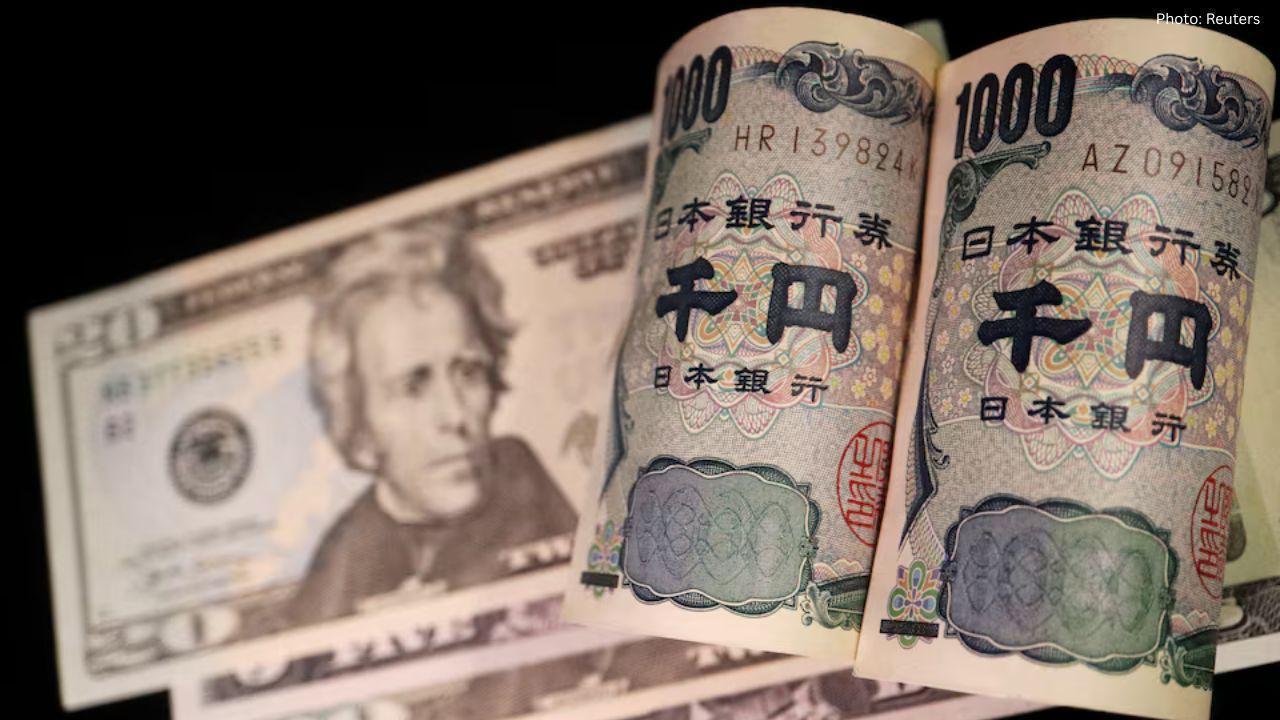
Japan's foremost business organizations are calling on the government for more decisive action regarding the weakened yen, indicating that the declining currency is elevating import costs and adding stress to both households and businesses nationwide.
These appeals were voiced by the leaders of two prominent business associations during separate interviews with Japanese media at the onset of the new year. Their statements underline a rising apprehension that while a depreciated yen may benefit exporters, it is instigating broader economic challenges.
Yoshinobu Tsutsui, head of Keidanren, Japan's preeminent business lobby, acknowledged that while a weak yen is often hailed for enhancing profits for exporters, this perspective is partial. He asserted that from a long-term national viewpoint, it would be advantageous for Japan to aim for a more robust and stable yen.
The yen faced struggles throughout 2025, remaining one of the rare significant currencies that didn't gain even when the U.S. dollar saw a decline. This stagnation occurred despite the Bank of Japan having increased interest rates twice during the year. Numerous analysts suggest that uncertainties regarding the pace of future rate hikes have hindered the yen's recovery.
The depreciated currency has further fueled inflation by driving up the cost of imported items. This inflationary pressure influenced the central bank to persuade the government last month about the necessity for another rate increase. Still, uncertainties linger about how much and how quickly interest rates might be raised in 2026.
As 2025 concluded, the yen was trading at approximately 157 per U.S. dollar, nearing levels that had previously caused alarm among Japanese officials. The last intervention by Japan in currency markets occurred in July 2024, when it initiated purchases of yen after the currency depreciated to its lowest point in nearly four decades.
In a separate interview, Ken Kobayashi, chairman of the Japan Chamber of Commerce and Industry, emphasized the challenges faced by small and medium-sized enterprises. He noted that the weak yen has significantly escalated the costs of raw materials imported from abroad, squeezing profit margins for smaller companies.
Kobayashi urged both the government and the central bank to restore confidence among business owners who feel overwhelmed by escalating costs. He cautioned that without intervention, the weak yen could perpetuate hardships in daily life and impede economic growth.
These comments collectively underscore the mounting pressure on Japanese policymakers to strike a more favorable balance. While exporters may gain in the short run, business leaders advocate that a stable and stronger yen is crucial for safeguarding households, supporting small businesses, and reinforcing Japan's economy over the long term.










PSG Coach Luis Enrique Urges Players to Step Outside Comfort Zone
PSG coach Luis Enrique says players must leave their comfort zone and keep improving as the club tar

China’s Tiangong Sets New 400m Record at Robot Olympics
China’s Tiangong robot sets a new 400m record at the Robot Olympics, beating a South African robot i

George Russell Wins Dutch GP Sprint, Boosts Mercedes Morale
George Russell wins the Dutch GP Sprint from pole as Mercedes teammate Kimi Antonelli extends his F1

Australia 50/3 After Bangladesh Bowled Out for 64 in Second Test
Australia reached 50/3 after Bangladesh were bowled out for 64 in the second Test, with Mitchell Sta

Jordan Burroughs Returns to Wrestling with 2028 Olympic Dream
Jordan Burroughs returns to wrestling with Real American Freestyle as the Olympic champion eyes a po

Lamborghini Catches Fire on Singapore's ECP, Causing Heavy Traffic
A Lamborghini caught fire on Singapore's ECP, causing heavy traffic and bus delays. No injuries were