
You have not yet added any article to your bookmarks!
Join 10k+ people to get notified about new posts, news and tips.
Do not worry we don't spam!
Post by : Badri Ariffin
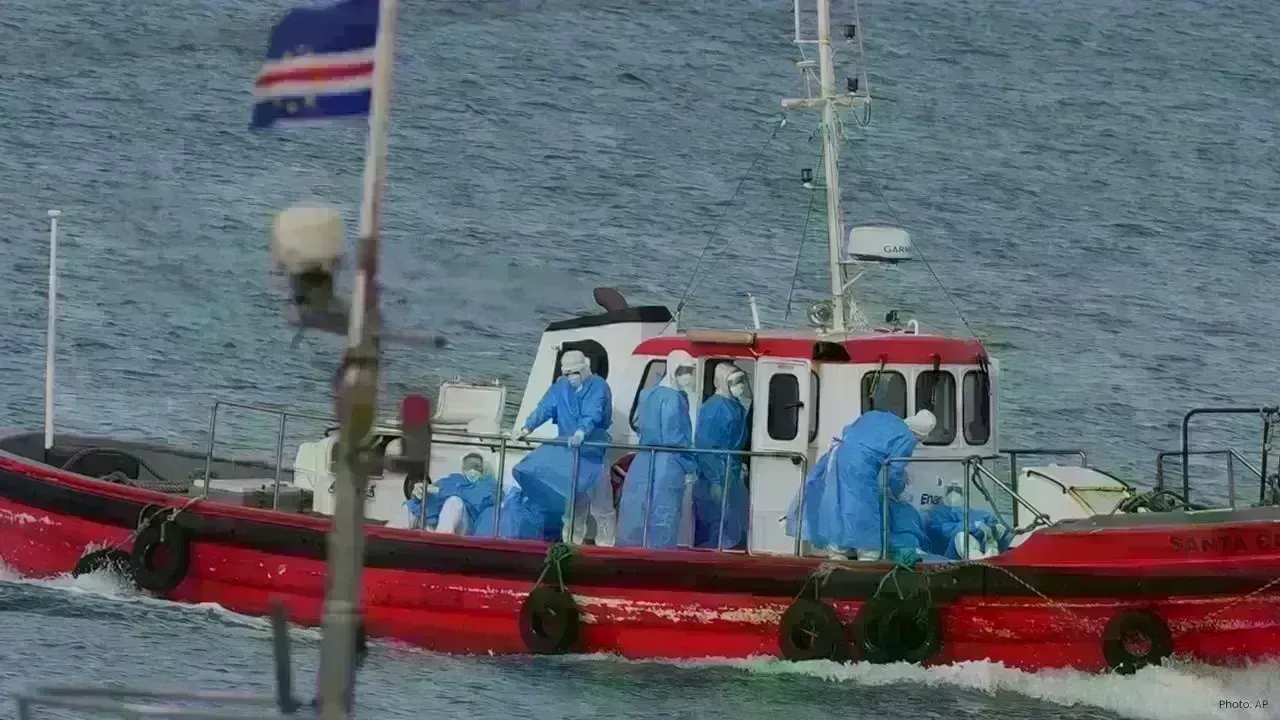
A significant health alert has been issued as medical evacuation teams in full hazmat gear transferred suspected hantavirus patients from the cruise ship MV Hondius. Global health authorities are increasingly vigilant over a rare outbreak associated with the Andes strain of hantavirus.
Footage circulating on social media depicted health workers donned in respirators, gloves, and protective suits, carefully moving patients on stretchers to specialized air ambulances in locations near Amsterdam and Cape Verde.
This Dutch-flagged expedition vessel, hosting approximately 150 passengers and crew, has become the focal point of an international health crisis, with three passengers reportedly deceased and a minimum of eight confirmed or suspected cases emerging from this voyage.
The World Health Organization (WHO) has indicated that the outbreak is likely tied to the Andes strain of hantavirus, which has been known to transmit between humans only under certain circumstances, particularly with close contact.
As MV Hondius makes its way towards Spain’s Canary Islands under tight surveillance, health authorities from Europe, South Africa, and Argentina are engaged in contact tracing, preparing for quarantine, and conducting laboratory tests to prevent any potential spread.
Reason for Hazmat Gear Usage
Typically, hantavirus pulmonary syndrome results from exposure to infected rodent excretions. Transmission primarily occurs when contaminated particles become airborne and are inhaled.
However, the Andes strain, primarily found in Argentina and Chile, has previously shown limited human-to-human spread, specifically among familial or close groups.
Due to the ambiguous transmission dynamics onboard the MV Hondius, medical teams adhered to rigorous WHO guidelines during the evacuations, utilizing respiratory equipment, waterproof gowns, gloves, and eye protection.
According to WHO protocols, comprehensive protective measures are essential when transferring patients with severe respiratory issues, particularly when the risk of transmission is uncertain.
Experts reiterated that these measures are precautionary and do not imply that the virus spreads easily as airborne illnesses do, such as Covid-19 or influenza. Currently, WHO assesses the overall public health risk as low.
Ongoing Medical Evacuations
Reports confirm that three individuals, including the ship's doctor and two crew members, were evacuated due to severe symptoms. Two patients necessitated urgent medical intervention and were flown to Europe using specialized medical aircraft.
Meanwhile, other passengers aboard the vessel have been confined to their cabins while medical teams conduct assessments on symptomatic individuals and keep a close watch on contacts.
Spanish authorities consented to receive the ship post a request for support from WHO and European health officials. The Canary Islands have been earmarked for handling isolated assessments and repatriation of passengers due to their suitable facilities.
It has been confirmed that transportation and disembarkation will proceed through controlled medical avenues, ensuring reduced risks of public exposure.
Health organizations across South Africa, Switzerland, the Netherlands, and the United States are monitoring individuals who might have encountered infected passengers earlier during the cruise.
Risks Associated with Cruise Ships
Experts highlight the challenging environment created on cruise ships during outbreaks, where passengers congregate in enclosed spaces, dining areas, and share ventilation systems over extended periods.
The MV Hondius embarked from Ushuaia, Argentina, in April, navigating through isolated South Atlantic waters before the outbreak surfaced.
Investigators from WHO speculate that the virus may have been introduced on board by a passenger who was already infected prior to boarding.
In response, health officials in Argentina are exploring potential exposure origins, focusing on rodent interaction in areas where the Andes strain is prevalent. The authorities are implementing rodent surveillance, tracing contacts, and conducting genomic tests to trace the outbreak's source and ascertain if any human transmission occurred aboard.
Upon reaching Spain, passengers are slated for medical evaluations, laboratory analyses, and supervised repatriation procedures.
Spanish nationals on board may face quarantine in designated facilities, whereas international passengers will be subjected to monitoring by health agencies in their respective countries.
The ongoing investigation by WHO emphasizes the necessity for genomic sequencing and epidemiological studies to definitively determine the virus's transmission dynamics on the ship.
The MV Hondius incident has emerged as one of 2026’s most scrutinized infectious disease occurrences, underscoring the difficulties in managing rare zoonotic illnesses aboard cruise ships and executing international medical evacuations amidst potential outbreaks.









PM Modi Pays Tribute to Mahatma Gandhi, Urges People to Support Khadi
PM Modi pays tribute to Mahatma Gandhi on Gandhi Jayanti and urges citizens to support Khadi and the

Amazon Seeks to Offload $8 Billion in Nvidia Chips to Investors
Amazon plans to move $8 billion in Nvidia chips to investors, using a new financing model to strengt

Samsung Raises Galaxy S26 Prices as Memory Chip Costs Rise
Samsung raises Galaxy S26 prices in South Korea as rising memory chip costs put pressure on smartpho

Lewis Hamilton Calls Singapore Grand Prix One of F1's Toughest Races
Lewis Hamilton discusses the demanding Singapore Grand Prix and brings Plus44 and Almave to Singapor

Denmark's Pandora Opens World's Largest Jewellery Factory in Vietnam
Pandora opens its largest jewellery factory in Vietnam, expanding global production, strengthening s

Gautam Gambhir Questions Batting-Friendly Pitches After India's Record ODI Chase
Gautam Gambhir questions batting-friendly ODI pitches after India’s record chase, calling for a bett

