
You have not yet added any article to your bookmarks!
Join 10k+ people to get notified about new posts, news and tips.
Do not worry we don't spam!
Post by : Rohit Dhiman
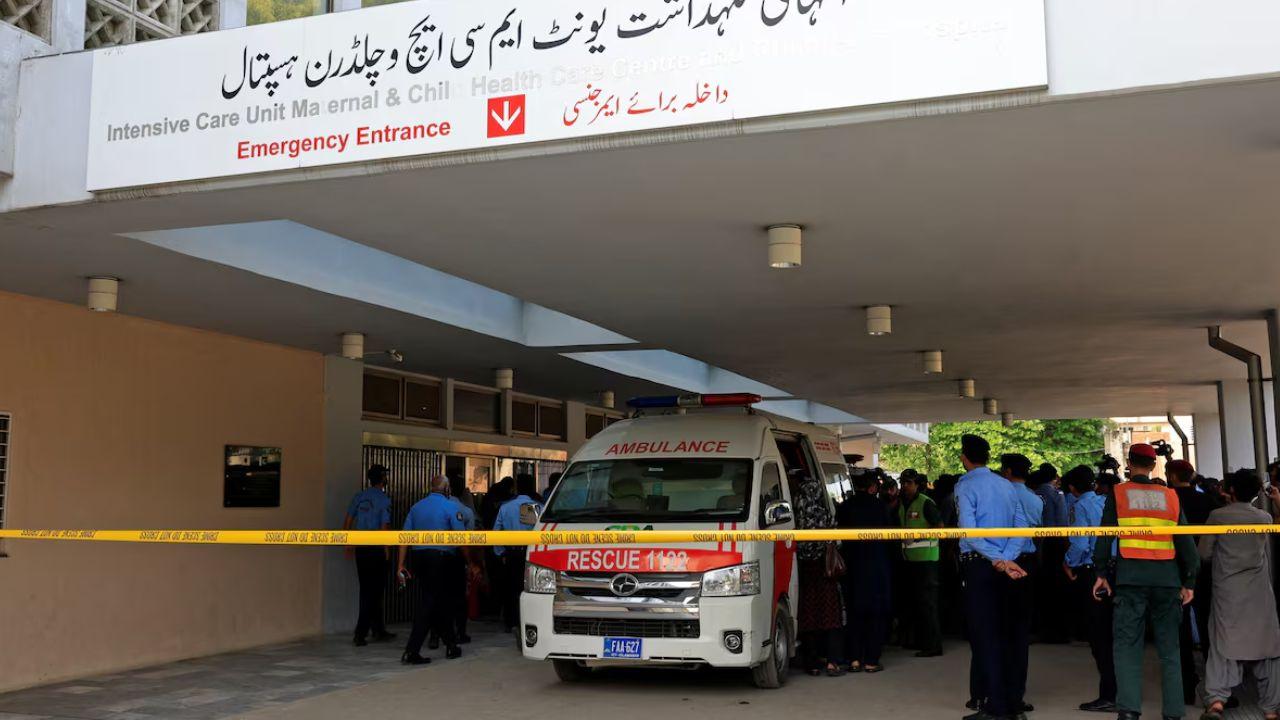
A devastating fire at one of Pakistan’s biggest government hospitals has raised serious questions about emergency preparedness and basic safety arrangements in healthcare facilities. Fourteen newborn babies died after a fire swept through the neonatal nursery at the Pakistan Institute of Medical Sciences (PIMS) in Islamabad on August 26. The tragedy has become even more disturbing after an interim government investigation found that the nursery did not have a fire alarm or sprinkler system. Investigators also found that there was no properly approved and regularly practised evacuation procedure designed specifically for the nursery. The findings have renewed concerns about hospital fire safety in Pakistan, particularly because PIMS had already experienced another fire only a few weeks before the fatal incident. That earlier event reportedly exposed weaknesses in detection systems, alarms, evacuation planning and emergency response. Fifteen newborns were inside the nursery when the August 26 fire began.
A devastating fire at a major government hospital in Islamabad has raised serious concerns about the safety of newborn children receiving medical care. The incident happened in the early hours of August 26, when flames spread rapidly through a nursery on the third floor of the hospital. At the time, fifteen babies were being cared for inside the room. Hospital workers were able to bring only one child to safety, while fourteen others lost their lives. The incident has caused deep sorrow among families and triggered questions about how prepared the hospital was for such an emergency. An initial government investigation later found several important weaknesses in the nursery's emergency arrangements. The inquiry said the area did not have adequate warning equipment and lacked a properly approved evacuation procedure. The tragedy has also drawn attention to an earlier fire at the same hospital, which had already raised concerns about emergency preparedness and the ability to respond quickly.
The interim inquiry has highlighted several failures that could have affected the hospital's ability to respond quickly when the fire started. One of the most serious findings was the absence of a fire alarm and sprinkler system inside the neonatal nursery. These systems are particularly important in areas where patients cannot independently escape during an emergency. Investigators also found that the nursery did not have an approved and rehearsed evacuation procedure. For a neonatal unit, an evacuation plan needs to account for babies who may require incubators, oxygen support or assistance from multiple medical workers. The inquiry further found delays in contacting emergency services. According to the investigation, emergency responders were contacted six minutes after the fire started, while the first responders reached the hospital around 15 minutes after receiving the call.
The situation has attracted additional scrutiny because PIMS had suffered another fire in July, just weeks before the nursery disaster. That earlier incident reportedly exposed problems involving fire detection, alarm systems, evacuation preparedness and the security response. According to the interim inquiry, the hospital administration did not take sufficient corrective action after that incident. This has raised a crucial question: whether the August tragedy could have been prevented or its impact reduced if the weaknesses identified earlier had been addressed. The latest case has therefore become more than an investigation into a single fire. It has developed into a wider discussion about whether hospitals are properly checking their equipment, training staff and preparing for emergencies.
The August 26 incident began in the early morning hours and spread quickly through the neonatal nursery. Fifteen babies were receiving care inside the unit. Staff members attempted to respond to the rapidly developing emergency, but only one newborn survived. The scale of the loss has left families devastated. Witnesses at the hospital described scenes of confusion and distress as patients and relatives were moved to safer areas. The incident also affected mothers who had recently given birth. Witnesses described the difficulty of moving patients during the emergency, adding to the emotional impact of the disaster. The deaths have generated widespread demands for stronger hospital safety measures and greater accountability from authorities responsible for maintaining public healthcare facilities.
Amid the tragedy, nurse Razia Noreen has been widely recognised for her courage. When the fire spread through the nursery, Noreen entered the burning area and carried one newborn baby to safety. She reportedly attempted to go back inside to rescue more children, but the rapidly spreading flames made it impossible. Noreen later spoke about the emotional impact of the incident and said she was deeply affected by the fact that she could not save the other babies. Pakistan's Prime Minister Shehbaz Sharif praised her courage and dedication to duty. She is set to receive the Sitara-i-Khidmat, or Star of Service, along with a financial award of 10 million Pakistani rupees. Her actions have been described as one of the few positive moments in an otherwise devastating incident.
The deaths have prompted the Pakistani government to take administrative action. Prime Minister Shehbaz Sharif ordered the suspension of eight officials, including the executive director of PIMS. Other suspended officials include two joint executive directors, the head of the neonatal department, two doctors, the assistant director for security and the head of the Capital Development Authority's emergency services. Legal proceedings have also been ordered against individuals found responsible. The action follows growing public pressure for accountability. Families of the victims and civil society groups have demanded answers about why essential safety arrangements were missing from a neonatal unit.
Read Also: Tragic Bus Accident Claims 16 Lives in South Sinai
The investigation has not ended with the interim report. Pakistan's National Assembly health committee has rejected the preliminary inquiry, arguing that important questions and gaps remain. The committee has proposed independent fire and safety audits for healthcare facilities across Islamabad Capital Territory. This could lead to a broader examination of government hospitals, including their alarm systems, emergency exits, firefighting equipment, evacuation procedures and staff training. The aim would be to identify dangerous weaknesses before another tragedy occurs. The United Nations children's agency UNICEF has also called for an urgent review and strengthening of fire prevention and safety standards in healthcare facilities across Pakistan.
Fire safety experts have stressed that hospitals cannot rely only on equipment being installed. Staff members must also know exactly what to do when an emergency begins. Regular fire drills, equipment inspections and emergency training are considered important parts of a hospital's preparedness. Experts have recommended that hospitals conduct fire drills every three months and check installed safety equipment every month. For neonatal wards, intensive care units and other high-risk areas, preparedness becomes even more important because patients may not be able to leave without assistance. A well-designed fire safety system therefore needs to include alarms, firefighting equipment, clear evacuation routes, trained employees and regular practical exercises.
The impact of the PIMS tragedy has extended beyond Islamabad. Punjab, Pakistan's most populous province, has ordered an immediate review of fire safety systems, firefighting equipment and emergency response facilities in hospitals. The move reflects growing concern that problems found at one hospital could also exist at other healthcare institutions. A wider inspection could help authorities identify hospitals where alarms, sprinklers, emergency exits or evacuation procedures are inadequate.
The Pakistan Institute of Medical Sciences is Islamabad's largest tertiary-care hospital and receives patients from different parts of the country. Because of its size and importance, the safety failures identified at the facility have attracted significant public attention. The incident has also raised broader concerns about whether healthcare facilities are receiving enough attention and resources for emergency preparedness. Medical treatment is only one part of hospital management. Protecting patients from fire, electrical faults and other emergencies is equally important, especially when vulnerable patients such as newborns are involved.
The interim inquiry has not yet established the exact cause of the fire. The final investigation is expected to determine how the blaze began and identify the individuals or institutions ultimately responsible. In the meantime, investigators have recommended immediate corrective measures, including a hospital-wide fire and electrical safety audit. The tragedy has shown how quickly a fire can become catastrophic when vulnerable patients are inside a poorly prepared area. The deaths of 14 newborns have therefore become a major warning for hospitals across Pakistan. Strengthening hospital fire safety, improving emergency training and ensuring that safety equipment is regularly tested could be critical in preventing another tragedy.
#world news #Global News #Asia News #Global #world #Pakistan








PM Modi Pays Tribute to Mahatma Gandhi, Urges People to Support Khadi
PM Modi pays tribute to Mahatma Gandhi on Gandhi Jayanti and urges citizens to support Khadi and the

Amazon Seeks to Offload $8 Billion in Nvidia Chips to Investors
Amazon plans to move $8 billion in Nvidia chips to investors, using a new financing model to strengt

Samsung Raises Galaxy S26 Prices as Memory Chip Costs Rise
Samsung raises Galaxy S26 prices in South Korea as rising memory chip costs put pressure on smartpho

Lewis Hamilton Calls Singapore Grand Prix One of F1's Toughest Races
Lewis Hamilton discusses the demanding Singapore Grand Prix and brings Plus44 and Almave to Singapor

Denmark's Pandora Opens World's Largest Jewellery Factory in Vietnam
Pandora opens its largest jewellery factory in Vietnam, expanding global production, strengthening s

Gautam Gambhir Questions Batting-Friendly Pitches After India's Record ODI Chase
Gautam Gambhir questions batting-friendly ODI pitches after India’s record chase, calling for a bett

