You have not yet added any article to your bookmarks!
Join 10k+ people to get notified about new posts, news and tips.
Do not worry we don't spam!
Post by : Saif Rahman
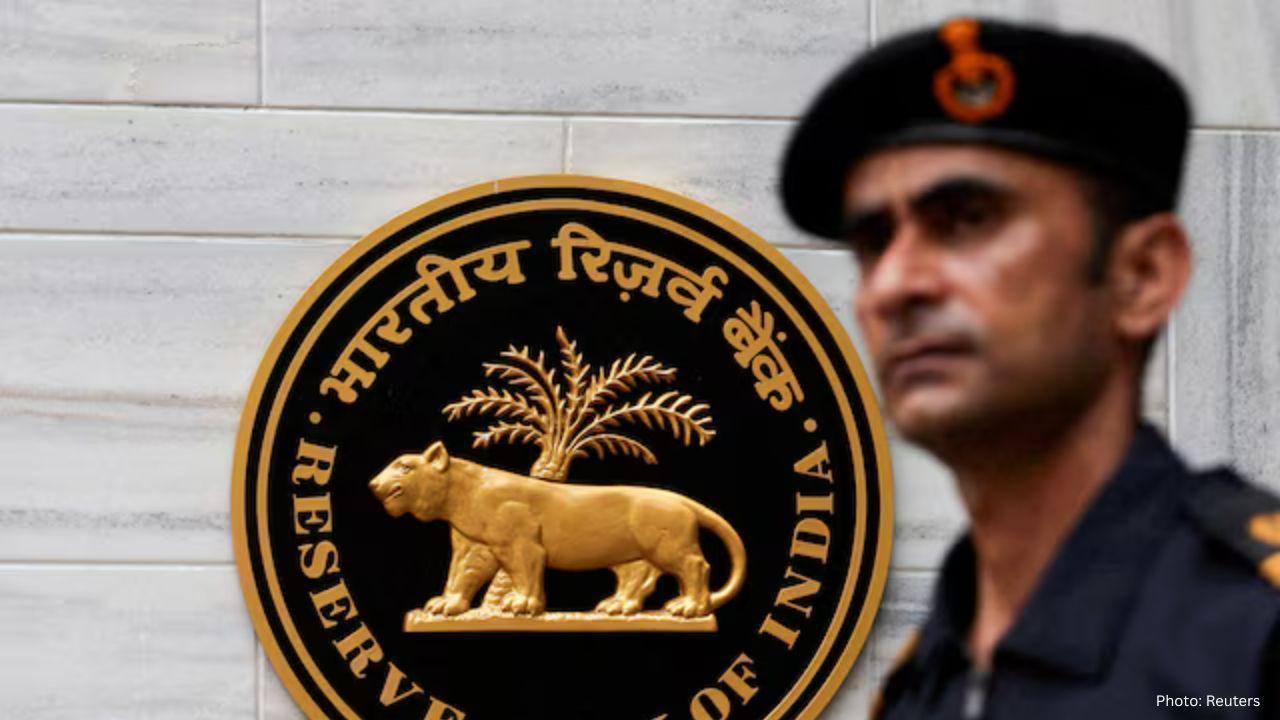
As 2025 comes to a close, India's government bond market is sending mixed signals, despite the Reserve Bank of India (RBI) executing its largest intervention to stabilize the system. Record liquidity and significant interest rate cuts have prevented bond yields from surging, but ongoing worries about excessive borrowing and weak demand are hindering substantial gains as the nation gears up for 2026.
Throughout 2025, the RBI infused an astounding 11.7 trillion rupees into the financial sector. This included hefty bond acquisitions, foreign exchange swaps, and a reduction in the cash reserve ratio for financial institutions. Additionally, the central bank implemented a 125 basis point interest rate cut, marking the most significant easing since 2019. These measures aimed to maintain low borrowing costs and bolster economic growth.
Consequently, India's benchmark 10-year government bond yield declined for a third consecutive year, wrapping up 2025 around 6.59%, down by 17 basis points from the beginning of the year. On the surface, this seems favorable, but the decrease was far less substantial than many had anticipated, given the extent of RBI support.
The bond market's performance showcased a tale of two halves. In the initial half of the year, yields dropped sharply as investors responded favorably to interest rate cuts and strong liquidity support. However, in the latter half, yields escalated as apprehensions regarding the supply of new bonds from both central and state governments mounted. This persistent influx of debt led to increased caution among investors.
Demand from significant investors also diminished. Insurance firms experienced lower inflows, pension funds diverted more capital into equities, and banks did not fully reinstate their bond holdings following sales to the RBI. This created an imbalance between supply and demand, placing downward pressure on bond prices.
Currency market challenges also emerged, with the Indian rupee depreciating nearly 5% in 2025, marking its worst performance in three years. Significant outflows from foreign investors and the absence of a trade agreement with the United States added to this strain. A weaker rupee necessitated a cautious approach from the RBI, balancing bond support with currency stability.
Looking towards 2026, experts predict that bond yields will likely remain stable within a tight range. With inflation in check, the RBI is expected to maintain interest rates for an extended period. Nonetheless, future developments will largely hinge on the Union Budget, borrowing strategies, and the RBI's management of liquidity and the rupee.
In summary, while the RBI's unprecedented actions in 2025 averted considerable stress in the bond market, they did not prompt a robust rally. As India transitions into 2026, government bonds are poised to remain steady yet cautious, influenced by borrowing requirements, investor appetite, and central bank policy decisions.










PSG Coach Luis Enrique Urges Players to Step Outside Comfort Zone
PSG coach Luis Enrique says players must leave their comfort zone and keep improving as the club tar

China’s Tiangong Sets New 400m Record at Robot Olympics
China’s Tiangong robot sets a new 400m record at the Robot Olympics, beating a South African robot i

George Russell Wins Dutch GP Sprint, Boosts Mercedes Morale
George Russell wins the Dutch GP Sprint from pole as Mercedes teammate Kimi Antonelli extends his F1
Australia 50/3 After Bangladesh Bowled Out for 64 in Second Test
Australia reached 50/3 after Bangladesh were bowled out for 64 in the second Test, with Mitchell Sta

Jordan Burroughs Returns to Wrestling with 2028 Olympic Dream
Jordan Burroughs returns to wrestling with Real American Freestyle as the Olympic champion eyes a po

Lamborghini Catches Fire on Singapore's ECP, Causing Heavy Traffic
A Lamborghini caught fire on Singapore's ECP, causing heavy traffic and bus delays. No injuries were