
You have not yet added any article to your bookmarks!
Join 10k+ people to get notified about new posts, news and tips.
Do not worry we don't spam!
Post by : Shweta
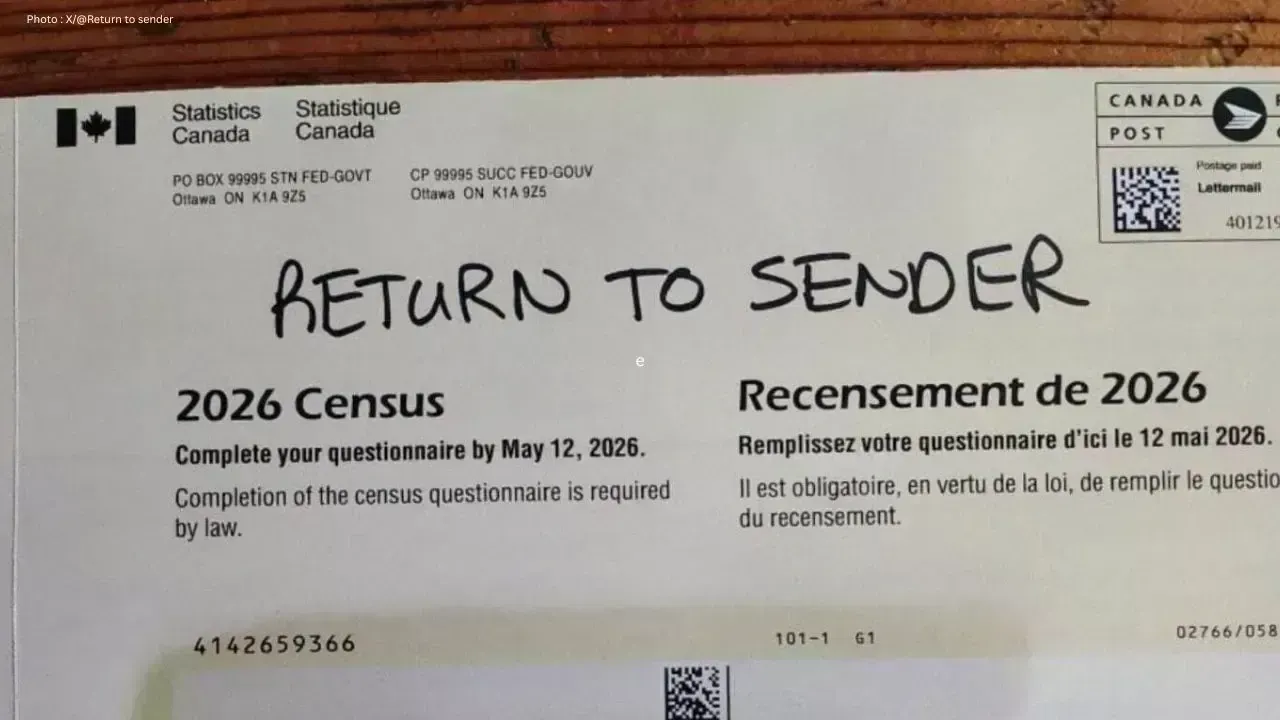
In Canada, a notable number of residents are choosing not to fill out their national census forms, even in light of federal penalties that can reach up to $1,000 for non-compliance. This rising trend has sparked significant discussions surrounding issues of privacy, trust in government, and the criticality of accurate national data collection.
Recently, Statistics Canada initiated the distribution of census forms nationwide, as part of its five-yearly population assessment. This census gathers vital information such as demographic data, housing status, employment rates, language preferences, education levels, and other household dynamics. Officials maintain that this data is essential for effective governmental planning and the provision of public services.
Nevertheless, some individuals have voiced their intention to refuse participation, openly advising others to return their forms instead of complying. Detractors criticise the census for the perceived excessive gathering of personal data, raising alarms about privacy and the potential future uses of such information.
Under the Statistics Act, the majority of Canadian residents are legally obligated to complete the census. Failing to do so, or providing misleading information, could result in penalties that may accumulate to $1,000. In extreme situations, authorities could pursue legal action against continued non-compliance.
Statistics Canada stands by the integrity of its census process, ensuring that all collected information is kept secure and confidential under stringent privacy regulations. It has reaffirmed that the data collected is primarily for statistical and policy purposes, not for surveilling individuals.
Various government agencies depend heavily on this census data to inform decisions related to healthcare, education, public transport, housing, infrastructure, and community funding. Experts alert that inaccuracies due to incomplete census participation could severely impact the distribution of services and funding in communities throughout Canada.
While the number of dissenters remains small, the conversation concerning the census has gained momentum across social media platforms and community forums. Many users express grievances toward government entities, whereas others highlight that participating in the census is essential for ensuring effective representation and resource allocation within communities.
Privacy advocates emphasize that recent global trends in data breaches and surveillance have amplified concerns about personal data. Yet, they also point out that legal structures exist within Canada’s census framework to safeguard individual privacy.
Political experts observe that public resistance to government initiatives can often intensify during times of economic hardship and political division. The rising cost of living and growing discontent with institutions may play substantial roles in the reluctance of certain groups to comply with mandatory census participation.
As the census cycle progresses, Statistics Canada continues to promote the importance of completing the forms, either online or via mail, prior to established deadlines. The agency asserts that achieving high participation rates is crucial for the accuracy of national statistics and the equitable distribution of services across provinces and municipalities.
Officials also reminded the public that census workers may follow up with non-responding households. While fines are a legal recourse, such measures have been seldom exercised in recent years, with authorities prioritizing voluntary compliance initiatives.
As discussions evolve, Canada finds itself navigating another census cycle, weighing the balance between privacy concerns and the necessity for accurate national data gathering.










PM Modi Pays Tribute to Mahatma Gandhi, Urges People to Support Khadi
PM Modi pays tribute to Mahatma Gandhi on Gandhi Jayanti and urges citizens to support Khadi and the

Amazon Seeks to Offload $8 Billion in Nvidia Chips to Investors
Amazon plans to move $8 billion in Nvidia chips to investors, using a new financing model to strengt

Samsung Raises Galaxy S26 Prices as Memory Chip Costs Rise
Samsung raises Galaxy S26 prices in South Korea as rising memory chip costs put pressure on smartpho

Lewis Hamilton Calls Singapore Grand Prix One of F1's Toughest Races
Lewis Hamilton discusses the demanding Singapore Grand Prix and brings Plus44 and Almave to Singapor

Denmark's Pandora Opens World's Largest Jewellery Factory in Vietnam
Pandora opens its largest jewellery factory in Vietnam, expanding global production, strengthening s

Gautam Gambhir Questions Batting-Friendly Pitches After India's Record ODI Chase
Gautam Gambhir questions batting-friendly ODI pitches after India’s record chase, calling for a bett

