You have not yet added any article to your bookmarks!
Join 10k+ people to get notified about new posts, news and tips.
Do not worry we don't spam!
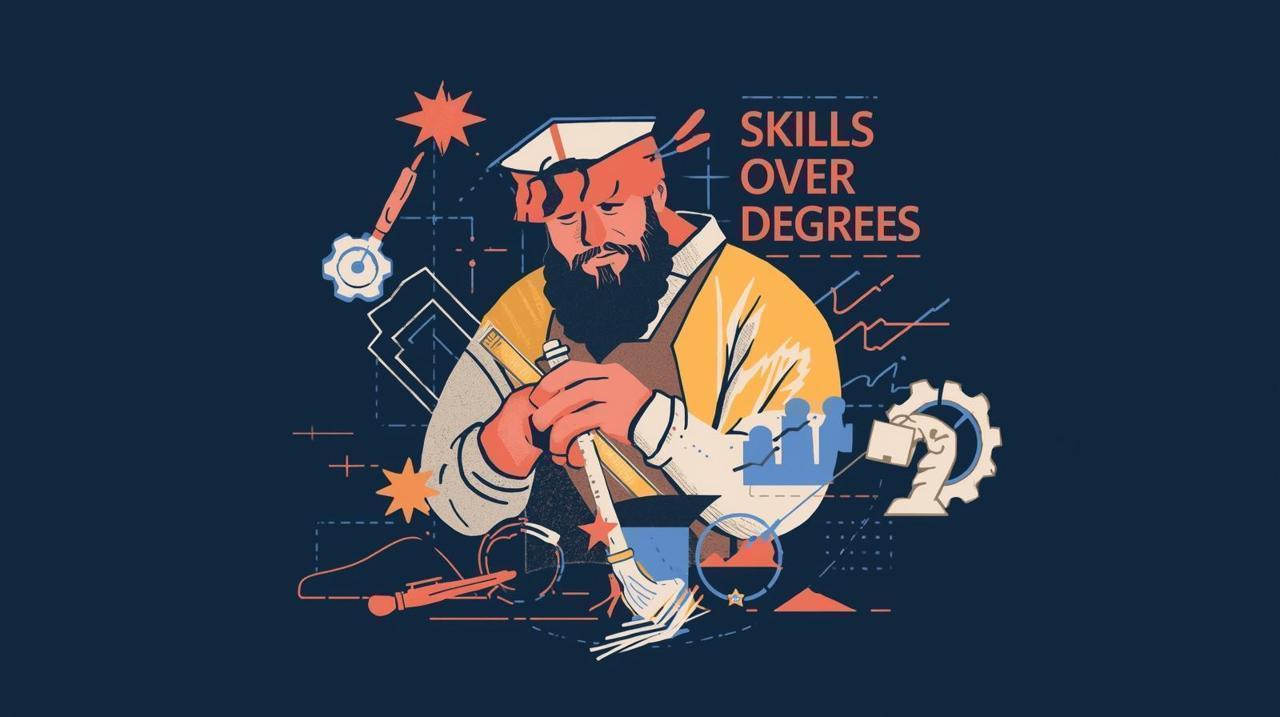
Post by : Samjeet Ariff
The job landscape is rapidly evolving. Traditionally, employers have relied heavily on college degrees as a qualification for hiring. However, with the rise of digital sectors, remote opportunities, and performance-driven recruitment, this approach is changing. Now, organizations are on the lookout for candidates who can demonstrate problem-solving skills, adaptability, and efficiency instead of just holding academic qualifications. This article delves into the reasons why the move to skills-based recruitment is gaining traction worldwide, the skills that will be essential by 2026, and how job seekers can remain competitive in this new landscape.
Employers operate in rapidly changing markets where the relevance of a degree earned four years prior may be questionable. When there’s a demand for employees who can utilize AI, code software, manage systems, or create content promptly, organizations are less inclined to wait for “the ideal degree.”
As industries advance quickly, educational institutions struggle to keep up. Skill shortages prompt recruiters to seek out capable employees. Having practical skills is easier to evaluate through assessments, portfolios, and practical interviews. Degrees do not always reflect a candidate's ability to function independently, communicate well, or resolve genuine challenges.
Consequently, businesses are prioritizing tangible skills over academic achievements.
Tech companies were trailblazers in declaring that degrees are not always a necessity. Major firms like IBM, Google, Tesla, and Accenture have openly stated that many job roles do not require formal qualifications.
Fields such as coding, analytics, cloud computing, cybersecurity, and AI operations benefit from practical experience. Skills can be acquired online more swiftly than educational programs can update their curriculum. Portfolios and real project outcomes offer a clearer picture of a candidate’s abilities than traditional grades do.
This mindset is now spreading across various sectors.
Contemporary employers favor tangible evidence of work instead of mere certificates.
A comprehensive digital portfolio featuring authentic projects. A developer’s GitHub page. A creative’s design library. A marketer’s collection of case studies. Actual work performance instills confidence that the candidate can contribute from day one.
Portfolio-centric hiring is supplanting degree-focused evaluation as it showcases measurable expertise.
The rise of remote work has broadened the global talent pool, enabling companies to recruit from diverse regions.
Global recruits may possess skills acquired beyond formal education. Companies are now in pursuit of proficient employees rather than simply degree-holders. In a remote work environment, practical skills take precedence.
As organizations recognize that top talent can emerge from anywhere, the significance of degrees continues to wane.
Soft skills, once viewed as secondary, have become crucial in today’s workplace. These encompass communication, time management, adaptability, problem-solving, and critical thinking.
Soft skills have a direct impact on workplace efficiency, often holding more significance than academic results. In remote teams, strong communicators who can manage issues autonomously are essential. Leaders must be imaginative to navigate unpredictable markets.
Many soft skills are developed through professional experience rather than classroom education.
With AI taking over repetitive tasks, the capacity for “learnability” has emerged as a vital skill in today’s workforce.
The capability to quickly adopt new tools. Adjusting to evolving procedures. Staying abreast of changes in the industry.
Employers are now searching for individuals who can adapt alongside technological advancements, not just those with conventional credentials.
Some industries have fully transitioned to performance-based hiring.
Software engineering. Digital marketing. UI/UX design. E-commerce management. Cybersecurity. Data analytics. Content generation. Customer support. Virtual assistance.
In these fields, demonstrable competencies are valued over formal education.
Certain industries still favor degrees but have begun to incorporate skill assessments into their hiring processes.
Banking (relevant skills: compliance tools, data analysis). Healthcare administration. Roles in education technology. Engineering management.
These sectors are now using simulations, tests, and scenario-based interviews for a more effective evaluation of candidates.
Although many professions are minimizing the emphasis on degrees, certain positions still mandate them for legal or technical reasons.
Medical practitioners. Lawyers. Civil engineers. Licensed accountants. Aircraft pilots.
These careers involve compliance, licensing, or critical responsibilities.
Rather than depending solely on degrees, candidates must hone their skills and demonstrate effectiveness.
Develop a robust skill set through online learning opportunities, internships, and practical experiences. Construct a portfolio exhibiting work outputs. Cultivate strong digital communication skills. Familiarize yourself with essential industry tools. Keep pace with advancements in AI and automation.
By taking these steps, job seekers enhance their value in comparison to those who lean solely on academic credentials.
Companies that adopt skills-focused recruitment benefit from quicker onboarding, improved performance, and mitigated hiring risks.
Reduced time for training new hires. Elevated productivity levels. Broader talent pools. Enhanced cultural alignment as expectations are clearer.
This strategy is both cost-efficient and focused on performance.
The global landscape of hiring is increasingly centered on skills, adaptability, and proven competence. While degrees retain their significance, they are no longer the sole determinants of employability. Today, what employers seek are individuals who can deliver results immediately. By emphasizing useful skills, real experiences, and interpersonal abilities, candidates can maintain their relevance in this dynamic job market. Skills-based hiring is not merely a trend—it signifies the future of employment worldwide.
This article aims to provide general information and does not serve as professional career, educational, or legal advice. Hiring practices can vary significantly among industries, regions, and companies, so readers should examine their specific career aspirations or consult qualified specialists before making decisions based on this content.










Jacob Bethell Returns as England Name Squads for Australia Tour
England name ODI and T20 squads for the Australia tour, with Jacob Bethell returning from injury and

Beauden Barrett Opens Up About Mental Struggles During All Blacks Exile
Beauden Barrett discusses his confidence struggles after missing six tests, his return against Austr

IMF Says AI Investment Supports Global Growth Despite Energy Shock
IMF says AI investment is supporting global growth near 3%, with Asian economies benefiting from ris

Will O'Rourke Ruled Out of New Zealand's India Series
New Zealand fast bowler Will O'Rourke will miss the India series with hamstring and calf injuries as

AI Companies Expected to Drive Most US Earnings Growth in Q3
AI companies are expected to drive US third-quarter earnings growth as investors assess tech profits

Money Market Funds See Record Inflows as Global Bond Selloff Intensifies
Global money market funds attract $153.81 billion as bond yields rise, inflation fears persist and i