You have not yet added any article to your bookmarks!
Join 10k+ people to get notified about new posts, news and tips.
Do not worry we don't spam!
Post by : Anis Farhan
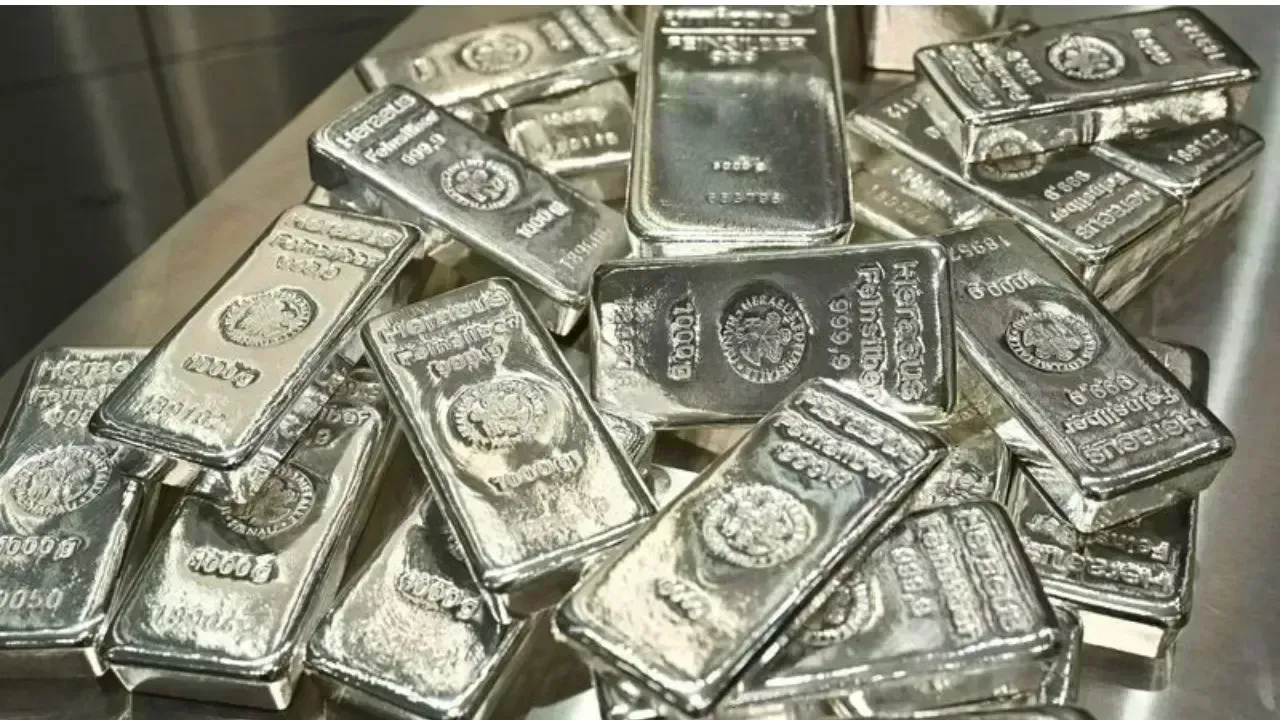
On January 19, 2026, silver prices in India achieved what was once considered a distant prospect — spot silver topped ₹3 lakh per kilogram for the first time in recorded history. This breakthrough represents a dramatic appreciation in the white metal’s value, triggered by a complex blend of global macroeconomic forces, geopolitical uncertainty, heightened investor demand for safe-haven assets, and robust industrial consumption. The milestone was reflected prominently on the Multi Commodity Exchange (MCX), where futures contracts climbed to record highs, and in key bullion trading centres across major Indian cities.
This article delves into the multifaceted story behind this extraordinary price surge, placing it within a wider economic context and exploring the implications for investors, industries, and market watchers. We examine key drivers, comparative price dynamics with gold, demand-supply factors, historical trends, impact on retail and physical silver markets, as well as the risks and opportunities this bull run presents.
In the early trading sessions on the MCX, silver futures contracts for March delivery surged, breaching the psychologically significant ₹3 lakh per kilogram threshold. The movement was both steep and swift, with benchmark prices moving well above ₹3 lakh, reflecting a powerful bullish sentiment among traders and investors.
Spot silver prices in major Indian cities like Delhi and Hyderabad also echoed this trend, quoting at over ₹3,04,000 per kilogram — starkly higher than the previous closing levels just days before.
This is not merely a modest uptick — it constitutes a structural break from past pricing norms, indicating that silver has re-rated itself not just as a commodity but as a strategic investment asset in the prevailing global environment.
The surge in silver prices globally has been driven primarily by heightened safe-haven demand. With lingering geopolitical tensions — including trade disputes and tariff uncertainty among major economies — investors have shifted capital into assets perceived as stable preserves of value. Silver, much like gold, benefits from such demand dynamics, but its relatively lower price point makes it accessible to a broader base of retail investors.
During recent global trading sessions, international spot silver briefly climbed above $94 per ounce, underscoring the metal’s strength on the world stage. This global price feed directly influences domestic rates in India once currency conversion factors and local premiums are accounted for.
The Indian rupee’s relative weakness against the US dollar has further magnified gains in silver prices domestically. Commodities priced internationally in dollars become more expensive in rupee terms as the local currency depreciates, amplifying imported cost pressures that are passed through to spot and futures markets.
This interplay between currency and commodity prices places additional upward momentum on precious metals when foreign exchange conditions are adverse, as seen during this recent price run.
Silver is unique among commodities in that it serves both as an investment asset and an industrial metal. In periods of economic uncertainty, traditional safe-haven assets such as gold attract inflows; silver benefits alongside but often with greater volatility. Since early 2025, price performance has escalated dramatically, supported by capital flows into silver as part of diversified investment strategies.
Investment avenues including silver Exchange-Traded Funds (ETFs) and futures contracts have seen increased activity, indicating that investor interest is not only speculative but strategic. The price jump of over 200 per cent year-on-year highlights how sharply sentiment has shifted toward silver.
Unlike gold, which is driven primarily by investment and jewellery demand, about 60 per cent of silver’s global demand originates from industrial uses — including electronics, photovoltaics (solar panels), automotive components, and medical devices. As technological and green energy sectors expand, demand for physical silver increases.
While demand accelerates, supply constraints — such as constrained mining output or processing bottlenecks — can tighten markets, contributing to higher prices. These supply-side pressures, even if subtle, gain prominence when demand surges concurrently.
The extraordinary price escalation has had mixed effects within India’s physical metals market. On one hand, the rally reflects strong interest from investors; on the other, local retail demand for silver jewellery and physical bars or coins has cooled, as elevated prices discourage immediate purchases. Reports suggest that in many local markets, this cooling has led to temporary discounts on physical silver to stimulate demand.
Meanwhile, imports of silver into India have shown robust growth, indicating that despite high prices, domestic industry and wholesalers are maintaining strategic inventories, perhaps in anticipation of continued demand or further price increases.
Gold, traditionally the nation’s most cherished precious metal, has also climbed to fresh records alongside silver. Gold prices breached significant milestones in their own right, with 10 grams of gold trading around ₹1.48 lakh — and continuing an upward trajectory. This co-movement of gold and silver is typical during risk-off phases in markets where investors shift towards tangible assets.
However, silver’s sharper relative gains underscore its evolving profile as both a safe-haven and an essential industrial commodity — rather than merely a jewellery metal.
Silver has a long historical association with money and value preservation, dating back to ancient monetary systems. In India, silver was historically minted into rupee coins, and its value has fluctuated widely over centuries. In modern markets, silver is priced in dollars on global exchanges and then translated into local currency values — bridging centuries of use with contemporary financial instruments.
The recent price trajectory, even compared with trends earlier in 2025 and prior years, shows a marked acceleration — suggesting that the current bull run is meaningful and potentially structural rather than merely cyclical.
Analysts and market strategists have pointed to several core themes behind the rally:
Geopolitical tensions leading to a surge in safe-haven demand.
Weak dollar dynamics making dollar-priced commodities pricier in local terms.
Industrial demand from sectors such as renewable energy and electronics.
Supply limitations and mining challenges that constrain immediate output expansion.
While these factors jointly describe the current price environment, experts caution that silver remains more volatile than gold, implying that sharp corrections are possible even within broader upward trends.
Periods of rapid price increases are often followed by volatility and short-term corrections. Silver’s price history includes episodes where prices have fallen sharply after sustained rallies, underscoring the metal’s inherent price swings.
Market participants should be mindful that while safe-haven demand and industrial usage underpin long-term value, trader psychology and macroeconomic news flows can amplify short-term fluctuations.
Investors must also differentiate between investment-driven pricing and physical demand fundamentals. As prices climb, physical demand from consumers may wane, potentially cooling price momentum even as financial inflows remain strong.
The psychological milestone of ₹3 lakh per kilogram reinforces silver’s capacity as a portfolio diversifier. Long-term investors may view this as an affirmation of silver’s strategic role — particularly when inflationary or geopolitical risks rise. However, prudent risk management remains crucial given the metal’s volatility.
Industries that rely on silver as a raw material — such as photovoltaics or electronics — may face cost pressures that influence product pricing or sourcing strategies. These sectors will be monitoring price trajectories closely to balance procurement costs with demand dynamics.
Consumers considering physical silver for jewellery or gifting should weigh current price levels against historical trends and potential near-term volatility. Elevated prices may signal premium entry points that could temper immediate demand.
The crossing of the ₹3 lakh per kilogram barrier for silver in India marks a watershed moment in the commodity’s market evolution. It reflects not only immediate global and domestic forces but also a broader shift in how silver is valued — marrying its heritage as a precious metal with its modern role as an industrial and investment asset.
While the future trajectory remains subject to a host of macroeconomic and geopolitical variables, this milestone underscores silver’s renewed prominence on the financial and commercial stage. Investors, industries, and market watchers alike will continue to scrutinise price movements as silver’s story unfolds beyond this historic benchmark.
Disclaimer:
This article is an independent market analysis based on the latest available pricing data and expert commentary. It is intended for informational purposes and should not be construed as financial advice. Investors and readers should conduct their own research or consult professional advisors before making investment decisions










Danaher to Launch AI-Powered Autonomous Research Lab in 2027
Danaher plans an AI research lab for 2027, combining robotics and automation to speed up drug discov

Musk Welcomes German Support for Tesla Driver Assistance Tech as EU Approval Push Continues
Elon Musk welcomes Germany's backing for Tesla FSD as the company seeks EU approval amid speed, safe

Microsoft and Nvidia CEOs to Unveil AI Laptop at San Francisco Event
Microsoft and Nvidia showcase a new AI laptop with RTX Spark chips as they push powerful local AI co

Man to face charges over perfume thefts at Changi Airport
A 47-year-old man faces charges over perfume theft at Changi Airport after six items worth nearly S$

Google Signs 3.6-GW Power Deal With Constellation Energy in US
Google signs a 3.6-GW power deal with Constellation Energy, including nuclear power upgrades to supp

Harmanpreet Kaur Steps Down as India Captain Across All Formats
Harmanpreet Kaur steps down as India captain across all formats after a remarkable leadership journe