
You have not yet added any article to your bookmarks!
Join 10k+ people to get notified about new posts, news and tips.
Do not worry we don't spam!
Post by : Shweta
The planned launch of the SMILE mission in 2026 is drawing significant attention to a pressing issue in Europe's space capabilities: the stark divide between cutting-edge scientific research and outdated systems still tasked with monitoring space weather. While teams prepare to deploy an advanced mission to examine Earth's magnetic shield, one of the essential spacecraft for real-time solar storm notifications dates back to 1995 and is operating far beyond its intended lifespan.
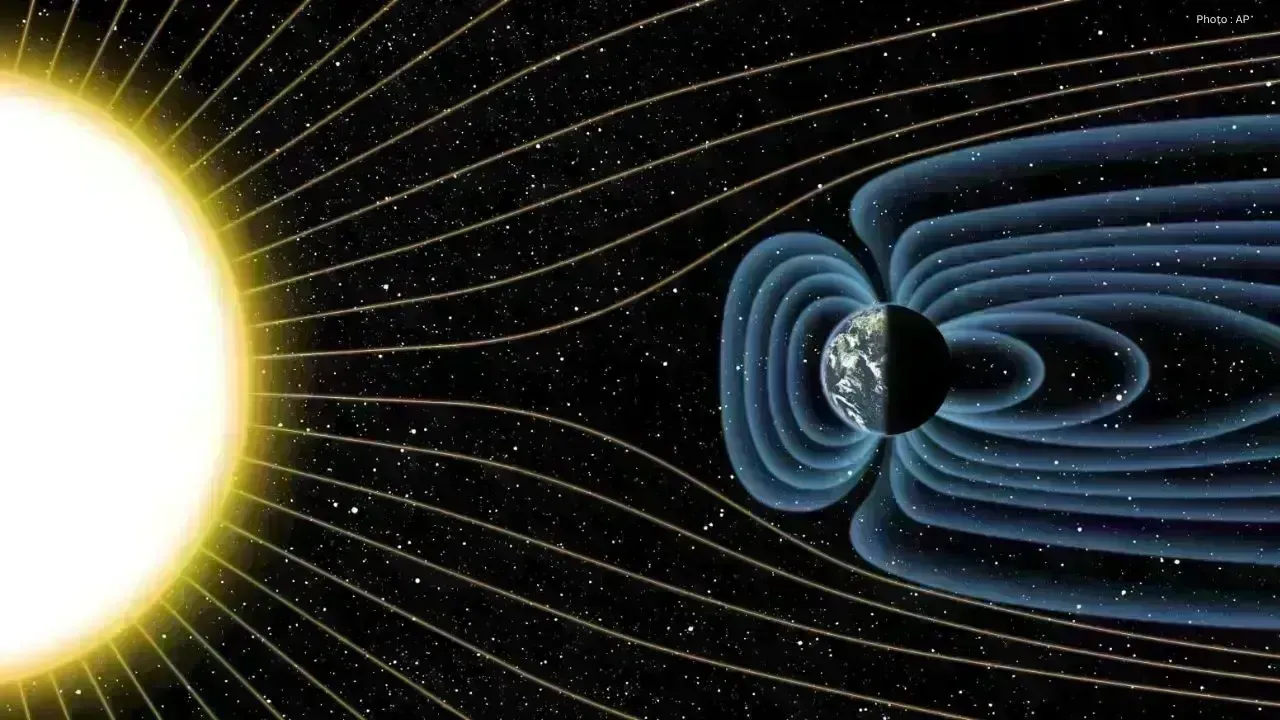
SMILE, which stands for Solar wind Magnetosphere Ionosphere Link Explorer, is a collaborative effort by the European Space Agency and the Chinese Academy of Sciences. The mission aims to capture intricate images of the interactions between solar wind and Earth's magnetosphere, an invisible shield that defends the planet against detrimental charged particles from the Sun.
Scientists assert that this mission could greatly enhance our comprehension of space weather phenomena such as solar storms, which can potentially jeopardize satellites, communication networks, GPS operations, aviation, and power systems on Earth. The endeavor signifies a pivotal advancement in heliophysics and space weather science, employing sophisticated imaging technologies that have never been utilized for such observations.
Nevertheless, analysts caution that the enthusiasm surrounding SMILE underscores a significant operational vulnerability. European and global forecasting frameworks still rely heavily on aging spacecraft like SOHO, which was launched back in 1995 by ESA and NASA. Despite being intended for a much shorter mission duration, SOHO has exceedingly extended its service life, operating for nearly three decades.
Despite its advanced age, SOHO is crucial for monitoring solar activity and generating early warning data for potentially hazardous solar storms. As societies grow increasingly reliant on satellites, digital communications, navigation technology, and electrical systems that are susceptible to severe space weather, such warnings become ever more essential.
Experts highlight broader issues facing numerous space agencies: while ambitious scientific exploration missions receive ample funding and attention, long-term operational monitoring systems often struggle to secure consistent financial support. Essentially, while highly advanced science projects are developed, older yet indispensable monitoring infrastructure languishes without comprehensive replacement strategies.
Experts caution that failing to maintain operational solar monitoring could pose significant threats to global infrastructure. A robust geomagnetic storm similar to significant historical solar occurrences could potentially disrupt airline routes, compromise satellites, interrupt internet and communication lines, and lead to severe electrical outages if monitoring systems falter or become inadequate.
The ESA and its international collaborators are formulating future space weather monitoring strategies, yet experts argue that maintaining continuous operational coverage is technically and financially challenging. The establishment, launching, and uninterrupted maintenance of solar observation systems necessitate coordinated efforts and sustained financial backing.
This situation has become increasingly urgent as governments and private sectors rapidly develop satellite infrastructures. Scientists warn that modern economies are now far more vulnerable to solar storm threats than when older spacecraft like SOHO were first launched.
As Europe embarks on ambitious projects like SMILE, the contrast between pioneering research initiatives and antiquated operational systems is becoming ever clearer. Observers of space policy contend that the forthcoming challenge is ensuring that the momentum of scientific innovation is complemented by equivalent investments in reliable long-term monitoring infrastructures that safeguard critical systems on our planet.










PM Modi Pays Tribute to Mahatma Gandhi, Urges People to Support Khadi
PM Modi pays tribute to Mahatma Gandhi on Gandhi Jayanti and urges citizens to support Khadi and the

Amazon Seeks to Offload $8 Billion in Nvidia Chips to Investors
Amazon plans to move $8 billion in Nvidia chips to investors, using a new financing model to strengt

Samsung Raises Galaxy S26 Prices as Memory Chip Costs Rise
Samsung raises Galaxy S26 prices in South Korea as rising memory chip costs put pressure on smartpho

Lewis Hamilton Calls Singapore Grand Prix One of F1's Toughest Races
Lewis Hamilton discusses the demanding Singapore Grand Prix and brings Plus44 and Almave to Singapor

Denmark's Pandora Opens World's Largest Jewellery Factory in Vietnam
Pandora opens its largest jewellery factory in Vietnam, expanding global production, strengthening s

Gautam Gambhir Questions Batting-Friendly Pitches After India's Record ODI Chase
Gautam Gambhir questions batting-friendly ODI pitches after India’s record chase, calling for a bett

